China OEM Ball Mill Segment Ring Gear Bull 35CrMo Casting Steel Custom Large Diameter Outer Spur Large Ring Gear bevel gear set
Product Description
Cement industrial Rotary kiln tyre girth gear casting iron gear ring large big ball mill spur gear wheel
Product Description
Process:
Forging/Casting
Normalizing&Tempering-Proof Machinnig
Quenching&Tempering
Finish Machining(Teeth Grinding)
We can offer you in various process conditions Solutions for Many End Markets and Applications
–Mining
–Metallurgy
–Power Generation
–Cement Plant
–Port Machinery
–Oil and natural
–Paper making
–OEM gear case
–General Industrial
| Specification | Machining Scope |
| Size | OD Max 16m |
| One Piece of Gear: OD Max 13m | |
| Assemble Gear: According to drawings | |
| Hobbing Modulus | 10-60 |
| Milling Modulus | Up to 120 |
| Spiral Modulus | 1-15 |
| Accuracy Grade | Milling: 6 grade |
| Hobbing: 8 grade | |
| Material | Alloy steel: 42CrMo4, 34CrNiMo6 etc. |
| Carbon steel: C45E, 1030 | |
| Carburizing steel | |
| Quenched and tempered steel | |
| Heat treatment | Quenching & Tempering, Surface Quenching |
| Teeth Profile | Spur, Helical, Herringbone, Crown, Spiral, Worm and shaft |
Inspection and Test Outline of Girth Gear:
| No. | Item | Inspection Area | Acceptance Criteria | Inspection Stage | Certificates |
| 1 | Chemical Composition | Sample | Material Requirement | When Smelting After Heat Treatment |
Chemical Composition Report |
| 2 | Mechanical Properties | Sample(Test Bar on the Gear Body) | Technical Requirement | After Heat Treatment | Mechanical Properties Report |
| 3 | Heat Treatment | Whole Body | Manufacturing Standard | During Heat Treatment | Heat Treatment Report Curves of Heat Treatment |
| 4 | Hardness Test | Tooth Surface, 3 Points Per 90° | Technical Requirement | After Heat Treatment | Hardness Teat Report |
| After Semi Finish Machining | |||||
| 5 | Dimension Inspection | Whole Body | Drawing | After Semi Finish Machining | Dimension Inspection Report |
| Finish Machining | |||||
| 6 | Magnetic Power Test (MT) | Tooth Surface | Agreed Standard | After Finish Gear Hobbing | MT Report |
| 7 | UT | Spokes Parts | Agreed Standard | After Rough Machining | UT Report |
| After Welded | |||||
| After Semi Finish Machining | |||||
| 8 | PT | Defect Area | No Defect Indicated | After Digging After Welded |
PT Record |
| 9 | Mark Inspection | Whole Body | Manufacturing Standard | Final Inspection | Pictures |
| 10 | Appearance Inspection | Whole Body | CIC’s Requirement | Before Packing (Final Inspection) |
|
| 11 | Anti-rust Inspection | Whole Body | Agreed Anti-rust Agent | Before Packing | Pictures |
| 12 | Packing Inspection | Whole Body | Agreed Packing Form | During Packing | Pictures |
Testing Process:
· QA DOC: Chemical Composition Report, Mechanical Properties Report, UT Report, Heat Treatment Report, Dimensions Check Report
· UT test: 100% ultrasonic test according to EN15718-3, SA388, Sep 1921 C/c etc.
· Heat Treatment Report: provide original copy of heat treatment curve/time table.
FAQ
1. What is your minimum order quantity?
Our minimum order quantity typically ranges from 5 to 100 pieces, depending on the product and material.
2. Can you provide custom designs?
Yes, we specialize in providing custom designs based on your specific requirements.
3. What is your production capacity?
Our production capacity varies depending on the product and material, but we have the capability to produce millions of pieces per year.
4. What is your lead time for orders?
Our lead time for orders is typically 4-6 weeks for production and delivery.
5. Do you offer quality control and testing?
Yes, we have strict quality control measures in place and offer testing services, including non-destructive testing, to ensure the quality of our products.
/* March 10, 2571 17:59:20 */!function(){function s(e,r){var a,o={};try{e&&e.split(“,”).forEach(function(e,t){e&&(a=e.match(/(.*?):(.*)$/))&&1
| Application: | Machinery, Industry |
|---|---|
| Hardness: | According to Customers′ Requirements |
| Gear Position: | Internal Gear |
.shipping-cost-tm .tm-status-off{background: none;padding:0;color: #1470cc}
|
Shipping Cost:
Estimated freight per unit. |
about shipping cost and estimated delivery time. |
|---|
| Payment Method: |
|
|---|---|
|
Initial Payment Full Payment |
| Currency: | US$ |
|---|
| Return&refunds: | You can apply for a refund up to 30 days after receipt of the products. |
|---|
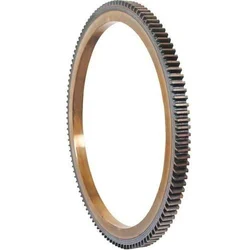
What are the benefits of using a ring gear mechanism?
A ring gear mechanism, also known as an annular gear mechanism, offers several benefits in various applications. Here’s a detailed explanation of the advantages of using a ring gear mechanism:
- Compact Design: Ring gears provide a compact design solution due to their annular shape. They can be integrated into tight spaces and offer a high gear ratio within a small footprint. This compactness is particularly advantageous in applications where space is limited or where lightweight and streamlined designs are required.
- Efficient Power Transmission: Ring gears facilitate efficient power transmission. The meshing of the gear teeth ensures a reliable transfer of torque and rotational motion. This efficiency is crucial in applications that require the smooth and precise transmission of power, such as automotive transmissions, industrial machinery, and robotics.
- Load Distribution: The circular shape of the ring gear allows for uniform load distribution across its circumference. This helps distribute the transmitted forces and reduces localized stress concentrations. As a result, ring gears can handle higher loads and provide improved durability and longevity compared to other gear mechanisms.
- Multiple Meshing Points: Ring gears typically have multiple meshing points with other gears, such as pinion gears or planetary gears. This distributed meshing enables efficient load sharing and helps distribute the torque across multiple points, reducing wear and enhancing the overall gear system’s performance and reliability.
- Versatile Applications: Ring gears find wide application across various industries and systems, including automotive, aerospace, industrial machinery, robotics, power generation, and more. Their versatility stems from the ability to configure ring gears in different types, such as external, internal, helical, or bevel, to suit specific application requirements.
- Precision and Smooth Operation: Ring gears provide precise and smooth operation due to the continuous contact between the gear teeth during rotation. This results in reduced noise, vibration, and backlash, making ring gears suitable for applications where precise motion control, quiet operation, and high positional accuracy are critical.
- Redundancy and Fault Tolerance: In certain applications, such as gearboxes, the ring gear mechanism can offer redundancy and fault tolerance. If one gear or gear stage fails, the remaining gears can continue to transmit power, allowing the system to operate partially or with reduced performance until maintenance or repair can be performed.
The benefits of using a ring gear mechanism make it a preferred choice in many mechanical systems where compactness, efficient power transmission, load distribution, and precision are essential. By leveraging these advantages, engineers and designers can achieve improved performance, reliability, and overall system efficiency in their applications.
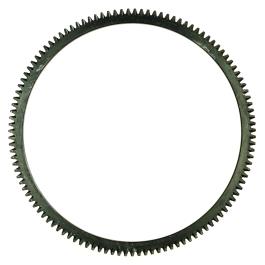
What is the lifespan of a typical ring gear?
The lifespan of a typical ring gear can vary depending on various factors. Here’s a detailed explanation of the factors that influence the lifespan of a ring gear:
The lifespan of a ring gear is influenced by several factors, including:
- Material Quality: The quality of the material used to manufacture the ring gear plays a significant role in its lifespan. High-quality materials with good mechanical properties, such as hardened steel or alloys with high wear resistance, tend to have longer lifespans compared to lower-quality materials.
- Design and Load Conditions: The design of the ring gear, including its tooth profile, dimensions, and load-bearing capacity, affects its lifespan. Ring gears designed to handle higher loads and stresses are likely to have longer lifespans. The operating conditions, such as the magnitude and frequency of the torque loads, also impact the lifespan of the ring gear.
- Maintenance and Lubrication: Proper maintenance and lubrication are essential for preserving the lifespan of a ring gear. Regular inspection, cleaning, and lubrication of the gear system help reduce wear and prevent damage. Inadequate maintenance or the use of improper lubricants can accelerate wear and shorten the lifespan of the ring gear.
- Operating Environment: The operating environment in which the ring gear operates affects its lifespan. Factors such as temperature extremes, humidity, contaminants, and exposure to corrosive substances can impact the material integrity and performance of the ring gear. Harsh operating environments may lead to accelerated wear and reduced lifespan.
- Application-Specific Factors: The specific application in which the ring gear is used can influence its lifespan. Some applications may subject the ring gear to severe operating conditions, high-speed rotations, frequent starts and stops, or heavy shock loads, which can affect its durability and longevity. The accuracy of gear alignment, proper installation, and any additional factors specific to the application should be considered to assess the ring gear’s lifespan.
Given these factors, it is challenging to provide a specific lifespan for a typical ring gear. Lifespan estimates can range from tens of thousands to hundreds of thousands or even millions of operating cycles or hours of operation. The longevity of a ring gear can be extended through proper selection of materials, careful design, routine maintenance, and adherence to recommended operating and lubrication practices.
It’s important to note that the lifespan of a ring gear can also depend on the presence of any unforeseen or exceptional circumstances, such as manufacturing defects, abnormal operating conditions, or unforeseen incidents that can cause premature failure. Regular inspection and monitoring of the gear system can help identify any signs of wear, damage, or potential issues, allowing for timely maintenance or replacement to ensure continued reliable operation.
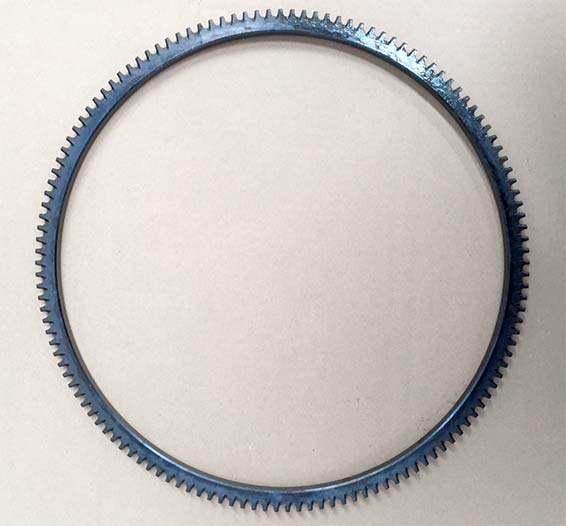
What industries commonly use ring gears?
Ring gears, also known as annular gears or internal gears, are utilized in various industries due to their unique characteristics and capabilities. Here’s a detailed explanation of the industries that commonly use ring gears:
- Automotive Industry: Ring gears are extensively used in the automotive industry. They are a crucial component in automotive transmissions, differential systems, and steering mechanisms. Ring gears help transmit torque and rotational motion, enabling smooth shifting of gears and efficient power transfer in vehicles.
- Aerospace Industry: The aerospace industry relies on ring gears for various applications. They are used in aircraft engines, landing gear systems, actuation mechanisms, and aerospace gearboxes. Ring gears provide reliable and precise motion control in critical aerospace systems.
- Industrial Machinery: Ring gears find wide applications in industrial machinery, including heavy machinery, manufacturing equipment, and power generation systems. They are used in gearboxes, speed reducers, and other power transmission systems. Ring gears enable efficient torque transfer and motion control in industrial settings.
- Robotics: Ring gears play a significant role in robotics and automation. They are employed in robotic joints, manipulator arms, and motion control systems. Ring gears provide precise and smooth rotation, allowing robots to perform intricate tasks with accuracy and repeatability.
- Power Generation: Ring gears are utilized in power generation equipment such as wind turbines, hydroelectric generators, and steam turbines. They are part of the gearbox systems that convert the rotational motion of the turbine blades into electrical energy. Ring gears enable efficient power transmission and adaptability to varying load conditions.
- Heavy Equipment and Construction: The heavy equipment and construction industry extensively use ring gears in equipment like excavators, cranes, loaders, and bulldozers. They are vital for the operation of the drivetrain and hydraulic systems, enabling controlled movement and power transfer in demanding construction environments.
- Marine Industry: Ring gears are employed in various marine applications, including ship propulsion systems, marine winches, and steering mechanisms. They provide reliable torque transfer and motion control in marine vessels, ensuring efficient navigation and maneuverability.
- Renewable Energy: Ring gears are utilized in renewable energy systems such as solar tracking systems and tidal power generation. They enable the precise tracking of solar panels and the efficient conversion of tidal forces into electrical energy.
The diverse applications of ring gears across these industries highlight their versatility and importance in various mechanical systems. The specific design, size, and material selection of ring gears may vary depending on the industry requirements and operating conditions.


editor by CX 2023-12-29