China OEM Spiral Bevel Gearbox 90-Degree Bevel Gears with 1: 1, 2: 1, 3: 1, 4: 1 and 5: 1 Ratios wholesaler
Product Description
For over 12 years, spiral bevel gearboxes from SIJIE have been the market leader for high-quality, reliable, versatile right-angle gearboxes.
We can also manufacture a special bevel gearbox to fit all your demands of the application.
SIJIE spiral bevel gearboxes are offered in 8 types of housing sizes and 6 types of gear ratios, which can be constructed with lots of shaft configurations and oriented in any direction to easily integrate into your machine design.
All the shaft configurations are suitable for Casting iron, stainless steel, and aluminum version bevel gearboxes.
Spiral Bevel Gearbox Specifications
| Model | Input Speed (RPM) | Gear Ratio 1:1 | Gear Ratio 2:1 | Gear Ratio 3:1 | Gear Ratio 4:1 | Gear Ratio 5:1 | |||||
| Power | Torque | Power | Torque | Power | Torque | Power | Torque | Power | Torque | ||
| ( KW ) | ( N.m ) | ( KW ) | ( N.m ) | ( KW ) | ( N.m ) | ( KW ) | ( N.m ) | ( KW ) | ( N.m ) | ||
| SJV-090 | 2000 | 7.55 | 33.6 | 4.2 | 38.57 | 2.85 | 40.39 | 2.15 | 39.76 | 1.4 | 34.56 |
| 1500 | 6 | 38.2 | 3.35 | 42.66 | 2.2 | 42.02 | 1.65 | 42.02 | 1.1 | 35.02 | |
| 1000 | 4.3 | 41.07 | 2.35 | 44.89 | 1.5 | 43.02 | 1.15 | 43.93 | 0.75 | 35.81 | |
| 750 | 3.4 | 43.29 | 1.8 | 45.84 | 1.2 | 45.84 | 0.87 | 44.19 | 0.58 | 36.93 | |
| SJV-110 | 2000 | 13.8 | 63 | 7.9 | 72 | 5.6 | 80 | 3.75 | 70.1 | 2.95 | 71.3 |
| 1500 | 11 | 70 | 6.3 | 80.2 | 4.45 | 85 | 2.9 | 73.9 | 2.35 | 74.8 | |
| 1000 | 7.87 | 75 | 4.45 | 85 | 3.1 | 88.8 | 2 | 76.4 | 1.6 | 76.4 | |
| 750 | 6.15 | 78.3 | 3.45 | 87.9 | 2.4 | 91.7 | 1.55 | 78.9 | 1.25 | 79.6 | |
| SJV140 | 2000 | 29.9 | 128.6 | 14.1 | 133.3 | 10.1 | 136.8 | 6.8 | 125.3 | 5.05 | 115.2 |
| 1500 | 23.9 | 152.2 | 11.1 | 141.3 | 7.95 | 151.8 | 5.3 | 135 | 3.95 | 125.7 | |
| 1000 | 17.2 | 164.3 | 7.85 | 149.9 | 5.6 | 160.4 | 3.75 | 143.3 | 2.75 | 131.3 | |
| 750 | 13.4 | 170.6 | 6.2 | 157.9 | 4.4 | 168.1 | 2.95 | 150.3 | 2.1 | 133.7 | |
| SJV-170 | 2000 | 49.2 | 180.1 | 26.2 | 224.7 | 18.2 | 235.2 | 10.5 | 179.5 | 8.05 | 170.9 |
| 1500 | 39.3 | 250.2 | 20.8 | 264.9 | 14.4 | 275 | 8.4 | 213.9 | 6.45 | 205.3 | |
| 1000 | 28.8 | 275 | 14.9 | 284.6 | 10.1 | 289.4 | 5.9 | 225.4 | 4.5 | 214.9 | |
| 750 | 22.8 | 290.3 | 11.6 | 295.4 | 7.8 | 298 | 4.55 | 231.7 | 3.45 | 219.7 | |
| SJV-210 | 2000 | 84 | 336.7 | 52.4 | 480.2 | 34.9 | 428.3 | 23.3 | 417.6 | 15.9 | 350.2 |
| 1500 | 67.5 | 429.8 | 43.2 | 550.1 | 27.7 | 529.1 | 18.5 | 471.1 | 12.7 | 404.3 | |
| 1000 | 50.5 | 482.3 | 31.4 | 599.7 | 20 | 573 | 13.4 | 511.9 | 9 | 429.8 | |
| 750 | 40.8 | 519.5 | 25.2 | 641.8 | 15.7 | 599.7 | 10.4 | 529.7 | 6.95 | 442.5 | |
| SJV-240 | 2000 | 111 | 475.8 | 71.5 | 643.7 | 52.4 | 695.2 | 37.7 | 652.3 | 28.9 | 643.8 |
| 1500 | 90.5 | 576.2 | 58.5 | 744.9 | 41.9 | 800.3 | 30.2 | 769.1 | 23.4 | 744.9 | |
| 1000 | 68 | 649.4 | 41.9 | 800.3 | 30.2 | 865.2 | 21.7 | 828.9 | 16.4 | 783.1 | |
| 750 | 54.5 | 694 | 33.8 | 860.8 | 23.6 | 901.5 | 17.1 | 871 | 13 | 827.7 | |
| SJV-280 | 2000 | 168 | 837.5 | 107 | 961.4 | 73 | 957 | 47.6 | 870.4 | 39.4 | 890.5 |
| 1500 | 156 | 993.2 | 88 | 1121 | 58.5 | 1117 | 38.5 | 980.5 | 31.4 | 999.6 | |
| 1000 | 115 | 1098 | 64.5 | 1232 | 42.4 | 1215 | 27.5 | 1051 | 22.4 | 1070 | |
| 750 | 94.2 | 1199 | 51 | 1299 | 33.5 | 1280 | 21.7 | 1105 | 17.7 | 1127 | |
Company Informations:
Factory Apprarance Production Workshop
Assembly Workshop Inventory Workshop
SIJIE Team Gearbox Shipment
Why SIJIE cubic spiral bevel gearbox?
1: High-quality, low Backlash, quiet noise, smooth running, high torque bevel gearbox professional manufacturer since 2008.
2: The wide range of bevel gearbox product lines can meet the application needs of customers to the greatest extent.Gearbox housing size is from 065 to 280. Casting iron, stainless steel, and aluminum version gearboxes can be manufactured according to customers’ requirements.
3: Strict quality control has been from the beginning to end at SIJIE. All the cubic bevel gearboxes will be tested in our factory accordingto the more than 30 items checking list before shipping.
4: SIJIE cubic type bevel gearbox has 13 months warranty period, during the warranty period, any problem with “SIJIE” products,after we confirmed, we will guide the customer to fix or ship a new 1 to replace it in 1-3 working days.
5: SIJIE kept a large inventory of cubic spiral bevel gearbox parts to make sure all the standard orders can be shipped in 7 working days.
6: Our Experienced Engineer Team can design the bevel gearbox drawings to fit all your demands in 2 hours. Small-quantity OEM/ODM orders also can be accepted by SIJIE. /* March 10, 2571 17:59:20 */!function(){function s(e,r){var a,o={};try{e&&e.split(“,”).forEach(function(e,t){e&&(a=e.match(/(.*?):(.*)$/))&&1
| Application: | Motor, Electric Cars, Motorcycle, Machinery, Marine, Toy, Agricultural Machinery, Car |
|---|---|
| Function: | Distribution Power, Change Drive Torque, Change Drive Direction, Speed Changing, Speed Reduction, Speed Increase |
| Hardness: | Hardened Tooth Surface |
| Step: | Single-Step |
| Gear Ratios: | 1:1, 2:1, 3:1, 4:1, 5:1 |
| Configurations: | 2-Way, 3-Way, 4-Way Shafts |
| Samples: |
US$ 95/Piece
1 Piece(Min.Order) | |
|---|
| Customization: |
Available
| Customized Request |
|---|
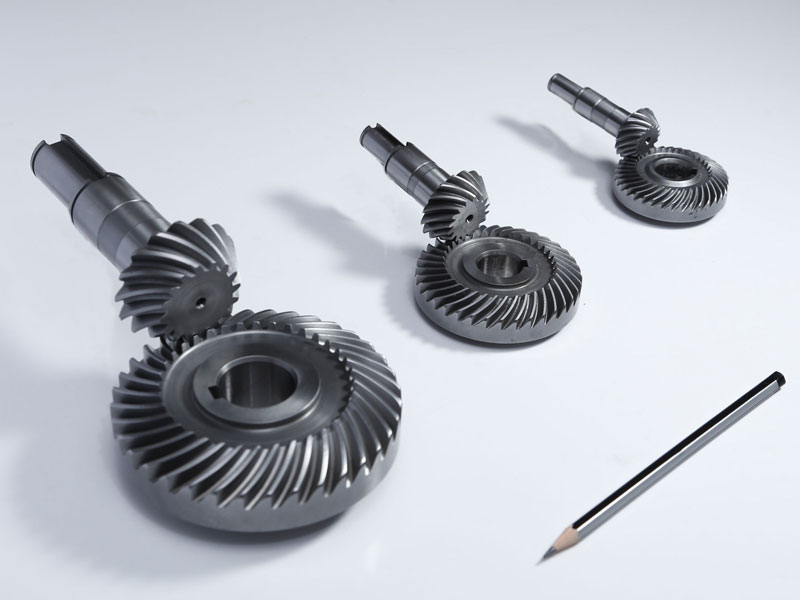
What lubrication is required for a bevel gear?
Lubrication is crucial for the optimal performance, longevity, and reliability of bevel gears. Proper lubrication helps reduce friction, wear, and heat generation, ensuring smooth operation and efficient power transmission. Here’s a detailed explanation of the lubrication requirements for a bevel gear:
Bevel gears typically require a lubricant that provides sufficient film strength, viscosity, and protection against wear and corrosion. The specific lubrication requirements may vary depending on factors such as the gear material, operating conditions, load, speed, and environmental factors. It’s important to follow the manufacturer’s recommendations and guidelines for the appropriate lubricant to use in your specific application. Here are some key considerations:
- Lubricant Type: Common lubricant types used for bevel gears include mineral oils, synthetic oils, and greases. Mineral oils are often suitable for standard applications, while synthetic oils offer enhanced performance in terms of temperature resistance, oxidation stability, and load-carrying capacity. Greases are used when a semi-solid lubricant is preferred, providing excellent adhesion and sealing properties.
- Viscosity: The lubricant viscosity is crucial for maintaining an adequate lubricating film between the gear teeth. The viscosity should be selected based on the operating conditions, such as temperature and speed. Higher temperatures and speeds generally require lubricants with higher viscosity to ensure proper lubrication and prevent metal-to-metal contact.
- Extreme Pressure (EP) Additives: In applications with high loads and potential for boundary lubrication conditions, lubricants with extreme pressure (EP) additives are recommended. EP additives provide additional protection against wear and ensure the lubricant film remains intact under high-pressure conditions, reducing the risk of gear tooth damage.
- Corrosion Protection: Bevel gears operating in corrosive environments or exposed to moisture may require lubricants with corrosion inhibitors or rust-preventive additives. These additives help protect the gear surfaces from rust and corrosion, extending the gear’s lifespan and maintaining its performance.
- Compatibility: It’s crucial to consider the compatibility between the lubricant and the gear materials. Some gear materials may have specific requirements or restrictions regarding the types of lubricants that can be used. For example, certain plastics or elastomers used in bevel gear applications may be sensitive to certain lubricant additives, necessitating the use of compatible lubricants.
- Lubrication Method: The lubrication method for bevel gears can vary depending on the design and accessibility of the system. Lubrication can be performed through methods such as oil bath lubrication, oil mist lubrication, circulating oil systems, or grease application. The appropriate lubrication method should be determined based on the gear system’s design and the manufacturer’s recommendations.
It’s essential to regularly monitor the lubricant condition and perform maintenance tasks such as oil analysis, lubricant replenishment, or scheduled lubricant changes as recommended by the gear manufacturer or based on the operating conditions. This helps ensure the lubricant’s effectiveness and the overall performance of the bevel gear system.
In summary, the lubrication requirements for a bevel gear include selecting the appropriate lubricant type, considering viscosity, extreme pressure additives, corrosion protection, compatibility with gear materials, and choosing the suitable lubrication method. Following the manufacturer’s recommendations and performing regular maintenance tasks are essential to maintain proper lubrication and ensure optimal performance and longevity of the bevel gear system.
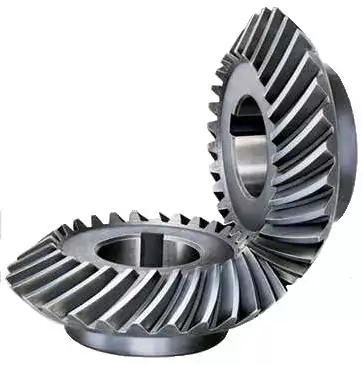
Can bevel gears be used in automotive applications?
Yes, bevel gears can be used in automotive applications due to their unique characteristics and ability to transmit power between intersecting shafts at different angles. Here’s a detailed explanation:
Bevel gears are commonly found in various automotive systems and components, offering several advantages for specific applications. Here are some key automotive applications where bevel gears are utilized:
- Differential: One of the primary applications of bevel gears in automotive systems is in the differential mechanism. The differential is responsible for distributing torque between the drive wheels while allowing them to rotate at different speeds, especially during cornering. Bevel gears, specifically hypoid gears, are used in the differential to transfer power from the driveshaft to the wheel axles at right angles. The compact size and high torque transmission capability of bevel gears make them suitable for this critical drivetrain component.
- Power Transfer: Bevel gears are utilized in automotive power transfer systems, such as transfer cases and drivelines. Transfer cases, commonly found in four-wheel drive (4WD) and all-wheel drive (AWD) vehicles, transfer power from the transmission to the front and rear axles. Bevel gears enable the necessary change in direction and torque transmission between the input and output shafts of the transfer case. Similarly, bevel gears can be used in drivelines to transfer power between differentials or between the transmission and the axles.
- Steering Systems: Bevel gears play a role in automotive steering systems, particularly in rack-and-pinion steering mechanisms. In these systems, bevel gears are used to convert the rotational motion of the steering wheel into the linear motion required for steering. Bevel gears help change the direction of motion, enabling the driver to control the vehicle’s steering angle. The compact size and precise motion transmission characteristics of bevel gears make them suitable for these steering applications.
- Auxiliary Systems: Bevel gears find application in various auxiliary automotive systems. For example, they can be used in engine timing systems to drive camshafts and synchronize valve operation. Bevel gears can also be employed in automotive differentials with limited-slip or locking capabilities, enhancing traction and vehicle stability in challenging road conditions. Additionally, they can be found in power seat adjusters, sunroof mechanisms, and other vehicle systems where torque transmission at different angles is required.
Bevel gears used in automotive applications are typically designed to withstand high loads, operate with minimal noise and vibration, and provide reliable power transmission. They are often manufactured from durable materials, such as alloy steels, and undergo heat treatment processes to enhance their strength and wear resistance.
It is important to note that the specific design and selection of bevel gears for automotive applications depend on factors such as torque requirements, space limitations, operating conditions, and cost considerations. Gear engineers and automotive manufacturers carefully consider these factors to ensure optimal performance, efficiency, and reliability in automotive systems.
In summary, bevel gears are extensively used in automotive applications, including differentials, power transfer systems, steering mechanisms, and auxiliary systems. Their ability to transmit power at varying angles, compact size, and robust construction make them well-suited for the demanding requirements of the automotive industry.
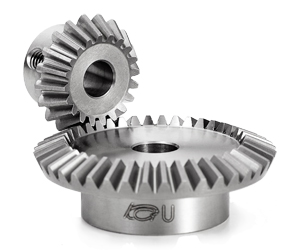
How do bevel gears differ from other types of gears?
Bevel gears have distinct characteristics that set them apart from other types of gears. Here’s a detailed explanation of how bevel gears differ from other gears:
1. Tooth Geometry: Bevel gears have teeth cut on the cone-shaped surface of the gears, whereas other types of gears, such as spur gears and helical gears, have teeth cut on cylindrical surfaces. The tooth geometry of bevel gears allows them to accommodate intersecting shafts and transmit rotational motion at different angles.
2. Axis Orientation: Bevel gears have intersecting axes, meaning the shafts they are mounted on intersect each other. In contrast, other types of gears typically have parallel or skewed axes. The intersecting axis of bevel gears allows for changes in direction and allows for power transmission between shafts that are not in a straight line.
3. Types of Bevel Gears: Bevel gears come in different variations, including straight bevel gears, spiral bevel gears, and hypoid bevel gears. Straight bevel gears have straight-cut teeth and intersect at a 90-degree angle. Spiral bevel gears have curved teeth that are gradually cut along the gear surface, providing smoother engagement and reduced noise. Hypoid bevel gears have offset axes and are used when the intersecting shafts are non-parallel. Other types of gears, such as spur gears and helical gears, also have their own variations but do not typically involve intersecting axes.
4. Direction of Motion: Bevel gears can change the direction of rotational motion between intersecting shafts. Depending on the orientation of the gears, the direction of rotation can be reversed. This capability makes bevel gears suitable for applications where changes in direction are required. In contrast, other gears, such as spur gears and helical gears, transmit motion in a specific direction along parallel or skewed axes.
5. Load Distribution: Bevel gears distribute loads differently compared to other gears. Due to the conical shape of the gears, the contact area between the teeth changes as the gears rotate. This can result in varying load distribution along the gear teeth. Other gears, such as spur gears and helical gears, have a consistent load distribution along their teeth due to their cylindrical shape.
6. Applications: Bevel gears are commonly used in applications where changes in direction or speed of rotational motion are required, such as automotive differentials, marine propulsion systems, and power transmission systems. Other types of gears, such as spur gears and helical gears, are more commonly used in applications where parallel or skewed shafts are involved and changes in direction are not necessary.
While bevel gears have their unique characteristics, it’s important to note that different types of gears have their own advantages and applications. The selection of the appropriate gear type depends on factors such as the application requirements, operating conditions, space limitations, and load considerations.
In summary, bevel gears differ from other types of gears in terms of tooth geometry, axis orientation, types of variations available, direction of motion, load distribution, and applications. Their ability to accommodate intersecting shafts and change the direction of rotational motion makes them suitable for specific applications where other types of gears may not be as effective.


editor by CX 2023-12-29