China Professional Customized Metal/Steel/40cr Gear Shaft Spline Shaft by Lathing Milling Tapping High Precision for Drive Rotor with Gears Factory Price for Machine Motor with high quality
Product Description
You can kindly find the specification details below:
HangZhou Mastery Machinery Technology Co., LTD helps manufacturers and brands fulfill their machinery parts by precision manufacturing. High precision machinery products like the shaft, worm screw, bushing, couplings, joints……Our products are used widely in electronic motors, the main shaft of the engine, the transmission shaft in the gearbox, couplers, printers, pumps, drones, and so on. They cater to different industries, including automotive, industrial, power tools, garden tools, healthcare, smart home, etc.
Mastery caters to the industrial industry by offering high-level Cardan shafts, pump shafts, and a bushing that come in different sizes ranging from diameter 3mm-50mm. Our products are specifically formulated for transmissions, robots, gearboxes, industrial fans, drones, etc.
Mastery factory currently has more than 100 main production equipment such as CNC lathe, CNC machining center, CAM Automatic Lathe, grinding machine, hobbing machine, etc. The production capacity can be up to 5-micron mechanical tolerance accuracy, automatic wiring machine processing range covering 3mm-50mm diameter bar.
Key Specifications:
| Name | Shaft/Motor Shaft/Drive Shaft/Gear Shaft/Pump Shaft/Worm Screw/Worm Gear/Bushing/Ring/Joint/Pin |
| Material | 40Cr/35C/GB45/70Cr/40CrMo |
| Process | Machining/Lathing/Milling/Drilling/Grinding/Polishing |
| Size | 2-400mm(Customized) |
| Diameter | φ18(Customized) |
| Diameter Tolerance | +0.008/-0.002mm |
| Roundness | 0.003mm |
| Roughness | Ra0.8 |
| Straightness | 0.08 |
| Hardness | HRC20-32 HRC45-55(High-Frequency Quenching) |
| Length | 178mm(Customized) |
| Heat Treatment | Customized |
| Surface treatment | Coating/Ni plating/Zn plating/QPQ/Carbonization/Quenching/Black Treatment/Steaming Treatment/Nitrocarburizing/Carbonitriding |
Quality Management:
- Raw Material Quality Control: Chemical Composition Analysis, Mechanical Performance Test, ROHS, and Mechanical Dimension Check
- Production Process Quality Control: Full-size inspection for the 1st part, Critical size process inspection, SPC process monitoring
- Lab ability: CMM, OGP, XRF, Roughness meter, Profiler, Automatic optical inspector
- Quality system: ISO9001, IATF 16949, ISO14001
- Eco-Friendly: ROHS, Reach.
Packaging and Shipping:
Throughout the entire process of our supply chain management, consistent on-time delivery is vital and very important for the success of our business.
Mastery utilizes several different shipping methods that are detailed below:
For Samples/Small Q’ty: By Express Services or Air Fright.
For Formal Order: By Sea or by air according to your requirement.
Mastery Services:
- One-Stop solution from idea to product/ODM&OEM acceptable
- Individual research and sourcing/purchasing tasks
- Individual supplier management/development, on-site quality check projects
- Muti-varieties/small batch/customization/trial order are acceptable
- Flexibility on quantity/Quick samples
- Forecast and raw material preparation in advance are negotiable
- Quick quotes and quick responses
General Parameters:
If you are looking for a reliable machinery product partner, you can rely on Mastery. Work with us and let us help you grow your business using our customizable and affordable products.
| Material: | Carbon Steel |
|---|---|
| Load: | Drive Shaft |
| Stiffness & Flexibility: | Stiffness / Rigid Axle |
| Journal Diameter Dimensional Accuracy: | IT6-IT9 |
| Axis Shape: | Straight Shaft |
| Shaft Shape: | Real Axis |
| Customization: |
Available
| Customized Request |
|---|
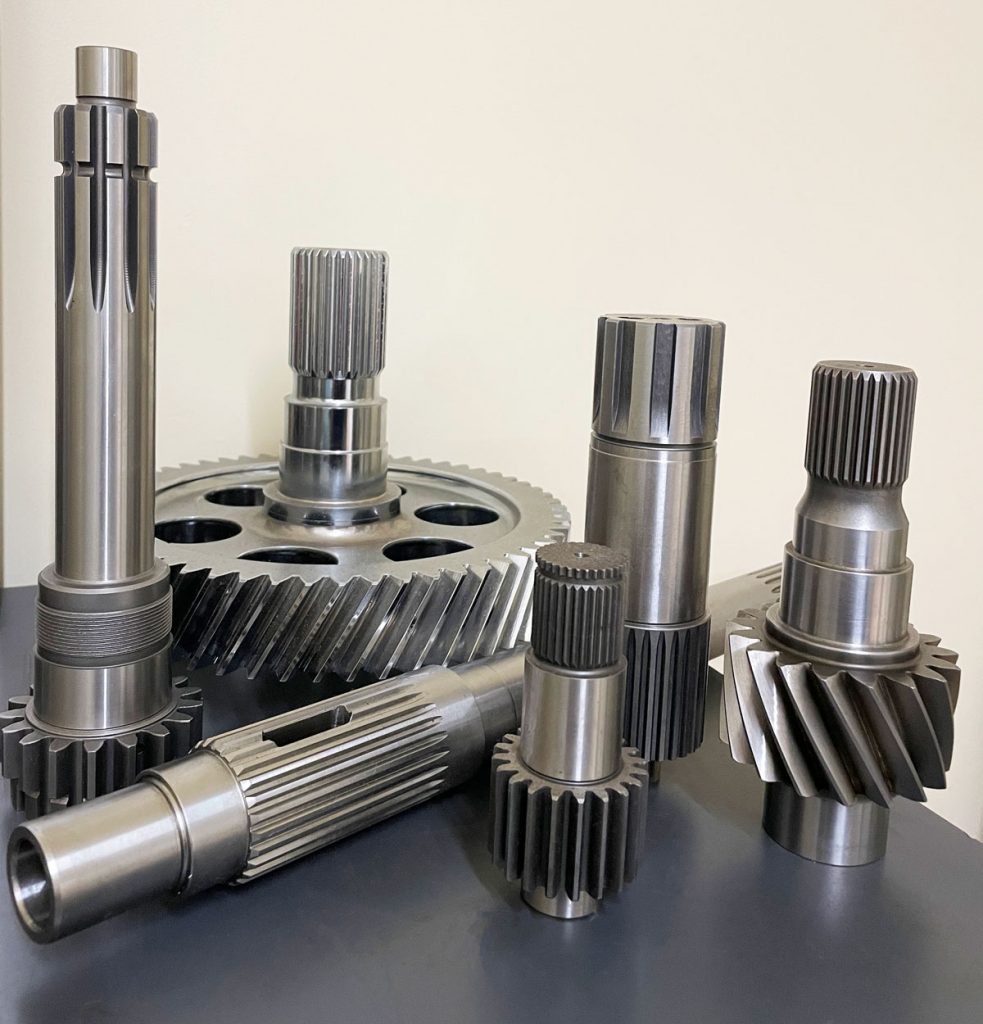
How do gear shafts handle changes in rotational direction and torque distribution?
Gear shafts play a crucial role in handling changes in rotational direction and torque distribution in machinery and mechanical systems. Let’s explore how gear shafts accomplish these tasks:
- Rotational Direction Changes:
Gear shafts are designed with gears that have different tooth profiles, sizes, and configurations. By meshing gears with varying characteristics, gear shafts can transmit rotational motion and change the direction of rotation. For example, when a gear with clockwise rotation meshes with a gear with counterclockwise rotation, the gear shaft can transfer the rotational motion and change the direction of output rotation accordingly.
- Torque Distribution:
Gear shafts are also responsible for distributing torque within a mechanical system. Torque is the rotational force applied to the gear shaft, and it needs to be transmitted and distributed to other components or gears in the system. Gear shafts achieve torque distribution through the engagement of multiple gears along the shaft. As torque is applied to the input gear, it transfers through the gear teeth and along the gear shaft, evenly distributing the torque to the output gears. The size, number of teeth, and gear ratios of the gears on the shaft determine the torque distribution characteristics.
- Gear Ratios:
Gear shafts can handle changes in torque distribution by utilizing different gear ratios. The gear ratio is the ratio of the number of teeth between two meshing gears. By using gears with different numbers of teeth, gear shafts can alter the torque distribution between the input and output gears. For example, gearing systems with larger input gears and smaller output gears can amplify torque, while systems with smaller input gears and larger output gears can reduce torque while increasing speed.
- Compound Gear Systems:
In more complex systems, gear shafts may incorporate compound gear arrangements to handle changes in both rotational direction and torque distribution. Compound gears consist of multiple gears mounted on the same shaft, allowing for a combination of gear ratios and rotational direction changes. These arrangements enable gear shafts to accommodate intricate mechanical systems with varying torque and rotational requirements.
Overall, gear shafts handle changes in rotational direction and torque distribution by utilizing different gear configurations, gear ratios, and compound gear systems. Their ability to transmit and distribute rotational motion and torque makes them essential components in machinery and mechanical systems.
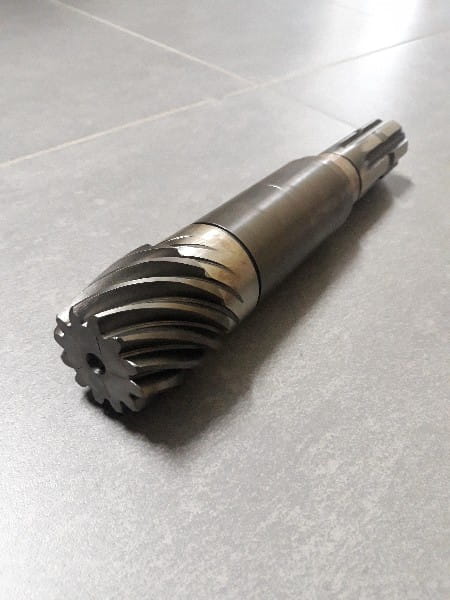
What is the significance of gear shaft alignment in mechanical systems?
Gear shaft alignment holds great significance in mechanical systems where gears are employed. Proper alignment of gear shafts is crucial for ensuring optimal performance and longevity of the system. Let’s explore the significance of gear shaft alignment:
- Efficient Power Transmission:
Accurate alignment of gear shafts facilitates efficient power transmission within the mechanical system. When gear shafts are properly aligned, the gear teeth mesh smoothly and engage without unnecessary friction or resistance. This minimizes power losses due to misalignment, reducing energy wastage and maximizing power transfer efficiency. Efficient power transmission ensures that the mechanical system operates at its intended performance level.
- Reduced Wear and Damage:
Proper gear shaft alignment helps in reducing wear and damage to the gears and other components within the mechanical system. Misalignment can cause excessive stress on the gear teeth, resulting in accelerated wear and premature failure. By aligning the gear shafts correctly, the load is evenly distributed, preventing concentrated stress points. This leads to reduced wear, improved gear life, and decreased chances of unexpected breakdowns or malfunctions.
- Noise and Vibration Reduction:
Misalignment of gear shafts can lead to increased noise and vibration levels within the mechanical system. When gears are not properly aligned, they may generate excessive vibration and noise during operation. This can be detrimental to the overall performance and user experience. Proper gear shaft alignment ensures that the gears mesh accurately, reducing vibration and noise. It contributes to a quieter and smoother operation of the mechanical system.
- Optimal Load Distribution:
Alignment of gear shafts enables optimal load distribution among the gears. When gear shafts are aligned correctly, the load is evenly shared across the gear teeth and their supporting components. This prevents overloading of specific gears, minimizing the risk of premature wear or failure. Proper load distribution enhances the overall reliability and efficiency of the mechanical system, as each gear operates within its intended design parameters.
- Improved Efficiency:
Gear shaft alignment directly impacts the overall efficiency of the mechanical system. Proper alignment reduces energy losses due to friction, misalignment, or inefficient gear engagement. It allows for smooth and efficient power transmission throughout the system, optimizing the utilization of available energy. Improved efficiency translates into reduced operating costs, increased productivity, and enhanced performance of the mechanical system.
- Longer Service Life:
Correct gear shaft alignment contributes to a longer service life for the mechanical system. By minimizing wear, reducing stress concentrations, and preventing excessive vibration, proper alignment helps to preserve the integrity of the gears and other related components. This leads to extended service intervals, reduced maintenance requirements, and increased reliability. A mechanical system with aligned gear shafts is more likely to operate smoothly and consistently over an extended period.
In summary, gear shaft alignment is of significant importance in mechanical systems. It ensures efficient power transmission, reduces wear and damage, minimizes noise and vibration, enables optimal load distribution, improves overall efficiency, and extends the service life of the system. Proper alignment of gear shafts is essential for achieving reliable and high-performance operation in gear-based mechanical systems.
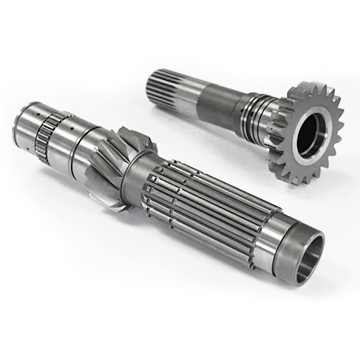
Can you explain the role of gear shafts in transmitting motion and power?
Gear shafts play a crucial role in the transmission of motion and power within mechanical systems. They serve as the mechanical linkages that enable the transfer of rotational motion and torque between gears. Here’s a detailed explanation of the role of gear shafts in transmitting motion and power:
- Power Transmission:
A primary role of gear shafts is to transmit power from a power source to various components within a mechanical system. When power is supplied to the gear shaft, it transfers this rotational force or torque to the connected gears. As the gears rotate, the power is transmitted further, allowing for the desired mechanical output. The gear shaft acts as a conduit for power, ensuring that it flows smoothly and efficiently between the interconnected gears.
- Rotational Motion Transfer:
Gear shafts facilitate the transfer of rotational motion between gears. When one gear rotates, it meshes with another gear connected to the gear shaft. As the teeth of the gears engage, the rotational motion is transmitted from the driving gear to the driven gear through the gear shaft. This rotational motion transfer allows for the synchronized movement of various components within the mechanical system, enabling the machinery to perform its intended function.
- Torque Transmission:
Along with rotational motion, gear shafts also transmit torque. Torque is the rotational force that causes an object to rotate. When a source of torque, such as a motor or engine, applies rotational force to the gear shaft, it transfers this torque to the connected gears. The gear teeth on the gears engage with each other, allowing the torque to be transmitted from the driving gear to the driven gear through the gear shaft. This torque transmission enables the machinery to generate the necessary force to perform tasks and overcome resistance.
- Gear Ratio Conversion:
By utilizing gears with different sizes or gear ratios on the gear shaft, gear shafts enable gear ratio conversion. The gear ratio represents the relationship between the number of teeth on the driving gear and the driven gear. When the gear shaft connects gears with different numbers of teeth, it changes the gear ratio, resulting in different rotational speeds and torque outputs. Gear ratio conversion allows mechanical systems to adapt to specific requirements, such as increasing speed for certain operations or increasing torque for heavy-duty tasks.
- Directional Change:
Another role of gear shafts is to facilitate directional change of motion. By using appropriately designed gears on the gear shaft, the direction of rotational motion can be redirected. This is achieved by meshing gears with specific tooth profiles and arrangements that change the orientation of the rotational force. Gear shafts enable the transmission of motion and power in different directions, allowing mechanical systems to perform complex tasks and operate in various orientations.
- Load Distribution:
Gear shafts help distribute the load or force evenly between connected gears. As the gears engage with each other through their teeth, the gear shaft ensures that the force and torque applied to one gear are evenly transferred to the others. This load distribution minimizes excessive stress on individual gears, promotes smooth operation, and enhances the overall durability and reliability of the mechanical system.
In summary, gear shafts play a vital role in transmitting motion and power within mechanical systems. They facilitate power transmission, rotational motion transfer, torque transmission, gear ratio conversion, directional change, and load distribution. Gear shafts are essential components that enable the efficient and effective operation of various machinery and mechanisms.


editor by CX 2023-11-28