China Standard Customized Heavy Duty Helical Ring Gear bevel spiral gear
Product Description
Product Description
We can produce large forging,casting and welding gears according to customer’s drawings.According to the working conditions and clients’ request,we also can do gear grinding,surface hardening,cemented and quenching,Nitriding and quenching,etc.
|
|
|||||||||||||||||||||||||||||||||||
★★★High Load Capacity: Large helical gear shafts are designed to handle significant loads and transmit high levels of torque. The helical gear design allows for a greater tooth engagement, resulting in improved load distribution and higher load-carrying capacity compared to other gear types.
★★★Smooth and Quiet Operation: Helical gears have a gradual engagement of teeth, which reduces noise and vibration during operation. The helix angle of the teeth helps to distribute the load smoothly, minimizing impact and ensuring a quieter gear system.
★★★Increased Efficiency: The helical gear design provides a larger contact area between the teeth, resulting in higher efficiency compared to other gear types. This leads to reduced power losses and improved overall system efficiency.
★★★Greater Tooth Strength: The helical gear teeth are longer and have a larger surface area compared to spur gears, providing increased tooth strength. This makes large helical gear shafts more resistant to wear and fatigue, allowing them to withstand heavy loads and prolonged use.
★★★Improved Gear Meshing: Helical gears offer a gradual engagement of teeth, which results in a smoother meshing action. This helps to minimize backlash, improve gear accuracy, and reduce the likelihood of tooth damage during gear engagement.
★★★Versatility: Large helical gear shafts can be used in a wide range of applications, including industrial machinery, heavy equipment, marine propulsion systems, and power transmission systems. Their versatility makes them suitable for various industries and sectors.
★★★Reliability and Durability: The use of high-quality materials, precise manufacturing techniques, and rigorous quality control ensures that large helical gear shafts are reliable and durable. They are designed to withstand heavy loads, extreme operating conditions, and long service life.
Company Profile
/* January 22, 2571 19:08:37 */!function(){function s(e,r){var a,o={};try{e&&e.split(“,”).forEach(function(e,t){e&&(a=e.match(/(.*?):(.*)$/))&&1
| Application: | Machinery, Rotary Kiln,Ball Mill |
|---|---|
| Hardness: | Hardened Tooth Surface |
| Gear Position: | External Gear |
| Manufacturing Method: | Cast Gear |
| Toothed Portion Shape: | Helical Gear |
| Material: | Cast Steel |
| Customization: |
Available
| Customized Request |
|---|
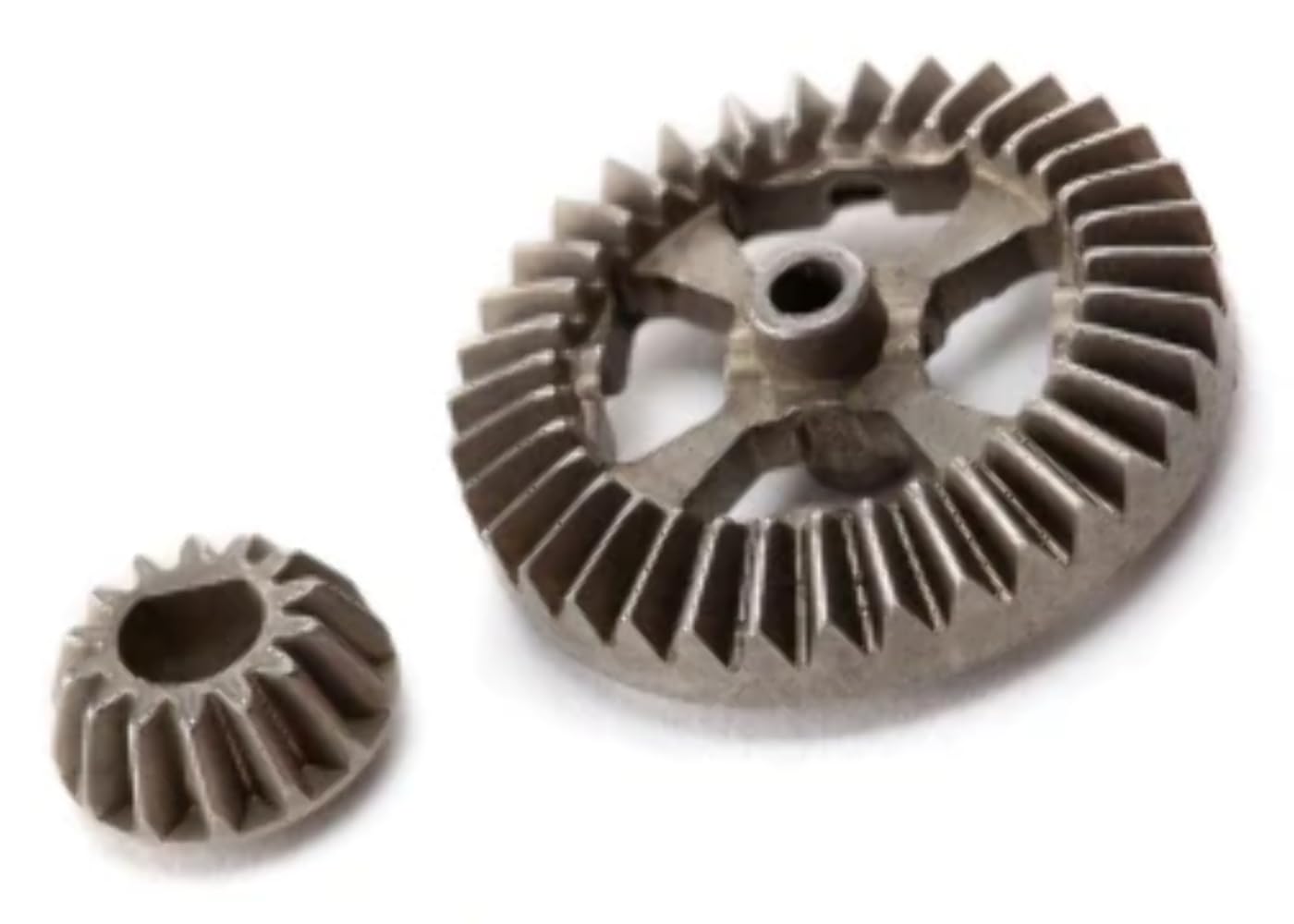
What lubrication is required for ring gears?
Proper lubrication is essential for the optimal performance and longevity of ring gears. Here’s a detailed explanation of the lubrication requirements for ring gears:
- Type of Lubricant: The type of lubricant used for ring gears depends on various factors, including the application, operating conditions, and gear design. Common lubricants for ring gears include gear oils, grease, and synthetic lubricants. Gear oils are specifically formulated for gear systems and provide excellent lubrication and protection against wear. Grease is often used in applications where the gear system operates at lower speeds or requires higher viscosity lubrication. Synthetic lubricants offer enhanced performance, durability, and resistance to extreme temperatures and loads.
- Lubricant Properties: The lubricant chosen for ring gears should possess certain properties to ensure effective lubrication. These properties include high film strength, good thermal stability, resistance to oxidation, and anti-wear characteristics. The lubricant should also be compatible with the materials used in the ring gear system to prevent damage or degradation of the gear surfaces.
- Viscosity: Viscosity is an important consideration when selecting lubrication for ring gears. Viscosity refers to the thickness or resistance to flow of the lubricant. It is crucial to choose a lubricant with the appropriate viscosity to ensure proper lubrication film formation between the gear teeth. If the lubricant’s viscosity is too low, it may not provide sufficient lubrication, leading to increased wear. Conversely, if the viscosity is too high, it may cause excessive friction and energy loss. The recommended viscosity range is typically specified by the gear manufacturer or industry standards.
- Lubrication Method: The lubrication method for ring gears can vary depending on the specific application and gear system design. For enclosed gear systems, such as gearboxes or sealed housings, lubrication is typically performed by filling the housing with the recommended lubricant to the appropriate level. In open gear systems, such as large industrial gears, lubricant application methods may include spray systems, drip lubrication, or circulation systems. The lubrication method should ensure sufficient coverage and distribution of the lubricant to all gear surfaces.
- Lubrication Frequency: Regular lubrication maintenance is crucial to keep ring gears properly lubricated. The frequency of lubrication depends on the operating conditions, gear system design, and the lubricant used. It is important to follow the manufacturer’s recommendations or industry standards regarding lubrication intervals. Regular inspections should also be conducted to monitor the lubricant condition, check for contamination, and replenish or replace the lubricant as needed.
- Environmental Considerations: Environmental factors, such as temperature, moisture, and contamination, can affect the performance of the lubricant and the ring gears. It is important to consider these factors when selecting the lubricant. Extreme temperatures may require lubricants with enhanced thermal stability, while exposure to moisture or harsh contaminants may necessitate lubricants with better resistance to corrosion or water washout.
To ensure the proper lubrication of ring gears, it is advisable to consult the gear manufacturer’s recommendations and guidelines. They can provide specific information regarding the suitable lubricant type, viscosity range, lubrication method, and maintenance practices for the particular ring gear system.
Can you provide examples of machinery that use ring gears?
Machinery in various industries utilize ring gears for different applications. Here are some examples of machinery that commonly use ring gears:
- Automotive Transmissions: Ring gears are an integral part of automotive transmissions. They are used in automatic transmissions, manual transmissions, and dual-clutch transmissions. Ring gears help transmit power from the engine to the wheels by engaging with the pinion gear or other associated gears.
- Industrial Gearboxes: Ring gears are extensively used in industrial gearboxes, which are employed in a wide range of applications. Gearboxes in industries such as manufacturing, mining, construction, and energy generation use ring gears to transmit power and control rotational speed. They provide torque multiplication and speed reduction or increase as required by the specific machinery.
- Wind Turbines: Ring gears are crucial components in wind turbines. They are used in the main gearbox to convert the rotational motion of the wind turbine blades into electrical power. The ring gear connects the rotor shaft to the generator, enabling the transmission and conversion of the mechanical energy into electrical energy.
- Rotary Tables: Rotary tables are used in machining operations to provide precise positioning and rotational movement. They are commonly found in milling machines, drilling machines, and machining centers. Ring gears are employed in the rotary tables to enable smooth and accurate rotation, allowing for precise machining and indexing of workpieces.
- Printing Presses: Printing presses, particularly those used for high-speed commercial printing, often incorporate ring gears. Ring gears help drive the paper feed mechanisms and synchronize the movement of various components, ensuring precise control and alignment during the printing process.
- Excavators and Earthmoving Equipment: Large construction machinery, such as excavators and earthmoving equipment, rely on ring gears for their hydraulic systems. Ring gears enable the rotation and control of the excavator’s superstructure, including the boom, arm, and bucket. They provide the necessary power and torque for efficient digging, lifting, and material handling.
- Conveyor Systems: Ring gears are utilized in conveyor systems, which are widely used in industries for material handling and transportation. They are often employed in large-scale conveyors to drive the pulleys and facilitate the movement of heavy loads along the conveyor belts. Ring gears ensure smooth and reliable operation of the conveyor systems.
- Robotics and Automation: Ring gears find applications in robotics and automation systems. They are used in robotic arms and joints to enable precise and controlled movement. Ring gears provide the necessary torque and rotational capabilities for various robotic applications, including assembly, pick-and-place operations, and material manipulation.
These examples represent just a few of the many machinery and equipment types that utilize ring gears. The versatility and reliability of ring gears make them essential components in various industries, where they play a crucial role in transmitting power, controlling movement, and ensuring efficient operation of machinery.
What is a ring gear and how does it work?
A ring gear is a type of gear that features teeth on the outer perimeter of a circular ring-shaped component. It is commonly used in various mechanical systems and applications. Here’s a detailed explanation of what a ring gear is and how it works:
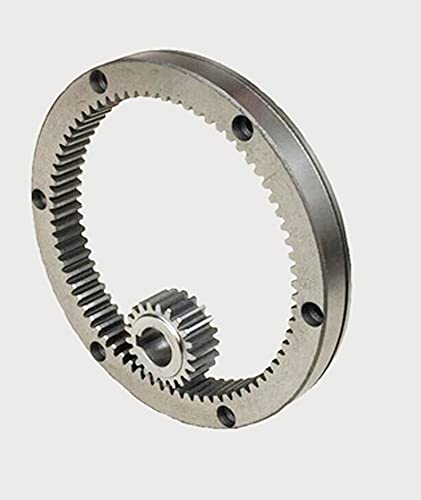
A ring gear, also known as an annular gear or internal gear, is a gear with teeth on the inside circumference of a circular ring. It is designed to mesh with a pinion gear or another gear that has teeth on the outside. The combination of a ring gear and a pinion gear forms a gear set, enabling the transmission of rotational motion and torque between the two gears.
Here’s how a ring gear works:
- Tooth Engagement: When a ring gear and a pinion gear are brought together, the teeth of the pinion gear mesh with the teeth of the ring gear. The teeth of the pinion gear enter the spaces between the teeth of the ring gear, creating a mechanical connection between the two gears.
- Motion Transmission: As the driving gear (such as the pinion gear) rotates, it transfers rotational motion to the ring gear. The teeth of the driving gear push against the teeth of the ring gear, causing the ring gear to rotate in the opposite direction. This rotational motion can be used to drive other components or systems connected to the ring gear.
- Torque Transfer: The meshing of the teeth between the ring gear and the driving gear allows for the transfer of torque. Torque is the rotational force or twisting force applied to a gear. As the driving gear exerts torque on the ring gear through the meshing teeth, the ring gear experiences a torque load. This torque load can be transmitted to other components or systems connected to the ring gear.
- Gear Ratio: The gear ratio between the ring gear and the driving gear determines the speed and torque relationship between the two gears. The gear ratio is defined as the ratio of the number of teeth on the ring gear to the number of teeth on the driving gear. By changing the size or number of teeth on either the ring gear or the driving gear, the gear ratio can be adjusted to achieve the desired speed or torque output.
- Load Distribution: The ring gear distributes the load over a larger area compared to other types of gears. This load distribution characteristic allows the ring gear to handle higher loads and torque. The design of the ring gear and its tooth profile ensures that the load is evenly distributed across the surface of the gear, enhancing its durability and reducing the risk of premature wear or failure.
Ring gears are commonly used in various applications, including automotive transmissions, differential systems, planetary gear systems, industrial machinery, and power transmission equipment. They provide advantages such as compactness, high torque capacity, load distribution, and the ability to achieve high gear ratios.
It’s important to note that the design and characteristics of ring gears may vary depending on the specific application and requirements. Factors such as tooth profile, material selection, lubrication, and manufacturing techniques are carefully considered to ensure optimal performance and durability of the ring gear.


editor by CX 2024-04-15