China supplier Transmission Helical Gear Shaft Used for Auto Gearbox straight bevel gear
Product Description
Transmission Helical Gear Shaft used for Auto Gearbox
1. Description
| No. | Item | Description |
| 1 | Name | Spiral teeth-Gear Shaft |
| 2 | Size | Products can be customized. |
| 3 | Manufacture Standard | 5-8 Grade ISO1328-1997. |
| 4 | Material | 45#Steel,20CrMnTi,40Cr,20CrNiMo,20MnCr5,GCR15SiMn,42CrMo,2Cr13stainless steel,Nylon,Bakelite,Copper,Aluminium.etc |
| 5 | Production Process | The main process is Gear Hobbing and Gear Grinding, Selecting production process according to the different products. |
| 6 | Heat Treatment | Carburizing and quenching ,High-frequency quenching,Nitriding, Hardening and tempering, Selecting heat treatment according to the different materials. |
| 7 | Testing Equipment | Rockwell hardness tester 500RA, Double mesh instrument HD-200B & 3102,Gear measurement center instrument CNC3906T and other High precision detection equipments |
| 8 | Certification | GB/T19001-2016/ISO9001:2015 |
| 9 | Usage | Used in printing machine, cleaning machine, medical equipment, garden machine, construction machine, electric car, valve, forklift, transportation equipment and various gear reducers.etc |
| 10 | Package | According to customer’s request |
2. Photos
3. Order process
a. Customer sends us the drawing or sample, If only sample, our company supply the CAD drawing.
b. Our company supplies the processing technique and quotation.
c. Our company supplies the sample after customer confirmed processing technique and quotation.
d. Customer places the order after confirm the sample.
e. Customer pay 50% deposit
f. Quantity production.
g. Pay the balance after the acceptance and confirmation.
h. Delivery.
| Material: | Alloy Steel |
|---|---|
| Load: | Drive Shaft |
| Stiffness & Flexibility: | Flexible Shaft |
| Journal Diameter Dimensional Accuracy: | IT6-IT9 |
| Axis Shape: | Straight Shaft |
| Shaft Shape: | Stepped Shaft |
| Samples: |
US$ 1.8/Piece
1 Piece(Min.Order) | |
|---|
| Customization: |
Available
| Customized Request |
|---|
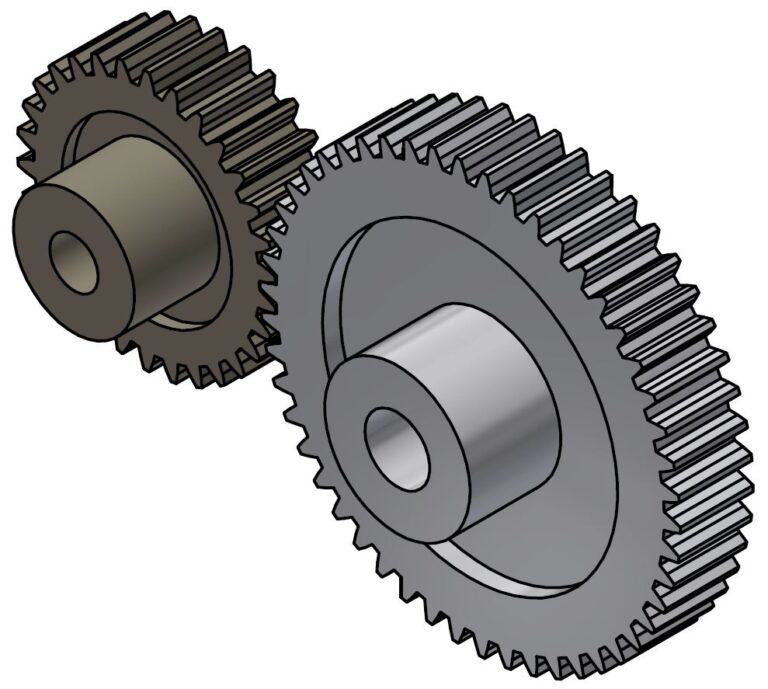
How does a helical gear impact the overall efficiency of a system?
A helical gear has a significant impact on the overall efficiency of a system. Due to their unique design and characteristics, helical gears offer several advantages that contribute to improved efficiency. Here’s a detailed explanation of how a helical gear impacts the overall efficiency of a system:
- Power Transmission: Helical gears provide efficient power transmission due to their inclined tooth design. The helical teeth engage gradually, resulting in a smooth transfer of torque between the gears. This gradual engagement reduces impact and shock loads, minimizing energy losses and improving overall efficiency.
- Load Distribution: The helical tooth profile allows for increased contact area between the gear teeth compared to other gear types. This larger contact area results in improved load distribution across the gear teeth. By distributing the load more evenly, helical gears can handle higher loads without excessive wear and reduce the risk of tooth failure, leading to increased efficiency and reliability.
- Noise and Vibration Reduction: Helical gears operate with less noise and vibration compared to other gear types, such as spur gears. The inclined tooth profile of helical gears helps to minimize gear meshing noise and vibration by distributing the forces along the gear teeth over a larger contact area. Reduced noise and vibration levels contribute to a quieter and smoother operation, indicating lower energy losses and improved overall efficiency.
- Higher Gear Ratios: Helical gears can achieve higher gear ratios compared to other gear types. This capability allows for more precise speed control and torque conversion in various applications. By providing the desired gear ratios, helical gears enable the system to operate at optimal speeds and torque levels, maximizing efficiency and performance.
- Efficient Lubrication: The helical gear design allows for effective lubrication of the gear teeth. The continuous sliding action between the helical teeth assists in distributing the lubricant evenly along the gear contact surfaces. Proper lubrication reduces friction and wear, minimizing energy losses and enhancing the overall efficiency of the gear system.
- Compact Design: Helical gears have a compact design that allows for efficient use of space within a system. The inclined tooth profile enables multiple gear sets to be positioned on parallel or intersecting shafts, facilitating compact gear arrangements. This compactness reduces the overall size and weight of the system while maintaining high efficiency.
- High Precision: Helical gears offer excellent positional accuracy and repeatability. The helical tooth profile ensures precise and consistent gear meshing, resulting in accurate motion control and minimal backlash. This precision contributes to efficient operation, especially in applications requiring precise positioning and synchronization of components.
- Wear Resistance: Helical gears exhibit good wear resistance due to the larger contact area and gradual tooth engagement. The inclined tooth profile helps distribute the load, reducing localized wear and extending the gear’s service life. Reduced wear translates to sustained gear efficiency over time, minimizing the need for frequent replacements and maintenance.
Overall, the design characteristics of helical gears, including smooth power transmission, load distribution, noise reduction, higher gear ratios, efficient lubrication, compactness, precision, and wear resistance, collectively contribute to improved system efficiency. By choosing helical gears appropriately for a given application, engineers can enhance the overall performance, reliability, and energy efficiency of the system.
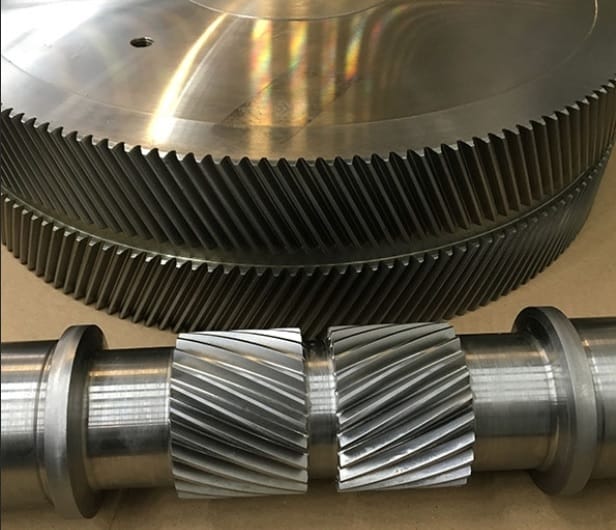
How do you ensure proper alignment when connecting helical gears?
Proper alignment is crucial when connecting helical gears to ensure smooth and efficient operation, minimize noise and vibration, and prevent premature wear. Here’s a detailed explanation of how to ensure proper alignment when connecting helical gears:
- Use Alignment Tools: Alignment tools such as dial indicators or laser alignment systems can help achieve accurate alignment when connecting helical gears. These tools measure the relative positions of the gears and aid in adjusting their positions to achieve proper alignment. By using precise alignment tools, engineers can ensure the gears are correctly positioned for optimal meshing and load distribution.
- Check Gear Meshing: Proper gear meshing is essential for alignment. Ensure that the teeth of the helical gears are correctly meshed, and there is sufficient contact across the entire tooth width. Improper meshing, such as excessive or insufficient contact, can lead to noise, vibration, and accelerated wear. Adjust the gear positions if necessary to achieve optimal meshing conditions.
- Verify Center Distance: The center distance between the two helical gears must be accurately determined and maintained. The center distance affects the gear meshing and tooth contact pattern. Measure and verify the center distance using appropriate measuring tools, such as calipers or micrometers, to ensure it aligns with the gear design specifications. Make adjustments if needed to achieve the correct center distance.
- Check Axial Alignment: Proper axial alignment is crucial for helical gears. The axial alignment refers to the alignment of the gear shafts and the gears along the axial direction. Misalignment can cause uneven load distribution, increased noise and vibration, and accelerated wear. Use appropriate alignment tools to check and adjust the axial alignment, ensuring the gears are aligned along the same axis.
- Consider Preload and Backlash: Preload and backlash are important considerations for helical gears. Preload refers to applying a slight axial force to the gears to ensure proper contact and minimize backlash. Backlash is the small amount of clearance between the gear teeth. Follow the gear manufacturer’s recommendations for preload and backlash values and make adjustments as necessary during the gear connection process.
- Check Parallelism: The gear shafts should be parallel to each other to ensure proper alignment. Use precision measuring tools, such as straightedges or feeler gauges, to verify the parallelism of the gear shafts. If any deviation is detected, adjust the gear positions or make appropriate modifications to achieve parallel alignment.
- Consider Thermal Expansion: Take into account the potential thermal expansion of the gear components. Gears can expand or contract due to temperature variations during operation. Ensure proper clearances and allowances are considered to accommodate thermal expansion without compromising alignment. Consult the gear manufacturer’s guidelines or industry standards for recommended clearances based on the expected operating temperature range.
- Follow Manufacturer’s Guidelines: Always refer to the gear manufacturer’s guidelines, specifications, and recommendations for proper alignment procedures. Different gear types and designs may have specific alignment requirements. Manufacturers often provide detailed instructions and alignment tolerances that should be followed to achieve optimal gear performance and longevity.
By following these alignment practices, engineers can ensure the proper alignment of helical gears, promoting smooth and efficient gear operation, reducing noise and vibration, and maximizing gear system lifespan.
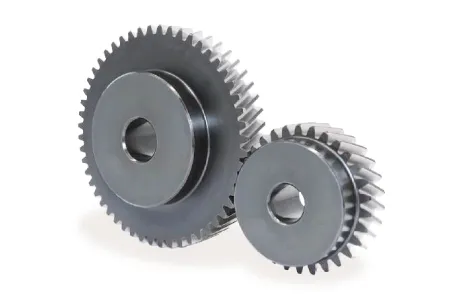
What are the applications of helical gears?
Helical gears find wide-ranging applications in various mechanical systems due to their advantageous characteristics and capabilities. Here’s a detailed explanation of the applications of helical gears:
1. Power Transmission: Helical gears are commonly used for power transmission in a wide range of industries. They are employed in machinery and equipment where rotational motion needs to be transmitted between parallel shafts. Examples include gearboxes, industrial machinery, conveyors, and automotive transmissions.
2. Rotary Motion Control: Helical gears are used in applications where precise rotary motion control is required. They provide smooth and accurate motion transfer, making them suitable for applications such as robotics, precision equipment, machine tools, and positioning systems.
3. High Torque Applications: Due to their design and tooth engagement characteristics, helical gears are well-suited for high torque applications. They can efficiently transmit substantial power and handle heavy loads. This makes them suitable for heavy machinery, construction equipment, mining machinery, and marine propulsion systems.
4. Automotive Industry: Helical gears are extensively used in automotive applications. They are found in transmissions, differentials, and powertrain systems, where they facilitate smooth and efficient power transmission while reducing noise and vibration. Helical gears help achieve the desired gear ratios and torque multiplication in vehicles.
5. Machine Tools: Machine tools, such as milling machines, lathes, and gear hobbing machines, utilize helical gears for precise motion control and power transmission. Helical gears enable accurate and smooth rotation of cutting tools and workpieces, contributing to the high precision and quality of machined components.
6. Printing Industry: Helical gears are used in printing presses and other printing equipment. They facilitate the precise movement of paper and printing plates, ensuring accurate registration and high-quality printing results.
7. Textile Industry: In the textile industry, helical gears are employed in various machinery and equipment. They are used in spinning machines, weaving machines, and other textile processing equipment that require precise motion control and power transmission for efficient textile production.
8. Oil and Gas Industry: Helical gears are utilized in oil and gas equipment and machinery. They are found in pumps, compressors, drilling rigs, and other critical components where high torque transmission and reliable motion control are essential for efficient operations.
9. Power Generation: Helical gears play a crucial role in power generation systems. They are employed in wind turbines, hydroelectric generators, and other power generation equipment to transmit rotational motion from the turbine or generator shaft to the electrical generator, ensuring efficient electricity production.
10. General Machinery: Helical gears have diverse applications in general machinery across various industries. They are used in packaging equipment, food processing machinery, material handling systems, and numerous other mechanical systems that require reliable power transmission and precise motion control.
The versatility, load-carrying capacity, and smooth operation of helical gears make them suitable for numerous applications in different industries. The specific design, tooth profile, helix angle, and material selection can be tailored to meet the requirements of each application, ensuring optimal performance and longevity of the gear system.


editor by CX 2023-12-06