China wholesaler Heavy Machinery Mining Equipment Herringbone Gear bevel gear set
Product Description
Product Description
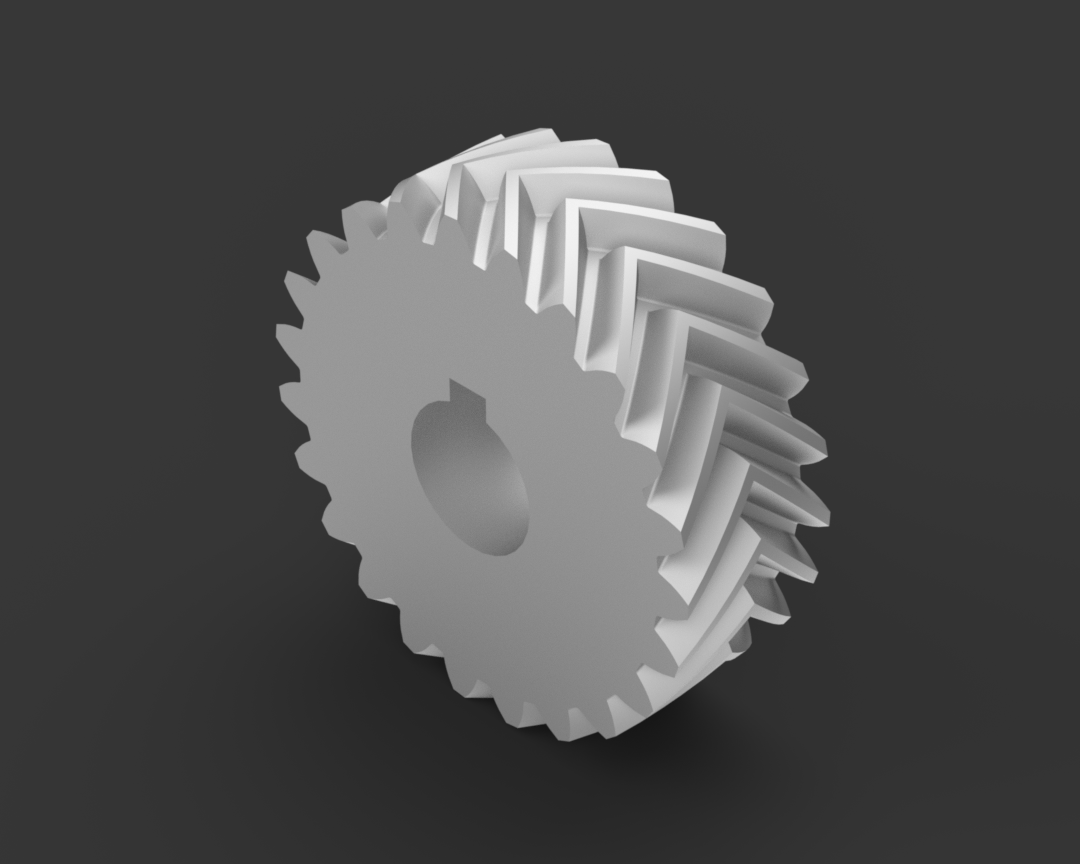
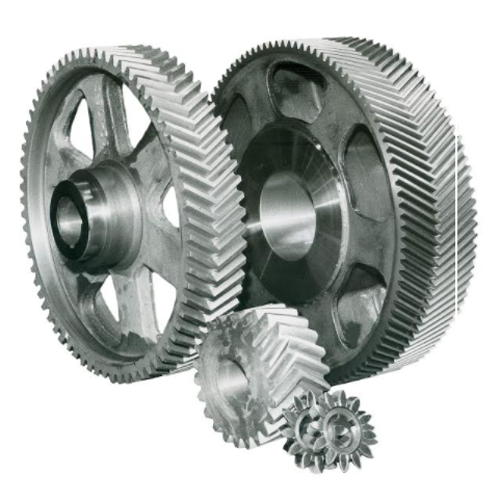
Herringbone gears are a specific type of gear that feature a unique double helix shape resembling the bones of a fish, hence the name “herringbone.” They are characterized by their distinctive V-shaped teeth that are arranged in a herringbone pattern.
Features
Double Helix Shape: The most distinctive characteristic of herringbone gears is their double helix shape, which allows for smoother and more efficient operation compared to traditional spur gears.
Self-Aligning: Due to the opposing helix angles on either side of the gear, herringbone gears are self-aligning. This helps to reduce axial thrust and prevents gear misalignment.
High Load Capacity: Herringbone gears are capable of handling high loads and transmitting significant amounts of power due to their robust design.
Reduced Vibration and Noise: The double helix design helps to cancel out axial forces and minimize vibration and noise during operation, making them ideal for applications where noise reduction is important.
Functions
Power Transmission: Like other types of gears, herringbone gears are primarily used to transmit power between parallel shafts while maintaining a constant speed ratio.
Direction Change: Herringbone gears can change the direction of rotation between 2 shafts while transmitting power efficiently.
Speed Reduction or Increase: By using herringbone gears with different numbers of teeth on the mating gears, speed reduction or increase can be achieved.
/* January 22, 2571 19:08:37 */!function(){function s(e,r){var a,o={};try{e&&e.split(“,”).forEach(function(e,t){e&&(a=e.match(/(.*?):(.*)$/))&&1
| Application: | Machinery |
|---|---|
| Gear Position: | External Gear |
| Manufacturing Method: | Cast Gear |
| Toothed Portion Shape: | Double Helical Gear |
| Material: | Alloy Steel |
| Transport Package: | Wooden Case |
| Customization: |
Available
| Customized Request |
|---|
How do herringbone gears contribute to smooth power transmission?
Herringbone gears contribute to smooth power transmission through their unique design and characteristics. Here’s a detailed explanation of how herringbone gears achieve smooth power transmission:
- Opposing Helix Angles: Herringbone gears have a double helical tooth profile with opposing helix angles on each side. The helix angles are inclined in opposite directions to each other. This design feature helps to cancel out axial and radial forces that would occur in single helical gears. The opposing helix angles create a self-centering effect that promotes proper tooth engagement and load distribution, reducing gear vibrations and ensuring smooth power transmission.
- Reduced Vibration and Noise: The opposing helix angles of the herringbone gear teeth minimize gear vibrations during operation. When the teeth of one side of the gear mesh with the teeth of the other side, the opposing helix angles create a balanced force distribution that counteracts any tendency for the gear to move laterally. This results in reduced vibration and noise levels, making herringbone gears ideal for applications where quiet operation is desired, such as precision machinery and automotive transmissions.
- Large Contact Area: Herringbone gears have a larger contact area compared to spur gears. The double helical tooth profile allows for overlapping engagement of the gear teeth, resulting in a larger contact ratio. This increased contact area distributes the transmitted torque over more teeth, reducing the stress on individual teeth and promoting smoother power transmission. The larger contact area also helps to minimize wear and improve the overall durability of the gear system.
- Enhanced Load Distribution: The double helical tooth design of herringbone gears provides improved load distribution along the tooth surfaces. The opposing helix angles help to evenly distribute the transmitted load between the two sides of the gear. This balanced load distribution minimizes localized stress concentrations and reduces the risk of tooth failure. It ensures that the torque is transmitted smoothly across the entire tooth profile, resulting in efficient power transmission and reduced wear.
- Efficient Torque Transfer: Herringbone gears offer efficient torque transfer due to their large contact area and overlapping tooth engagement. The double helical tooth profile provides a larger contact ratio compared to spur gears, allowing for a greater number of teeth in contact at any given time. This increased contact ratio distributes the torque more evenly, reducing the risk of tooth shear and improving power transmission efficiency. The efficient torque transfer contributes to smooth and reliable operation of the gear system.
These factors combined – opposing helix angles, reduced vibration and noise, large contact area, enhanced load distribution, and efficient torque transfer – contribute to the smooth power transmission capabilities of herringbone gears. Their design minimizes the effects of axial and radial forces, promotes balanced load distribution, and ensures reliable and efficient power transfer in various applications.
How do you prevent backlash and gear play in a herringbone gear mechanism?
Preventing backlash and gear play is crucial in a herringbone gear mechanism to ensure accurate and efficient power transmission. Here’s a detailed explanation of methods to prevent backlash and gear play in a herringbone gear mechanism:
- Precision Manufacturing: Backlash and gear play can be minimized by ensuring precise manufacturing of the herringbone gears. This involves maintaining tight tolerances during gear machining, tooth profiling, and gear assembly. High-quality manufacturing processes help achieve proper gear tooth engagement and minimize any gaps that can lead to backlash.
- Proper Gear Alignment: Accurate alignment of the herringbone gears is essential to reduce backlash. Misalignment can result in uneven load distribution and improper gear meshing, leading to increased gear play. Proper alignment should be ensured during the initial installation and periodically checked during maintenance to maintain optimal gear performance.
- Optimal Tooth Contact: Maximizing tooth contact between the herringbone gears can help reduce backlash. This can be achieved by adjusting the gear position, gear meshing depth, and gear tooth profile. By optimizing tooth contact, the gears are more tightly engaged, minimizing any free play or backlash between the gear teeth.
- Preload or Gear Meshing Pre-Tensioning: Applying a small amount of preload or pre-tensioning in the herringbone gear mechanism can help minimize backlash. This can be achieved by using spring-loaded components, such as thrust bearings or Belleville washers, to exert a slight force on the gears, ensuring continuous contact and reducing any play between the gear teeth.
- Appropriate Lubrication: Proper lubrication of the herringbone gears is essential to reduce friction, wear, and backlash. Using the right type and amount of lubricant helps maintain smooth gear operation, ensuring optimal gear meshing and minimizing gear play. Regular lubrication maintenance is necessary to prevent excessive wear and maintain proper lubrication film thickness.
- Stiff Gearbox Design: A stiff and rigid gearbox design can help minimize gear play and backlash. By reducing any flexing or deflection within the gearbox components, the herringbone gears can maintain their proper alignment and engagement, reducing the potential for backlash. Robust housing structures, rigid shafts, and appropriate bearing support contribute to a stiff gearbox design.
- Periodic Maintenance and Inspection: Regular maintenance and inspection procedures are crucial for identifying and addressing any potential issues that can lead to backlash or gear play in a herringbone gear mechanism. This includes checking gear alignment, lubrication condition, gear tooth wear, and any signs of damage or misalignment. Any detected problems should be promptly resolved to maintain optimal gear performance.
Implementing these prevention methods can help minimize backlash and gear play, ensuring accurate and efficient power transmission in a herringbone gear mechanism. It is important to consider the specific operating conditions, load requirements, and system design factors when applying these methods to achieve the best performance from herringbone gears.
Are there different variations of herringbone gears available?
Yes, there are different variations of herringbone gears available to suit specific application requirements. Here’s a detailed explanation of some of the common variations of herringbone gears:
- Single- and Double-Sided: Herringbone gears can be classified as single-sided or double-sided based on the number of helical sections. Single-sided herringbone gears have a herringbone tooth profile on one side and a straight tooth profile on the other side. Double-sided herringbone gears have herringbone tooth profiles on both sides. Single-sided herringbone gears are commonly used when axial thrust elimination is not a primary requirement, while double-sided herringbone gears provide superior axial thrust cancellation.
- Conventional and Low-Backlash: Herringbone gears can also be categorized as conventional or low-backlash based on their tooth design and manufacturing precision. Conventional herringbone gears have standard tooth profiles and may exhibit some level of backlash, which is the slight clearance between the mating teeth. Low-backlash herringbone gears are designed and manufactured with tighter tolerances to minimize or eliminate backlash, resulting in improved precision and reduced vibration.
- Materials and Coatings: Herringbone gears can be made from various materials depending on the application requirements. Common materials include steel, cast iron, bronze, and non-ferrous alloys. Additionally, surface coatings such as nitriding or carburizing can be applied to enhance the gear’s hardness, wear resistance, and durability. The choice of material and coating depends on factors like load capacity, operating conditions, and cost considerations.
- Customized Geometries: Herringbone gears can be customized to specific geometries and specifications based on the application requirements. This includes variations in tooth dimensions, helix angles, pressure angles, and gear module (the ratio of the gear’s pitch diameter to the number of teeth). Customized geometries allow herringbone gears to be optimized for specific torque loads, speed ranges, and space constraints.
- Integrated Components: In some applications, herringbone gears may be integrated with other components to form specialized gear systems. For example, herringbone gears can be combined with planetary gear systems to create herringbone planetary gears, which offer high torque capacity and compact design. These integrated variations provide specific advantages in terms of load distribution, torque transmission, and overall system efficiency.
The choice of herringbone gear variation depends on the specific application requirements, including factors such as torque loads, speed ranges, axial thrust considerations, precision requirements, and space limitations. Manufacturers and engineers can select the most appropriate variation or customize herringbone gears to ensure optimal performance and reliability in their respective applications.
In summary, herringbone gears offer different variations such as single-sided and double-sided configurations, conventional and low-backlash designs, variations in materials and coatings, customized geometries, and integration with other gear systems. These variations allow herringbone gears to be tailored to meet the specific needs of diverse industrial applications.


editor by CX 2024-04-17