gear rack design challenges

Gear Rack Design Challenges and Gear Rack
Introduction to Gear Rack Design Challenges
Gear rack design challenges encompass various aspects that engineers and designers must address to ensure effective and reliable gear rack systems. These challenges range from material selection and dimensional accuracy to load capacity and environmental considerations. Understanding these challenges is crucial for developing high-performance gear racks that meet specific application needs.
Load Capacity and Stress Distribution
The load capacity of a gear rack is a critical factor that influences its performance. Designers must ensure that the gear rack can handle the maximum expected load without failure. Stress distribution along the gear rack is another important consideration, as uneven stress can lead to premature wear and failure.
Material Selection and Durability
Choosing the right material for a gear rack is essential for its durability and performance. Common materials include steel, stainless steel, brass, and polymers. Each material offers different advantages and challenges in terms of strength, corrosion resistance, and wear resistance.
Dimensional Accuracy and Precision
Dimensional accuracy and precision are paramount in gear rack design. Any deviation from the specified dimensions can lead to poor meshing with the pinion gear, resulting in increased wear, noise, and reduced efficiency. Tolerances must be tightly controlled during manufacturing.
Environmental Factors
Environmental conditions such as temperature, humidity, and exposure to corrosive substances can significantly impact the performance of gear racks. Designers must consider these factors when selecting materials and protective coatings to ensure longevity and reliability in various operating environments.
Lubrication and Maintenance
Proper lubrication and maintenance are essential to ensure the smooth operation and longevity of gear racks. Inadequate lubrication can lead to increased friction, wear, and eventual failure. Regular inspection and maintenance routines are necessary to identify potential issues and address them promptly.
Noise and Vibration Control
Noise and vibration are common issues in gear rack systems. Designers must employ strategies to minimize these factors, such as optimizing gear tooth profiles, using damping materials, and ensuring proper alignment. Reducing noise and vibration enhances the overall performance and user experience.
Gear Rack Design Challenges and Gear Rack Relationship
Gear rack design challenges are intrinsically linked to the overall performance and reliability of gear racks. Addressing these challenges effectively ensures that gear racks operate smoothly and efficiently in their intended applications. From load capacity to environmental considerations, each challenge must be carefully managed to achieve the desired results.

Gear Rack Performance Characteristics
- Load Handling: Gear racks must support the required loads without deformation or failure.
- Dimensional Stability: Maintaining precise dimensions ensures proper meshing with the pinion gear.
- Durability: Materials and coatings must resist wear, corrosion, and environmental factors.
- Efficiency: Smooth operation with minimal friction and noise is essential for high efficiency.
Types of Gear Racks and Their Features
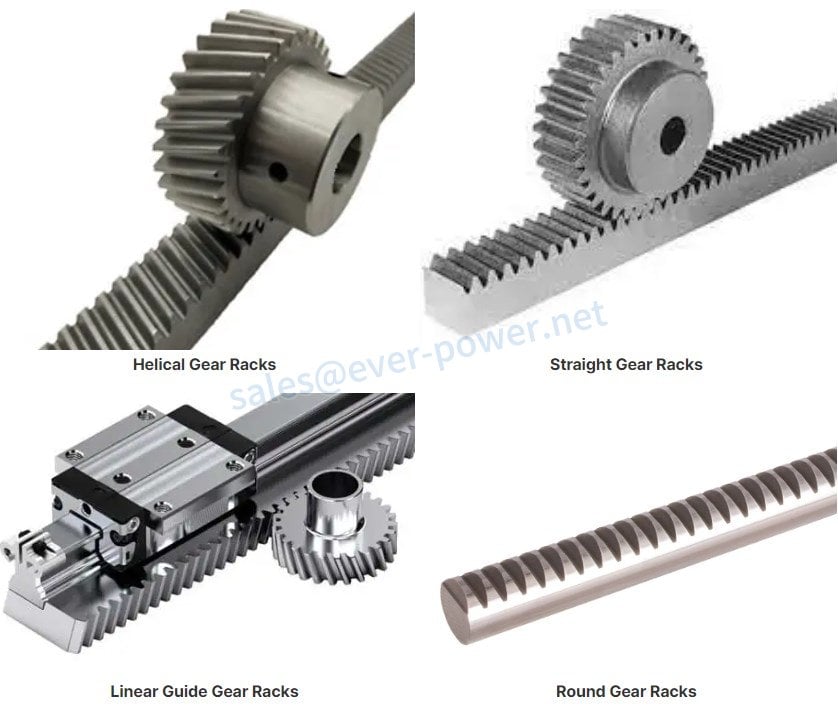
Gear racks come in various types, each suited for different applications. Common types include:
- Spur Gear Racks: Straight teeth that mesh with spur gears. They are commonly used in linear actuators and machinery.
- Helical Gear Racks: Angled teeth that provide smoother and quieter operation. Suitable for high-load applications.
- Curved Gear Racks: Curved design for specialized applications requiring non-linear motion.
- Custom Gear Racks: Tailored to specific requirements for unique applications.
Materials used in gear racks include steel, stainless steel, brass, and polymers. Steel offers high strength, stainless steel provides corrosion resistance, brass has good wear resistance, and polymers are lightweight and resistant to chemicals.

Applications of Gear Racks in Various Industries
- Aerospace: Gear racks are used in aircraft control systems, landing gear mechanisms, and satellite positioning.
- Renewable Energy: Gear racks play a role in solar tracking systems and wind turbine pitch control mechanisms.
- Automotive Industry: Steering systems, seat adjustment mechanisms, and transmission systems utilize gear racks.
- Industrial Machinery: Gear racks are essential in CNC machines, robotics, and automated production lines.
- Medical Devices: Precision gear racks are used in surgical instruments, diagnostic equipment, and patient positioning systems.
Future Development Trends and Opportunities for Gear Rack Products
- Advanced Materials: The development of new materials with enhanced strength, durability, and corrosion resistance will drive innovation in gear rack design.
- Automation and Robotics: Increased demand for automation and robotics in various industries will lead to the need for more precise and reliable gear racks.
- Green Technologies: Renewable energy applications will continue to expand, requiring gear racks for solar and wind energy systems.
- Customization: The trend towards bespoke solutions will drive the development of custom gear racks tailored to specific applications.

Choosing the Right Gear Rack
- Identify Requirements: Determine the load, speed, and environmental conditions the gear rack will be exposed to.
- Material Selection: Choose a material that offers the required strength, durability, and resistance to environmental factors.
- Design Optimization: Ensure the gear rack design meets dimensional accuracy and performance requirements.
- Supplier and After-Sales Service: Select a reputable supplier who offers comprehensive support and after-sales service.
- Cost-Effectiveness: Balance the cost of the gear rack with its performance and longevity.
- Quality Control: Implement strict quality control measures to ensure the gear rack meets all specifications.
Maintaining Gear Racks
- Regular Inspections: Conduct periodic inspections to check for wear, alignment, and lubrication.
- Cleaning and Corrosion Prevention: Keep the gear rack clean and apply anti-corrosion treatments as needed.
- Lubrication and Maintenance: Use appropriate lubricants and maintain proper lubrication levels.
- Replacement of Worn Parts: Replace any worn or damaged parts promptly to prevent further damage.
- Temperature Monitoring: Monitor operating temperatures to prevent overheating and associated damage.
Why Choose Ever Power?
Ever Power is a leading manufacturer and supplier of high-quality gear racks. We pride ourselves on delivering exceptional products and services to our customers. Here are five key reasons to choose Ever Power:
- Extensive Expertise: With years of experience in gear rack manufacturing, we have the technical knowledge and expertise to meet diverse application needs.
- High-Quality Materials: We use only the best materials to ensure our gear racks are durable, reliable, and perform optimally in various environments.
- Customization Options: Our ability to provide custom gear racks tailored to specific requirements sets us apart from the competition.
- Comprehensive Support: We offer full support from design and manufacturing to installation and after-sales service.
- Competitive Pricing: Our products are competitively priced without compromising on quality, making us a cost-effective choice for our customers.

FAQ
- Q: What factors should I consider when choosing a gear rack? A: Consider load capacity, material, dimensional accuracy, environmental conditions, and supplier support.
- Q: How often should I inspect and maintain my gear rack? A: Regular inspections should be conducted based on the operating conditions and usage frequency, typically every few months.
- Q: Can Ever Power provide custom gear racks? A: Yes, Ever Power specializes in providing customized gear racks tailored to specific application requirements.
- Q: What materials are used in Ever Power gear racks? A: We use high-quality materials such as steel, stainless steel, brass, and polymers, depending on the application needs.
- Q: How does Ever Power ensure the quality of its gear racks? A: We implement strict quality control measures throughout the manufacturing process to ensure our gear racks meet all specifications and performance standards.
Author: Dream