gear rack design considerations

Gear Rack Design Considerations and Their Relationship with Gear Racks
Introduction to Gear Rack Design Considerations
Designing a gear rack involves numerous factors that must be meticulously evaluated to ensure optimal performance and longevity. From the choice of materials to the intricacies of gear geometry, various considerations play a crucial role in the final product’s efficiency and durability. Understanding these design elements is essential for engineers and manufacturers aiming to develop high-quality gear racks.
Material Selection
The choice of material significantly influences the gear rack’s performance. Common materials include steel, stainless steel, and nylon. Each material offers specific advantages, such as high strength, corrosion resistance, or low friction properties, catering to different application needs.
Gear Geometry
Gear geometry encompasses the shape and dimensions of the gear teeth. Parameters such as module, pressure angle, and pitch affect the gear’s load-carrying capacity and efficiency. Precise calculations and adherence to standards are essential to achieve desired performance characteristics.
Heat Treatment Processes
Heat treatment processes, such as carburizing, nitriding, and induction hardening, enhance the gear rack’s hardness and wear resistance. The choice of process depends on the application requirements and material properties, ensuring robustness under various operating conditions.
Lubrication Requirements
Proper lubrication reduces friction, minimizes wear, and extends the gear rack’s lifespan. Selecting the appropriate lubricant and establishing a consistent maintenance schedule are crucial for maintaining optimal performance and preventing premature failure.
Load Capacity and Stress Analysis
Analyzing the load capacity and stress distribution within the gear rack is vital for ensuring durability. Finite element analysis (FEA) and other simulation tools help identify potential stress concentrations, allowing for design modifications to enhance strength and reliability.
Precision Manufacturing
High-precision manufacturing techniques, such as CNC machining and gear grinding, ensure tight tolerances and accurate tooth profiles. Precision is paramount for reducing backlash, achieving smooth operation, and maintaining consistent performance over time.
Environmental Considerations
Environmental factors such as temperature, humidity, and chemical exposure can impact the gear rack’s performance. Selecting materials and surface treatments that withstand these conditions is essential for ensuring reliability in harsh environments.
Noise and Vibration Control
Gear racks can generate noise and vibration during operation. Implementing design strategies to minimize these effects, such as optimizing tooth profiles and incorporating damping materials, enhances user comfort and extends equipment life.
Cost-Effectiveness
Balancing performance requirements with cost considerations is crucial. Evaluating the total cost of ownership, including maintenance and potential downtime, helps in selecting the most cost-effective design solution that meets performance criteria.
Gear Rack Design Considerations and Their Relationship with Gear Racks
Design considerations are intrinsic to the development and functionality of gear racks. By carefully evaluating factors such as material selection, gear geometry, and load capacity, engineers can create gear racks that deliver reliable and efficient performance in various applications. The following image illustrates the intricate design of an industrial gear rack.

Performance Characteristics of Gear Racks
Gear racks exhibit several performance characteristics that make them suitable for a wide range of applications. These include:
- High Load Capacity: Gear racks can handle significant loads, making them ideal for heavy-duty applications.
- Precision Movement: They provide accurate and repeatable linear motion, crucial for applications requiring tight tolerances.
- Durability: High-quality materials and proper design ensure long service life under various operating conditions.
- Versatility: Gear racks can be customized to fit specific requirements, allowing for flexibility in design and application.
- Cost-Effectiveness: They offer a cost-effective solution for achieving precise linear motion compared to other mechanisms.
Types of Gear Racks and Their Characteristics
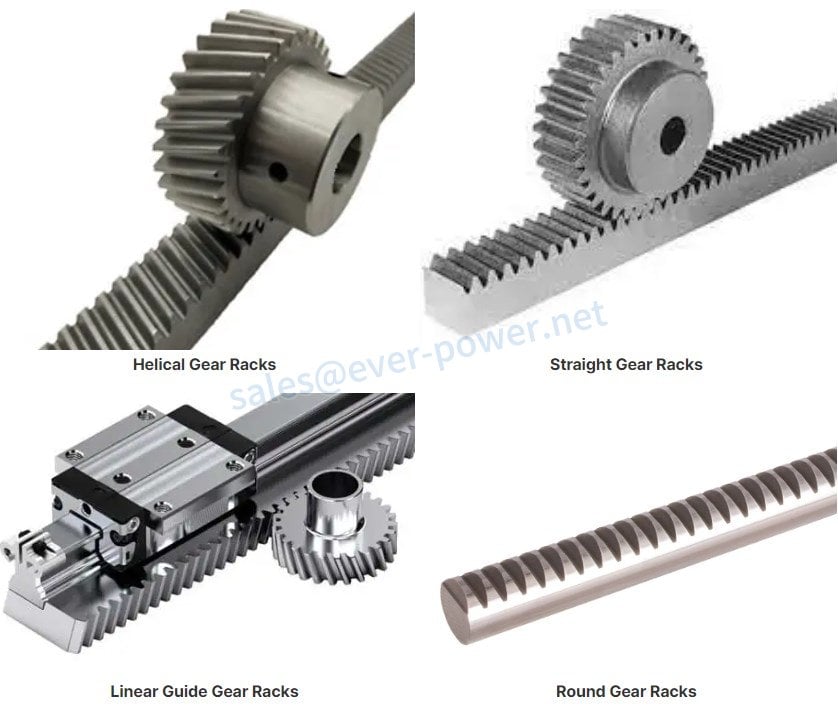
Gear racks come in various types, each with unique characteristics and advantages:
- Spur Gear Racks: Known for their simplicity and efficiency, spur gear racks are suitable for high-speed applications with moderate loads.
- Helical Gear Racks: Offering smoother and quieter operation, helical gear racks are ideal for high-load applications requiring reduced noise levels.
- Nylon Gear Racks: These lightweight racks are resistant to corrosion and provide low friction, making them suitable for applications involving high humidity or chemical exposure.
- Steel Gear Racks: Known for their high strength and durability, steel gear racks are used in heavy-duty applications requiring robust performance.
The following image showcases different types of gear racks used in various applications:

Applications of Gear Racks in Various Industries
Gear racks are integral components in multiple industries due to their versatility and reliability:
- Aerospace Industry: Gear racks enable precise control of aircraft components, ensuring safety and efficiency in critical systems.
- Renewable Energy: They are used in solar tracking systems and wind turbine mechanisms to enhance energy capture and efficiency.
- Automotive Industry: Gear racks are essential in steering systems, providing accurate and responsive control for vehicles.
- Industrial Machinery: They are used in CNC machines and automation systems for precise linear motion control.
- Medical Devices: Gear racks ensure accurate movement and positioning in medical equipment, contributing to reliable and safe operations.
Future Trends and Opportunities in Gear Rack Products
The gear rack market is poised for growth, with several trends and opportunities emerging:
- Advanced Materials: Development of new materials with enhanced properties, such as high-strength composites, will improve performance and durability.
- Automation and Robotics: Increasing demand for automation and robotics will drive the need for precision gear racks in various industries.
- Energy Efficiency: Focus on energy-efficient designs will lead to innovations in gear rack mechanisms, reducing power consumption and environmental impact.
- Customization: Growing demand for customized solutions will encourage manufacturers to offer tailored gear rack designs for specific applications.
- Digitalization: Integration of digital technologies, such as IoT and AI, will enhance monitoring and maintenance of gear rack systems, improving reliability and reducing downtime.

How to Choose the Right Gear Rack
Selecting the appropriate gear rack involves several critical steps:
- Define Requirements: Clearly identify the application requirements, including load capacity, precision, and environmental conditions.
- Material Selection: Choose materials that match the application’s performance criteria, such as strength, corrosion resistance, and weight.
- Design Optimization: Optimize the gear rack design for the specific application, considering factors like gear geometry and heat treatment.
- Supplier and After-Sales Service: Partner with reputable suppliers who offer quality products and reliable after-sales support.
- Cost-Effectiveness: Evaluate the total cost of ownership, balancing initial investment with long-term maintenance and operational costs.
- Quality Control: Ensure rigorous quality control measures are in place to guarantee consistent performance and reliability.
Maintaining Gear Racks
Proper maintenance is essential for ensuring the longevity and performance of gear racks:
- Regular Inspections: Conduct periodic inspections to identify and address any signs of wear or damage.
- Cleaning and Corrosion Prevention: Keep the gear racks clean and apply corrosion inhibitors to protect against environmental damage.
- Lubrication and Maintenance: Ensure proper lubrication to minimize friction and wear, and follow a regular maintenance schedule.
- Replacement of Worn Parts: Replace any worn or damaged components promptly to prevent further damage and ensure optimal performance.
- Temperature Monitoring: Monitor operating temperatures to prevent overheating and ensure the gear rack remains within safe operating limits.
Why Choose Ever Power
Ever Power is a leading manufacturer and supplier of high-quality gear racks, offering a range of products and services to meet diverse industrial needs. Here are five key reasons to choose Ever Power:
- Expertise and Innovation: With extensive experience and a commitment to innovation, we deliver cutting-edge gear rack solutions tailored to your requirements.
- Quality Assurance: Our rigorous quality control processes ensure that every gear rack meets the highest standards of performance and reliability.
- Comprehensive Support: We provide comprehensive support, from initial design consultation to after-sales service, ensuring a seamless customer experience.
- Customization Options: We offer a wide range of customization options to meet specific application needs, providing flexibility and precision.
- Competitive Pricing: Our competitive pricing and cost-effective solutions help you achieve the best value without compromising on quality.

Frequently Asked Questions (FAQs)
- What are the main considerations in gear rack design? Material selection, gear geometry, heat treatment, and load capacity are key considerations.
- How do I choose the right gear rack for my application? Define your requirements, select suitable materials, optimize design, and ensure quality control.
- What maintenance practices are essential for gear racks? Regular inspections, proper lubrication, and prompt replacement of worn parts are essential.
- What types of gear racks are available? Spur gear racks, helical gear racks, nylon gear racks, and steel gear racks are commonly used.
- Why should I choose Ever Power for gear racks? Expertise, quality assurance, comprehensive support, customization options, and competitive pricing make Ever Power the ideal choice.
Author: Dream