gear rack finite element analysis

Gear Rack Finite Element Analysis and Its Relationship with Gear Rack
Introduction to Gear Rack Finite Element Analysis
Finite Element Analysis (FEA) is a computational method used to predict how structures behave under various physical conditions. In the context of gear racks, FEA is employed to analyze stress distribution, deformation, vibration, and other mechanical properties. By simulating different loading conditions, engineers can optimize gear rack designs to ensure durability and efficiency.
Importance of Finite Element Analysis in Gear Rack Design
FEA is crucial in gear rack design as it allows for the prediction of potential failures before physical prototyping. This not only saves time and resources but also enhances the reliability of the gear racks used in various applications. By identifying stress concentrations and optimizing material distribution, FEA contributes to the development of high-performance gear racks.
Key Components of Gear Rack Finite Element Analysis
Several key components are involved in FEA of gear racks. These include the creation of a detailed geometric model, the selection of appropriate material properties, meshing of the model, application of boundary conditions and loads, and performing the simulation. Each step is critical to ensuring accurate and reliable results.
Meshing in Gear Rack Finite Element Analysis
Meshing is the process of discretizing the gear rack model into small elements. This step is vital as the quality of the mesh directly affects the accuracy of the FEA results. Fine meshes with smaller elements provide more detailed results but require more computational resources. Balancing mesh density and computational efficiency is a key consideration in FEA.
Stress Analysis in Gear Racks Using FEA
Stress analysis involves determining the distribution of stresses within the gear rack under various loading conditions. FEA helps engineers identify areas of high stress concentration, which may lead to failure. By understanding stress distribution, engineers can make informed design decisions to enhance the strength and longevity of the gear racks.
Deformation Analysis in Gear Racks
Deformation analysis focuses on predicting how the gear rack will deform under load. This is important for ensuring that the gear rack maintains its functional integrity under operational conditions. Excessive deformation can lead to misalignment and operational issues. FEA helps in designing gear racks that can withstand operational loads without excessive deformation.
Vibration Analysis in Gear Racks
Vibration analysis examines the natural frequencies and modes of vibration of the gear rack. Resonance can lead to significant operational problems and potential failures. By performing vibration analysis, engineers can design gear racks that avoid resonance conditions, ensuring smooth and reliable operation.
Thermal Analysis in Gear Racks
Thermal analysis evaluates the temperature distribution and heat flow within the gear rack. This is particularly important in applications where the gear rack is subjected to varying thermal conditions. Thermal analysis helps in selecting appropriate materials and designing cooling mechanisms to manage thermal stresses and prevent overheating.
Optimizing Gear Rack Design Using FEA
FEA allows for the optimization of gear rack designs by iteratively adjusting parameters and evaluating their effects. This process helps in achieving a balance between strength, weight, and material usage. By optimizing the design, engineers can produce gear racks that meet performance requirements while minimizing costs.
Gear Rack Finite Element Analysis and Gear Rack Relationship
FEA and gear racks are intrinsically linked through the design and development process. FEA provides the tools and insights needed to create high-quality gear racks that meet stringent performance criteria. By leveraging FEA, engineers can ensure that gear racks are robust, reliable, and efficient in their applications.

Gear Rack Performance Characteristics
- Durability: Gear racks are designed to withstand high loads and operational wear, ensuring long service life.
- Precision: High manufacturing standards ensure that gear racks maintain precise alignment and smooth operation.
- Load Capacity: Engineered to handle significant loads without deformation or failure.
- Material Variety: Available in various materials to suit different applications and environmental conditions.
- Versatility: Can be used in a wide range of industrial and mechanical systems.
Types of Gear Racks and Their Characteristics
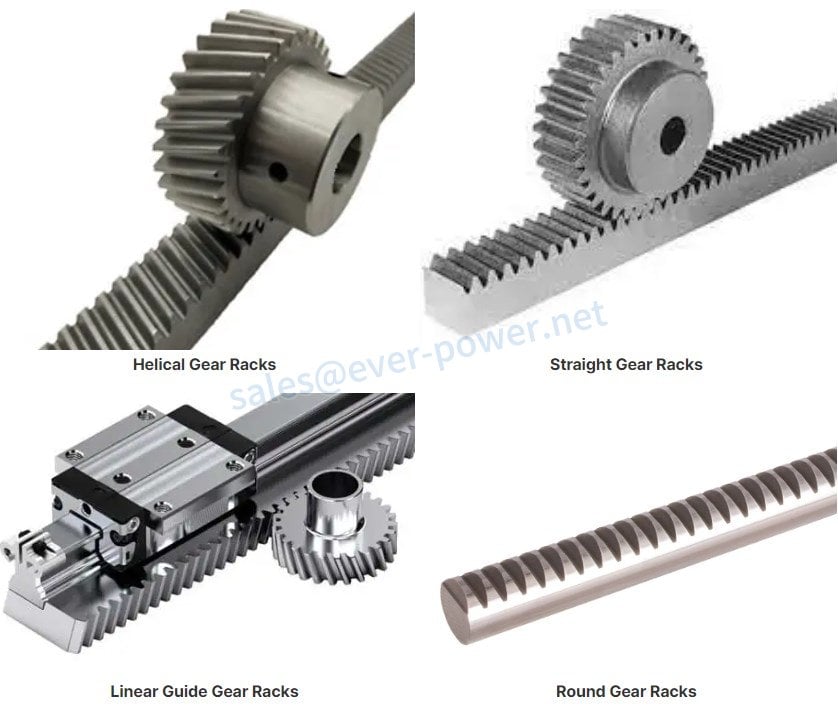
Gear racks come in different types, each suited for specific applications. Common types include:
- Spur Gear Racks: Known for their simplicity and efficiency in transmitting motion.
- Helical Gear Racks: Provide smoother operation and can handle higher loads due to their angled teeth.
- Curved Gear Racks: Used in applications requiring non-linear motion or special alignment.

Applications of Gear Racks in Various Industries
- Aerospace Industry: Gear racks are used in flight control systems and landing gear mechanisms.
- Renewable Energy: Employed in wind turbine pitch control systems and solar tracking systems.
- Automotive Industry: Integral components in steering systems and transmission mechanisms.
- Industrial Machinery: Used in CNC machines, conveyor systems, and automation equipment.
- Medical Machinery: Found in surgical robots and precision medical devices.
Future Trends and Opportunities in Gear Rack Products
- Advanced Materials: Development of new materials to enhance strength and reduce weight.
- Smart Gear Racks: Integration of sensors and IoT for real-time monitoring and predictive maintenance.
- Sustainability: Focus on environmentally friendly manufacturing processes and materials.
- Customization: Increasing demand for customized gear racks to meet specific application needs.
- Global Expansion: Expanding markets in developing regions offering new growth opportunities.

How to Choose the Correct Gear Rack
- Define Requirements: Understand the specific operational needs and performance criteria.
- Material Selection: Choose materials that offer the best balance of strength, durability, and cost.
- Design Optimization: Use FEA and other tools to optimize the gear rack design for maximum efficiency.
- Supplier and After-sales Service: Select reputable suppliers who provide comprehensive support and services.
- Cost-Effectiveness: Evaluate overall value, considering both upfront costs and long-term benefits.
- Quality Control: Ensure rigorous testing and quality control measures are in place.
Maintenance of Gear Racks
- Regular Inspections: Schedule periodic checks to identify wear and potential issues early.
- Cleaning and Corrosion Prevention: Keep gear racks clean and apply protective coatings to prevent rust.
- Lubrication and Care: Use appropriate lubricants to reduce friction and wear.
- Replacing Worn Components: Replace any worn or damaged parts promptly to avoid operational failures.
- Temperature Monitoring: Monitor operating temperatures to prevent overheating and related damage.
Why Choose Ever Power
Ever Power is a leading manufacturer and supplier of high-quality gear racks. Here’s why you should choose us:
- Extensive Experience: Decades of experience in the industry, providing reliable and innovative solutions.
- Quality Assurance: Rigorous quality control processes to ensure every product meets the highest standards.
- Customization: Tailored solutions to meet specific customer requirements and applications.
- Technical Support: Comprehensive technical support and consultation services to assist with product selection and implementation.
- Global Reach: A wide distribution network ensuring timely delivery and support worldwide.

Frequently Asked Questions
- What is Finite Element Analysis (FEA)? FEA is a computational technique used to predict how structures respond to various physical conditions.
- How does FEA benefit gear rack design? FEA helps optimize gear rack designs by predicting stress distribution, deformation, and other mechanical properties.
- What types of gear racks are available? Common types include spur gear racks, helical gear racks, and curved gear racks.
- What industries use gear racks? Gear racks are used in aerospace, renewable energy, automotive, industrial machinery, and medical machinery.
- How can I choose the right gear rack for my application? Consider factors such as operational requirements, material selection, design optimization, supplier reputation, cost-effectiveness, and quality control.
Author: Dream