gear rack in industrial automation

Gear Rack in Industrial Automation: Enhancing Efficiency in Modern Machinery
Introduction to Gear Rack in Industrial Automation
Gear racks are integral components in the field of industrial automation. They are used to convert rotational motion into linear motion, providing a versatile and reliable solution for various industrial applications. The design and precision of gear racks directly influence the efficiency and performance of automated systems, making them essential for modern manufacturing processes.
The Role of Gear Rack in Automation Systems
In automation systems, gear racks play a crucial role in achieving precise linear movement. They are often paired with pinions to create a rack-and-pinion mechanism, which is widely used in CNC machines, robotic arms, and other automated machinery. The accuracy and durability of gear racks ensure that these systems can operate efficiently and consistently.
Informational Connection Between Gear Rack and Automation
The informational connection between gear racks and automation lies in their ability to provide accurate and repeatable linear motion. This capability is fundamental for the automation of tasks that require precise positioning, such as cutting, welding, and assembly operations. Understanding the specifications and performance characteristics of gear racks is essential for designing and implementing effective automation solutions.

Performance Characteristics of Gear Racks
- High Load Capacity: Gear racks are designed to handle significant loads, making them suitable for heavy-duty industrial applications.
- Precision Engineering: The precision of gear racks ensures accurate linear motion, which is critical for tasks requiring high levels of accuracy.
- Durability: Made from robust materials, gear racks can withstand harsh industrial environments and long-term use.
- Versatility: Gear racks can be customized to fit a wide range of applications, from simple mechanisms to complex automation systems.
- Low Maintenance: Properly designed gear racks require minimal maintenance, reducing downtime and operational costs.
Types of Gear Racks and Their Properties
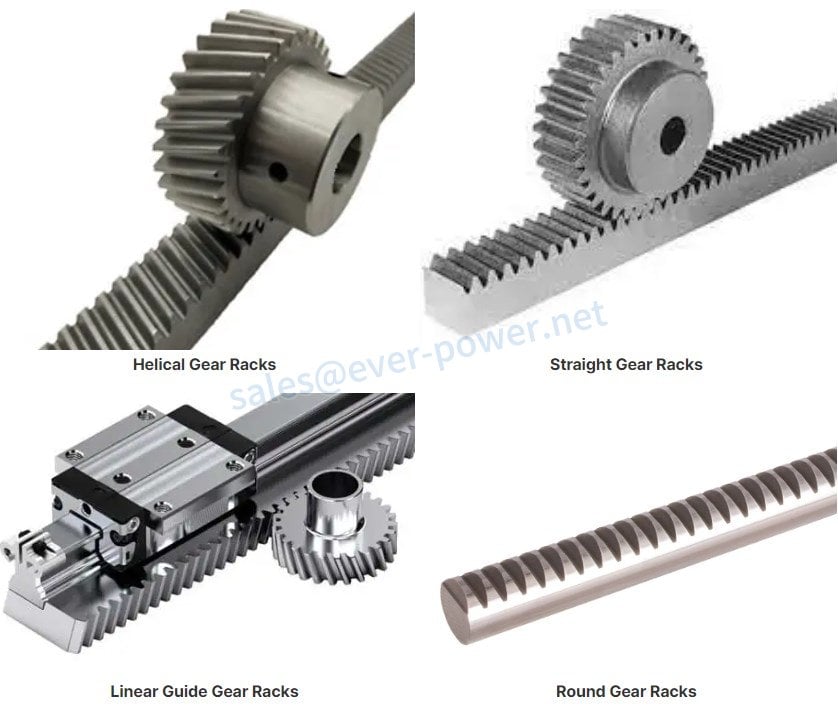
Gear racks come in various types, each with unique properties tailored to specific applications:
- Spur Gear Racks: Known for their simplicity and efficiency, spur gear racks are commonly used in straightforward applications.
- Helical Gear Racks: These racks offer smoother and quieter operation due to their angled teeth, making them ideal for high-speed applications.
- Curved Gear Racks: Designed for applications requiring curved motion paths, such as in circular or semi-circular movements.
- Steel Gear Racks: Steel gear racks provide high strength and durability, suitable for heavy-duty industrial use.
- Nylon Gear Racks: Nylon gear racks are lightweight and offer good electrical insulation, making them suitable for specific applications where these properties are advantageous.

Applications of Gear Racks in Various Industries
Gear racks are utilized across multiple industries due to their versatility and reliability:
- Aerospace Industry: Gear racks are used in aircraft control systems and landing gear mechanisms to ensure precise and reliable motion control.
- Renewable Energy: In wind turbines, gear racks help in adjusting the blade pitch and yaw, improving the efficiency of energy production.
- Automotive Industry: Steering systems in vehicles use gear racks for accurate and responsive control, enhancing driving safety and performance.
- Industrial Machinery: Gear racks are essential in CNC machines and automated assembly lines for precise linear movements and positioning.
- Medical Equipment: In medical devices, gear racks facilitate precise movements required for surgical robots and patient positioning systems.
Future Trends and Opportunities for Gear Racks
The future of gear racks in industrial automation is promising, with several trends and opportunities emerging:
- Increased Automation: As industries continue to adopt automation, the demand for high-precision gear racks will rise, driving innovations in design and materials.
- Advanced Materials: The development of new materials, such as composite and advanced alloys, will enhance the performance and durability of gear racks.
- Customization: Custom-designed gear racks will become more prevalent, catering to specific application needs and improving overall system efficiency.
- Integration with IoT: Gear racks integrated with IoT technology will enable real-time monitoring and predictive maintenance, reducing downtime and increasing operational efficiency.
- Sustainability: The push for sustainable manufacturing will lead to the development of eco-friendly gear racks with reduced environmental impact.

Choosing the Right Gear Rack
Selecting the appropriate gear rack for your application involves several considerations:
- Define Your Requirements: Understand the specific needs of your application, including load capacity, precision, and environmental conditions.
- Material Selection: Choose the right material based on the operational requirements, such as steel for strength or nylon for electrical insulation.
- Design Optimization: Work with engineers to optimize the gear rack design for enhanced performance and efficiency.
- Supplier and After-Sales Service: Partner with reputable suppliers who offer comprehensive after-sales support and services.
- Cost-Effectiveness: Balance the initial cost with the long-term benefits and maintenance requirements to ensure overall cost-effectiveness.
- Quality Control: Ensure that the gear racks meet stringent quality standards to guarantee reliability and durability.
Maintenance of Gear Racks
Proper maintenance is essential for the longevity and performance of gear racks:
- Regular Inspections: Conduct periodic inspections to detect any signs of wear or damage early.
- Cleaning and Corrosion Protection: Keep gear racks clean and apply anti-corrosive coatings to protect them from rust and degradation.
- Lubrication: Regularly lubricate gear racks to minimize friction and wear.
- Replacement of Worn Parts: Timely replace any worn or damaged components to prevent further damage and ensure optimal performance.
- Temperature Monitoring: Monitor the operating temperature to prevent overheating, which can lead to premature failure.
Why Choose Ever Power?
Ever Power specializes in the production and sale of high-quality gear racks. Here are several reasons to choose our products:
- Exceptional Quality: We adhere to stringent quality control measures to ensure the reliability and durability of our gear racks.
- Innovative Designs: Our gear racks are engineered with the latest technology and design optimizations to meet diverse application needs.
- Comprehensive Support: We offer extensive after-sales support, including technical assistance and maintenance guidance.
- Cost-Effective Solutions: Our gear racks provide excellent value for money, balancing initial costs with long-term performance benefits.
- Industry Expertise: With years of experience in the industry, we understand the unique requirements of various applications and deliver tailored solutions.

Frequently Asked Questions
- What is a gear rack? A gear rack is a linear component that works with a pinion to convert rotational motion into linear motion.
- How are gear racks used in industrial automation? Gear racks are used in CNC machines, robotic arms, and other automated systems to achieve precise linear movement.
- What materials are commonly used for gear racks? Gear racks are typically made from steel, nylon, and other durable materials depending on the application requirements.
- How can I select the right gear rack for my application? Consider factors such as load capacity, material properties, design requirements, and supplier reliability when selecting a gear rack.
- What maintenance is required for gear racks? Regular inspections, cleaning, lubrication, and replacement of worn parts are essential for maintaining gear racks.
Author: Dream