gear rack manufacturing materials

Gear Rack Manufacturing Materials And Their Relationship With Gear Racks
Gear racks play a vital role in many mechanical applications, from industrial machinery to automotive systems. The choice of manufacturing materials for gear racks is crucial to their performance, durability, and application suitability. This article delves into the various materials used in gear rack manufacturing and their influence on gear rack characteristics.
Introduction to Gear Rack Manufacturing Materials
Gear racks are typically made from a variety of materials, each offering unique properties and advantages. Common materials include steel, aluminum, plastic, and composites. The selection of material depends on factors such as load capacity, environmental conditions, and required precision.
Steel Gear Racks
Steel is a popular choice for gear rack manufacturing due to its high strength and durability. It is capable of withstanding significant loads and harsh operating conditions. Heat-treated and alloyed variants of steel can enhance wear resistance and longevity.
Aluminum Gear Racks
Aluminum gear racks are known for their lightweight and corrosion-resistant properties. They are often used in applications where weight reduction is essential, such as aerospace and automotive industries. However, aluminum is not as strong as steel and may not be suitable for high-load applications.
Plastic Gear Racks
Plastic gear racks, typically made from materials like nylon or acetal, offer excellent wear resistance and low friction. They are ideal for low-load applications and environments where noise reduction is important. Plastic gear racks are also resistant to many chemicals, adding to their versatility.
Composite Gear Racks
Composite materials combine the benefits of multiple materials, providing a balance of strength, weight, and resistance to environmental factors. These materials are often used in specialized applications where traditional materials may fall short.
Factors Influencing Material Selection
The choice of material for gear rack manufacturing depends on several key factors, including load requirements, environmental conditions, cost considerations, and the specific application. Understanding these factors helps in selecting the most appropriate material for optimal performance and longevity.
Relationship Between Gear Rack Manufacturing Materials and Gear Racks
Choosing the right material for gear racks directly impacts their performance, durability, and applicability. High-strength materials like steel provide exceptional load-bearing capacity, making them suitable for heavy-duty industrial applications. In contrast, lighter materials like aluminum and plastic are preferred in applications where weight and corrosion resistance are critical, such as in aerospace and automotive industries.

Performance Characteristics of Gear Racks
- Load Capacity: Gear racks made from high-strength materials like steel can handle significant loads, making them suitable for heavy-duty applications.
- Durability: The lifespan of a gear rack is influenced by its material. Durable materials resist wear and tear, extending the gear rack’s service life.
- Corrosion Resistance: Materials like aluminum and certain plastics offer excellent resistance to corrosion, making them ideal for environments with high moisture or chemical exposure.
- Weight: Lightweight materials like aluminum and plastic are advantageous in applications where reducing weight is crucial, such as in aerospace and automotive industries.
- Noise Reduction: Plastic gear racks are preferred in applications where noise reduction is important, as they generate less noise compared to metal gear racks.
Types and Characteristics of Gear Racks

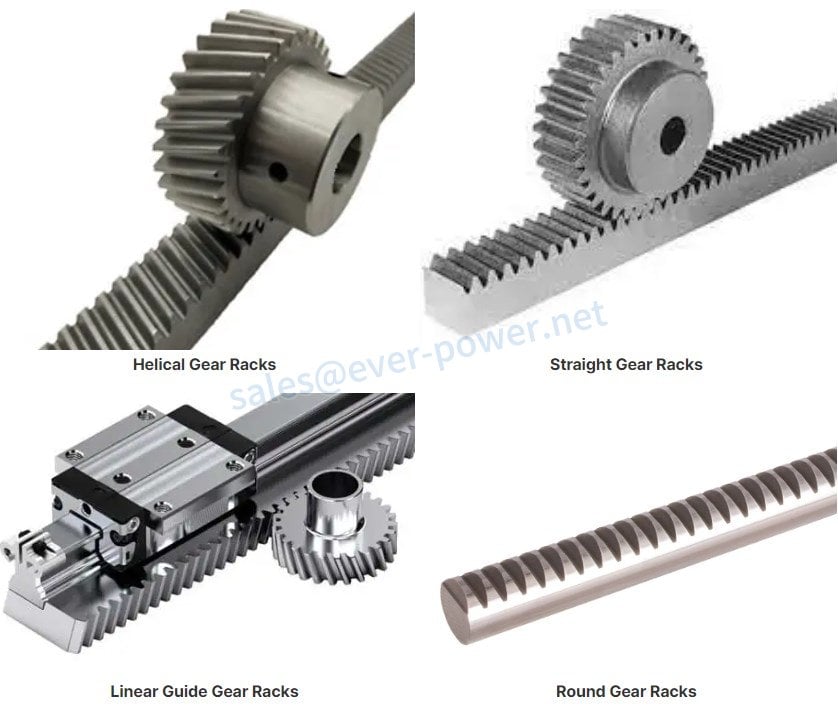
Gear racks come in various types, each designed for specific applications and requirements. The primary types of gear racks include:
- Straight Gear Racks: These are the most common type and are used in applications requiring linear motion.
- Helical Gear Racks: Helical gear racks provide smoother and quieter operation due to their angled teeth.
- Curved Gear Racks: Used in specific applications where a curved path of motion is required, such as in robotics and automation systems.
Different materials used in gear racks offer various advantages:
- Steel: High strength, wear resistance, suitable for heavy-duty applications.
- Aluminum: Lightweight, corrosion-resistant, ideal for aerospace and automotive applications.
- Plastic: Low friction, noise reduction, chemical resistance, suitable for low-load applications.
- Composite: Balanced properties of strength, weight, and environmental resistance for specialized applications.
Applications of Gear Racks
Gear racks are utilized in various industries, each benefiting from their unique properties and capabilities:
- Aerospace Industry: Gear racks made from lightweight and corrosion-resistant materials like aluminum are used in aircraft control systems and other aerospace components.
- Renewable Energy: Durable and high-strength gear racks are essential in wind turbines and solar tracking systems.
- Automotive Industry: Gear racks are integral in steering mechanisms and other automotive systems, where precision and durability are crucial.
- Industrial Machinery: Heavy-duty gear racks made from steel are used in various industrial machines, providing reliable performance under significant loads.
- Medical Devices: Precision gear racks are used in medical equipment, where accuracy and reliability are paramount.
Future Trends and Opportunities in Gear Rack Manufacturing

As technology advances, the gear rack manufacturing industry is poised for several exciting developments:
- Advanced Materials: Research into new materials and composites will lead to gear racks with enhanced properties, such as higher strength-to-weight ratios and improved resistance to environmental factors.
- 3D Printing: Additive manufacturing techniques will enable more complex and customized gear rack designs, reducing production times and costs.
- Automation: Increased automation in manufacturing processes will improve precision and consistency in gear rack production.
- Smart Gear Racks: Integration of sensors and IoT technology will allow real-time monitoring of gear rack performance, enabling predictive maintenance and reducing downtime.
- Sustainable Manufacturing: The industry will continue to focus on sustainability, with efforts to reduce waste, energy consumption, and the environmental impact of production processes.
Choosing the Right Gear Rack
Selecting the appropriate gear rack involves several considerations:
- Clarify Requirements: Understand the specific requirements of your application, including load capacity, precision, and operating environment.
- Material Selection: Choose the material that best meets your needs, considering factors like strength, weight, and corrosion resistance.
- Design Optimization: Ensure the gear rack design is optimized for your application, taking into account factors such as tooth profile and pitch.
- Supplier and After-Sales Service: Select a reputable supplier who offers reliable after-sales support and maintenance services.
- Cost-Effectiveness: Balance the cost of the gear rack with its performance and longevity to ensure a cost-effective solution.
- Quality Control: Implement stringent quality control measures to ensure the gear racks meet your specifications and performance standards.
Maintaining Gear Racks
Proper maintenance is crucial to ensuring the longevity and performance of gear racks. Here are some essential maintenance practices:
- Regular Inspections: Conduct regular inspections to identify any signs of wear, damage, or misalignment.
- Cleaning and Corrosion Prevention: Keep gear racks clean and apply appropriate coatings to prevent corrosion.
- Lubrication and Care: Use suitable lubricants to reduce friction and wear on the gear teeth.
- Replace Worn Parts: Timely replacement of worn or damaged gear racks prevents further damage and maintains performance.
- Temperature Monitoring: Monitor the operating temperature to prevent overheating and damage to the gear racks.
Why Choose Ever Power
Ever Power is a leading manufacturer and supplier of high-quality gear racks, offering unparalleled expertise and customer support. Here are some reasons to choose Ever Power:
- Quality Products: Our gear racks are manufactured to the highest standards, ensuring superior performance and durability.
- Wide Range of Materials: We offer gear racks made from various materials, including steel, aluminum, plastic, and composites, to meet diverse application needs.
- Customization Options: We provide customized solutions to meet specific requirements, ensuring optimal performance for your application.
- Experienced Team: Our team of experts has extensive experience in gear rack manufacturing, providing valuable insights and recommendations.
- Comprehensive Support: We offer reliable after-sales support, including maintenance services and technical assistance, ensuring long-term satisfaction.

Frequently Asked Questions
- What factors should I consider when selecting a gear rack? Consider load capacity, material properties, environmental conditions, and specific application requirements.
- How can I ensure the longevity of my gear rack? Regular maintenance, proper lubrication, and timely replacement of worn parts are key to ensuring the longevity of gear racks.
- What materials are commonly used in gear rack manufacturing? Common materials include steel, aluminum, plastic, and composites, each offering unique advantages.
- Can gear racks be customized for specific applications? Yes, gear racks can be customized in terms of material, design, and dimensions to meet specific application needs.
- Why should I choose Ever Power for my gear rack needs? Ever Power offers high-quality products, a wide range of materials, customization options, experienced team, and comprehensive support.
Author: Dream