gear rack manufacturing techniques

Gear Rack Manufacturing Techniques and Gear Rack
Introduction to Gear Rack Manufacturing Techniques
Gear racks are integral components in various mechanical systems, crucial for converting rotational motion into linear motion. The manufacturing techniques of gear racks are sophisticated and require precision engineering. This article delves into detailed gear rack manufacturing techniques and their relationship with gear racks, providing insights into their applications and future trends.
Material Selection for Gear Racks
The choice of material is paramount in gear rack manufacturing. Materials like steel, aluminum, and plastic are commonly used, each offering distinct advantages. Steel provides strength and durability, aluminum offers lightweight properties, and plastic is cost-effective and resistant to corrosion.
Precision Machining Processes
Precision machining involves processes such as milling, hobbing, and grinding. These techniques ensure the gear teeth are accurately shaped and sized for optimal performance. Hobbing is particularly important for producing high-precision gear racks.
Heat Treatment Procedures
Heat treatment is employed to enhance the mechanical properties of gear racks. Processes such as carburizing, quenching, and tempering increase the hardness and wear resistance of the gear racks, ensuring longevity and reliable performance.
Quality Control and Inspection
Quality control is critical in gear rack manufacturing. Techniques like coordinate measuring machines (CMM) and gear inspection machines are used to verify the accuracy and conformity of the gear racks to specified standards. This ensures that the gear racks meet the necessary quality requirements.
Surface Finishing Techniques
Surface finishing techniques such as grinding, polishing, and coating improve the gear rack’s surface quality. These techniques reduce friction, enhance appearance, and provide protection against corrosion and wear.
Advanced Manufacturing Technologies
Adopting advanced manufacturing technologies like CNC machining and additive manufacturing has revolutionized gear rack production. These technologies offer higher precision, flexibility, and efficiency in production, catering to complex designs and faster turnaround times.
Gear Rack Manufacturing Techniques and Gear Rack Relationship
Gear rack manufacturing techniques are intrinsically linked to the performance and application of gear racks. Precise manufacturing techniques ensure that gear racks operate smoothly and efficiently in various mechanical systems. The accuracy of gear teeth and the durability of materials directly impact the gear rack’s effectiveness.

Performance Characteristics of Gear Racks
- High Precision: Gear racks manufactured with precision machining techniques ensure high accuracy in motion transmission.
- Durability: Using high-quality materials and heat treatment processes significantly enhance the durability of gear racks.
- Load Capacity: Gear racks are designed to handle substantial loads, making them suitable for heavy-duty applications.
- Efficiency: The efficient design of gear racks minimizes energy loss during motion transmission.
- Versatility: Gear racks are versatile and can be customized for various applications in different industries.
Types of Gear Racks and Their Characteristics
There are various types of gear racks, each designed for specific applications:
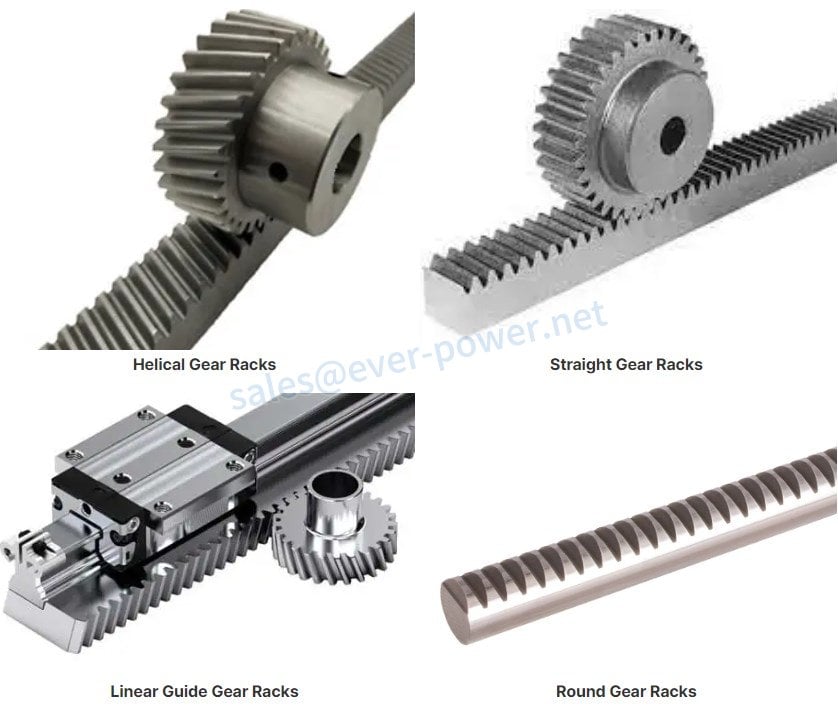
- Spur Gear Racks: Known for their simplicity and efficiency, ideal for general-purpose applications.
- Helical Gear Racks: Feature angled teeth for smoother and quieter operation, suitable for high-speed applications.
- Curved Gear Racks: Designed for applications requiring precise directional changes, commonly used in steering mechanisms.
Different materials used in gear rack manufacturing also offer unique advantages:
- Steel Gear Racks: Provide superior strength and resistance to wear and tear.
- Aluminum Gear Racks: Lightweight and resistant to corrosion, ideal for aerospace and automotive industries.
- Plastic Gear Racks: Cost-effective and resistant to chemicals, suitable for medical and food processing applications.

Applications of Gear Racks in Various Industries
- Aerospace Industry: Used in aircraft control systems and satellite positioning mechanisms.
- Renewable Energy: Integral components in wind turbine control systems and solar panel tracking systems.
- Automotive Industry: Essential in steering systems and electric vehicle drive mechanisms.
- Industrial Machinery: Used in CNC machines, robotic arms, and conveyor systems.
- Medical Equipment: Critical in surgical robots and diagnostic machinery for precise movements.
Future Trends and Opportunities in Gear Rack Products
The future of gear rack products is promising, with several trends and opportunities on the horizon:
- Integration of Smart Technologies: Implementing IoT and sensor technologies for predictive maintenance and real-time monitoring.
- Adoption of Sustainable Materials: Using eco-friendly materials and manufacturing processes to reduce environmental impact.
- Customization and Personalization: Increasing demand for customized gear racks tailored to specific applications and requirements.
- Automation in Manufacturing: Utilizing advanced robotics and AI-driven processes for higher efficiency and precision.
- Global Market Expansion: Exploring new markets and applications, particularly in emerging economies.

Choosing the Right Gear Rack
Selecting the appropriate gear rack involves several considerations:
- Define Requirements: Clearly specify the application requirements, including load capacity, precision, and environmental conditions.
- Material Selection: Choose the material based on the application needs, considering factors like strength, weight, and cost.
- Design Optimization: Ensure the gear rack design is optimized for performance and efficiency, taking into account gear teeth geometry and surface finishing.
- Supplier and After-Sales Service: Opt for reliable suppliers offering comprehensive after-sales support and warranty services.
- Cost-Efficiency: Balance the cost with quality and performance, ensuring the chosen gear rack offers the best value for money.
- Quality Control: Prioritize gear racks that adhere to stringent quality control standards and certifications.
Maintenance of Gear Racks
Proper maintenance is essential to ensure the longevity and performance of gear racks:
- Regular Inspections: Conduct periodic inspections to identify and address wear and damage early on.
- Cleaning and Corrosion Protection: Keep gear racks clean and apply anti-corrosion treatments to prevent rust and degradation.
- Lubrication and Care: Regularly lubricate gear racks to reduce friction and wear, ensuring smooth operation.
- Replacement of Worn Parts: Timely replacement of worn or damaged components to maintain optimal performance.
- Temperature Monitoring: Monitor operating temperatures to prevent overheating and thermal damage.
Why Choose Ever Power?
Ever Power is a leading manufacturer and supplier of high-quality gear racks. Choosing Ever Power for your gear rack needs offers several advantages:
- Expertise: With years of experience in gear rack manufacturing, we offer unparalleled expertise and technical knowledge.
- High-Quality Products: Our gear racks are manufactured to the highest standards, ensuring superior performance and durability.
- Customization: We offer customized solutions to meet specific application requirements, ensuring the perfect fit for your needs.
- Comprehensive Support: From design to after-sales service, we provide comprehensive support to ensure customer satisfaction.
- Competitive Pricing: We offer competitive pricing without compromising on quality, providing excellent value for money.

Frequently Asked Questions
- What materials are used in gear rack manufacturing?
- How do you ensure the quality of gear racks?
- Can gear racks be customized for specific applications?
- What are the maintenance requirements for gear racks?
- What industries commonly use gear racks?
Author: Dream