gear rack operational temperature

Gear Rack Operational Temperature and Gear Rack Relationship
Introduction to Gear Rack Operational Temperature
Understanding the operational temperature of gear racks is paramount for ensuring their longevity and performance. Gear racks, which are integral components in various mechanical systems, operate optimally within specific temperature ranges. Deviations from these ranges can significantly impact their functionality and lifespan.
What is Gear Rack Operational Temperature?
Gear rack operational temperature refers to the range of temperatures within which a gear rack can function effectively without suffering from excessive wear or failure. This temperature range is dictated by the materials used in the gear rack’s construction and the environmental conditions it is exposed to during operation.
Materials and Their Impact on Operational Temperature
The material composition of gear racks plays a crucial role in determining their operational temperature ranges. Different materials have varying thermal properties, which influence their ability to withstand high or low temperatures without degrading.
Steel Gear Racks
Steel gear racks are known for their strength and durability. They can operate effectively in a broad temperature range, typically from -20°C to 120°C. The high thermal conductivity of steel allows it to dissipate heat efficiently, maintaining structural integrity under strenuous conditions.
Plastic Gear Racks
Plastic gear racks, such as those made from nylon, have lower operational temperature limits compared to steel. They usually function well between -30°C and 80°C. Their lightweight nature and resistance to corrosion make them ideal for specific applications, although they may soften at higher temperatures.
Operational Temperature and Gear Rack Performance
Maintaining the operational temperature within the specified range is essential for ensuring the gear rack’s performance. Excessive heat can cause thermal expansion, leading to misalignment and increased wear. Conversely, extremely low temperatures can make materials brittle, increasing the risk of fractures.
Heat Management Systems
Implementing heat management systems, such as cooling and lubrication, can help maintain optimal operational temperatures. These systems aid in dissipating excess heat generated during operation, thereby preventing thermal overload and extending the gear rack’s lifespan.
Informational Relationship Between Gear Rack and Operational Temperature
The relationship between operational temperature and gear rack performance is informational, providing critical insights into the maintenance and optimization of mechanical systems. Understanding this relationship aids in the selection of appropriate gear racks for specific applications, ensuring efficiency and reliability.

Performance Characteristics of Gear Racks
Precision
Gear racks are manufactured to high precision standards, ensuring accurate and consistent motion transmission. This characteristic is vital in applications requiring exact positioning and alignment.
Durability
Constructed from robust materials, gear racks are designed to withstand significant stress and operational loads. Their durability ensures long-term performance and reliability.
Versatility
Gear racks are versatile components used in a wide range of applications, from automotive steering systems to industrial machinery. Their adaptability to different environments and requirements makes them indispensable in mechanical design.
Noise Reduction
High-quality gear racks are engineered to minimize operational noise. This feature is particularly important in environments where noise control is critical, such as medical and aerospace industries.
Types of Gear Racks and Their Properties
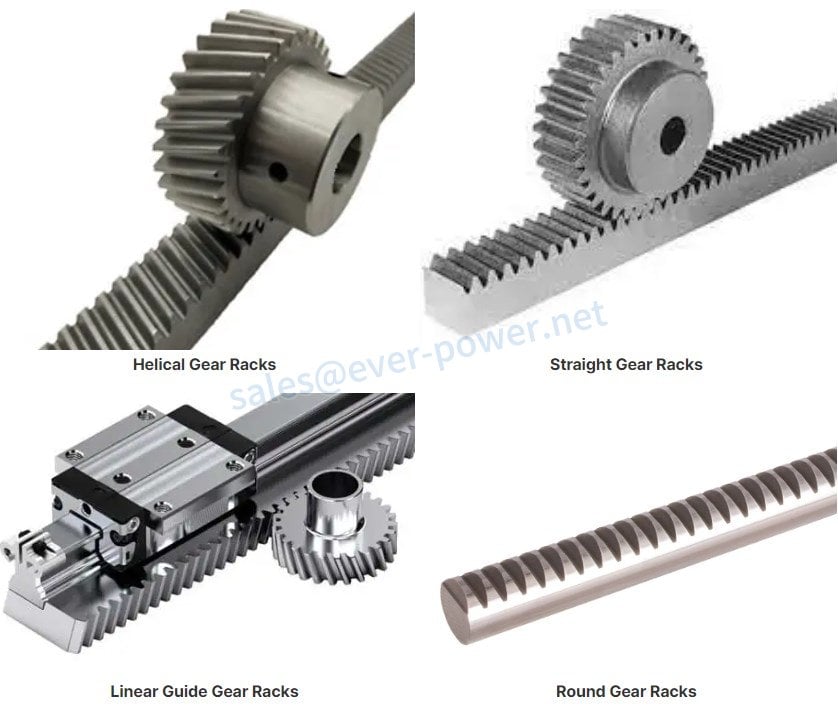
Gear racks are available in various types, each designed to meet specific operational needs. Understanding the different types and their properties is essential for selecting the right gear rack for your application.

Standard Gear Racks
Standard gear racks are the most commonly used type, suitable for general-purpose applications. They offer a balance between cost, durability, and performance.
Helical Gear Racks
Helical gear racks feature angled teeth, which provide smoother and quieter operation compared to straight-cut gears. This type is ideal for high-speed applications and environments where noise reduction is crucial.
Curved Gear Racks
Curved gear racks are designed for applications requiring non-linear motion. They are often used in specialized machinery where conventional straight gear racks would be unsuitable.
Plastic Gear Racks
Plastic gear racks, typically made from materials like nylon, offer advantages such as lightweight, corrosion resistance, and reduced noise. However, they have lower operational temperature limits and are less durable than metal gear racks.
Applications of Gear Racks Across Various Industries
Gear racks are pivotal components in numerous industries, contributing to the efficiency and functionality of mechanical systems.
Aerospace Industry
- Flight Control Systems: Gear racks ensure precise movement of control surfaces.
- Landing Gear: They facilitate smooth extension and retraction of landing gear assemblies.
Renewable Energy
- Solar Tracking: Gear racks enable accurate positioning of solar panels to maximize energy capture.
- Wind Turbines: They assist in the adjustment of turbine blades for optimal performance.
Automotive Industry
- Steering Mechanisms: Gear racks are integral to the functionality of power steering systems.
- Transmission Systems: They contribute to the smooth operation of gear changes in automatic transmissions.
Industrial Machinery
- Robotics: Gear racks enable precise motion control in robotic arms and assemblies.
- CNC Machines: They provide accurate positioning for cutting and milling operations.
Medical Machinery
- Imaging Equipment: Gear racks ensure the precise movement of imaging components.
- Surgical Robots: They contribute to the accuracy and reliability of robotic surgical systems.
Future Trends and Opportunities for Gear Racks
The gear rack industry is poised for significant advancements, driven by technological innovations and evolving industrial needs.
Smart Manufacturing
Integration of IoT and AI technologies in gear rack manufacturing processes will enhance precision, efficiency, and customization capabilities.
Material Innovations
Development of new materials with superior thermal, mechanical, and chemical properties will expand the operational capabilities of gear racks.
Sustainability
Emphasis on environmentally friendly manufacturing practices and materials will drive the adoption of sustainable gear racks in various industries.
Global Expansion
Growing industrialization in emerging markets will create new opportunities for gear rack manufacturers, fostering global expansion and collaboration.

How to Choose the Right Gear Rack
Selecting the appropriate gear rack for your application involves several considerations to ensure optimal performance and cost-effectiveness.
Define Your Requirements
Clearly outline the operational parameters and performance expectations of your application to guide your selection process.
Material Selection
Choose a material that offers the desired balance of strength, thermal resistance, and corrosion resistance based on your application’s needs.
Design Optimization
Consider the design features that will enhance performance, such as tooth profile, pitch, and helix angle. Custom designs may be necessary for specialized applications.
Supplier and After-Sales Service
Select a reputable supplier with a proven track record of quality and reliability. Ensure they offer comprehensive after-sales support, including maintenance and repair services.
Cost-Benefit Analysis
Evaluate the total cost of ownership, including initial investment, maintenance, and potential downtime costs, to ensure the chosen gear rack offers the best value.
Quality Control
Ensure the gear rack meets stringent quality standards and undergoes thorough testing to guarantee its performance and durability.
Maintaining Your Gear Rack
Proper maintenance is crucial for extending the lifespan and ensuring the reliability of your gear rack.
Regular Inspections
Conduct routine inspections to identify and address any signs of wear, misalignment, or damage before they escalate into major issues.
Cleaning and Corrosion Prevention
Keep the gear rack clean and free from contaminants. Apply protective coatings to prevent corrosion, especially in harsh environments.
Lubrication and Maintenance
Ensure proper lubrication to reduce friction and wear. Use the recommended lubricants and apply them at appropriate intervals.
Replacing Worn Components
Timely replacement of worn or damaged components is essential to maintain optimal performance and prevent system failures.
Temperature Monitoring
Monitor the operational temperature to detect any deviations from the recommended range. Implement corrective measures to maintain optimal conditions.
Why Choose Ever Power
At Ever Power, we specialize in manufacturing and supplying high-quality gear racks designed to meet diverse industrial needs. Here are some reasons to choose our products:

1. Exceptional Quality
Our gear racks are produced using advanced manufacturing techniques and high-grade materials, ensuring superior quality and reliability.
2. Customization Options
We offer customized gear rack solutions tailored to meet specific operational requirements, providing flexibility and adaptability for various applications.
3. Comprehensive Support
Our dedicated support team provides expert guidance and after-sales service to ensure your gear racks perform optimally throughout their lifespan.
4. Competitive Pricing
We provide cost-effective solutions without compromising on quality, offering the best value for your investment.
5. Global Reach
With a robust distribution network, we deliver our products to clients worldwide, ensuring timely and efficient service.
Q&A
Q1: What is the importance of operational temperature in gear racks?
A1: Operational temperature is crucial as it affects the durability and performance of gear racks. Maintaining the right temperature prevents wear and ensures longevity.
Q2: How do materials impact the operational temperature of gear racks?
A2: Different materials have distinct thermal properties, influencing their ability to withstand temperature variations without degrading.
Q3: What types of gear racks are available?
A3: Common types include standard, helical, curved, and plastic gear racks, each offering unique advantages for specific applications.
Q4: How can I ensure I choose the right gear rack for my application?
A4: Define your requirements, select appropriate materials, optimize design, choose a reputable supplier, conduct a cost-benefit analysis, and ensure quality control.
Q5: What maintenance practices are essential for gear racks?
A5: Regular inspections, cleaning, lubrication, replacing worn components, and temperature monitoring are essential to maintain optimal performance and longevity.
Author: Dream