gear rack quality control

Gear Rack Quality Control: Ensuring Precision and Reliability
Introduction to Gear Rack Quality Control
Gear rack quality control is a critical process that ensures the precision, reliability, and longevity of gear racks used in various mechanical applications. Quality control in gear rack manufacturing involves rigorous testing and inspection procedures to guarantee that each gear rack meets stringent industry standards and performs optimally under various conditions. Understanding the importance of gear rack quality control can help manufacturers produce superior products and help consumers make informed decisions when purchasing gear racks.
The Relationship Between Gear Rack Quality Control and Gear Rack Performance
Quality control is intrinsically linked to the performance of gear racks. By implementing thorough quality control measures, manufacturers can identify and mitigate potential defects that could compromise the efficiency and durability of gear racks. This relationship ensures that gear racks operate smoothly, reducing the risk of mechanical failure and extending the lifespan of the equipment they are used in.

Key Features of Gear Racks
- High Precision: Gear racks are engineered to precise specifications to ensure smooth and accurate motion transmission.
- Durability: Made from high-quality materials, gear racks are designed to withstand heavy loads and harsh operating conditions.
- Versatility: Gear racks can be used in a wide range of applications, from automotive to industrial machinery.
- Ease of Installation: Gear racks are designed for straightforward installation, minimizing downtime and ensuring quick integration into existing systems.
- Maintenance-Friendly: The design of gear racks allows for easy maintenance and replacement of worn parts, extending the overall lifespan of the equipment.
Types of Gear Racks and Their Characteristics
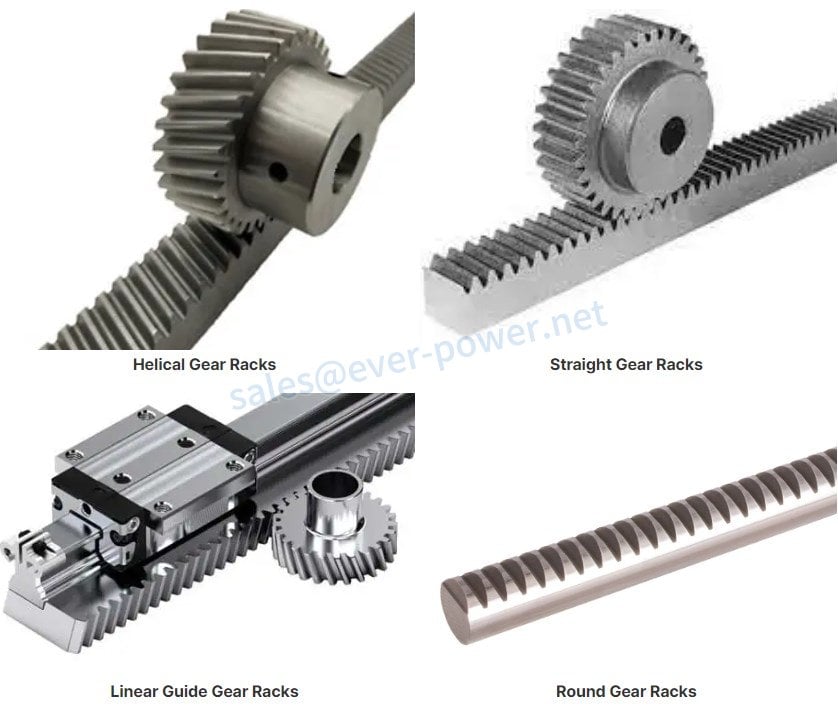
Gear racks come in various types, each with specific characteristics that make them suitable for different applications. The following are the primary types of gear racks:

Spur Gear Racks
Spur gear racks have straight teeth and are commonly used for applications requiring linear motion. They are known for their simplicity and reliability.
Helical Gear Racks
Helical gear racks have angled teeth, providing smoother and quieter operation compared to spur gear racks. They are ideal for high-speed and high-torque applications.
Rack and Pinion Sets
Rack and pinion sets consist of a gear rack and a matching pinion gear, used to convert rotational motion into linear motion. These sets are widely used in steering systems and CNC machinery.
Materials Used in Gear Racks
Gear racks can be made from various materials, each offering unique advantages:
- Steel: Offers high strength and durability, making it suitable for heavy-duty applications.
- Aluminum: Lightweight and corrosion-resistant, ideal for applications where weight savings are critical.
- Plastic: Provides good insulation and is resistant to chemicals, making it suitable for specific industrial applications.
Applications of Gear Racks in Various Industries
Gear racks find applications across multiple industries due to their versatility and reliability:
Aerospace Industry
Gear racks are used in aircraft control systems, ensuring precise movement of control surfaces and landing gear. Their reliability is crucial for the safety and performance of aerospace systems.
Renewable Energy
In wind turbines, gear racks are employed to adjust the pitch of the blades, optimizing the efficiency of energy capture. Their durability ensures long-term operation in harsh environmental conditions.
Automotive Industry
Gear racks are integral to the steering systems of vehicles, providing responsive and accurate steering control. They are also used in electric vehicle drivetrains for efficient power transmission.
Industrial Machinery
In industrial applications, gear racks are used in CNC machines, conveyors, and automated systems, ensuring precise linear motion and positioning.
Medical Equipment
Gear racks are utilized in medical devices such as imaging equipment and surgical robots, where precision and reliability are paramount.
Future Trends and Opportunities in Gear Rack Industry
The gear rack industry is poised for significant growth, driven by technological advancements and increasing demand across various sectors:

- Automation and Robotics: The rise of automation and robotics in manufacturing and logistics will increase the demand for high-precision gear racks.
- Electric Vehicles: The shift towards electric vehicles will drive innovation in gear rack design for efficient power transmission and steering systems.
- Renewable Energy: As the renewable energy sector expands, the need for durable and efficient gear racks in wind turbines and solar tracking systems will grow.
- Advanced Manufacturing: Developments in materials science and manufacturing techniques will lead to the production of stronger, lighter, and more efficient gear racks.
- Customization: Increasing demand for customized solutions will drive manufacturers to offer tailor-made gear racks for specific applications.
Selecting the Right Gear Rack
Choosing the correct gear rack for your application involves several critical considerations:
- Define Your Requirements: Understand the specific requirements of your application, including load, speed, and environmental conditions.
- Material Selection: Choose the appropriate material based on the application’s demands, such as strength, weight, and corrosion resistance.
- Design Optimization: Work with engineers to optimize the gear rack design for maximum efficiency and performance.
- Supplier and After-Sales Service: Select a reputable supplier who offers comprehensive after-sales support and services.
- Cost-Effectiveness: Ensure that the gear rack provides the best balance of cost and performance for your application.
- Quality Control: Verify that the supplier implements strict quality control measures to guarantee product reliability.
Maintaining Gear Racks for Optimal Performance
Proper maintenance is essential to ensure the longevity and performance of gear racks. Follow these best practices:
- Regular Inspections: Conduct routine inspections to identify and address potential issues before they escalate.
- Cleaning and Corrosion Prevention: Keep gear racks clean and apply protective coatings to prevent corrosion.
- Lubrication and Maintenance: Ensure that gear racks are adequately lubricated to minimize friction and wear.
- Replacing Worn Parts: Replace worn or damaged parts promptly to avoid compromising the entire system.
- Temperature Monitoring: Monitor the operating temperature to prevent overheating and thermal damage.
Why Choose Ever Power?
Ever Power is a leading manufacturer of high-quality gear racks, offering a range of products designed to meet the needs of various industries. Here are five key reasons to choose Ever Power:

- Unmatched Quality: We adhere to the highest quality standards, ensuring that our gear racks deliver consistent performance and reliability.
- Cutting-Edge Technology: Our state-of-the-art manufacturing facilities utilize advanced technology to produce precision-engineered gear racks.
- Customization Options: We offer tailored solutions to meet the unique needs of our clients, providing gear racks designed for specific applications.
- Comprehensive Support: Our dedicated support team provides expert assistance from product selection to after-sales service, ensuring a seamless experience.
- Competitive Pricing: We offer competitive pricing without compromising on quality, providing excellent value for our customers.
Q&A Section
-
Q: What materials are commonly used for gear racks?
A: Gear racks are commonly made from steel, aluminum, and plastic, each offering unique benefits. -
Q: How can I ensure the durability of a gear rack?
A: Regular maintenance, proper lubrication, and adhering to load specifications can enhance the durability of a gear rack. -
Q: What industries commonly use gear racks?
A: Gear racks are widely used in aerospace, renewable energy, automotive, industrial machinery, and medical equipment industries. -
Q: How do I choose the right gear rack for my application?
A: Consider factors such as load requirements, environmental conditions, material selection, and supplier reputation when choosing a gear rack. -
Q: What are the future trends in the gear rack industry?
A: Future trends include increased automation, advancements in materials and manufacturing techniques, and growing demand in the electric vehicle and renewable energy sectors.
Author: Dream