gear rack stress analysis

Gear Rack Stress Analysis and Gear Rack
Introduction to Gear Rack Stress Analysis
Gear rack stress analysis is an integral part of ensuring the operational reliability and efficiency of gear systems. This analysis involves understanding the distribution of stresses and strains within a gear rack when subjected to various loads and conditions. The primary objective is to identify potential failure points and optimize the design for enhanced performance and durability.
Mechanics of Gear Rack Stress Analysis
Understanding the mechanics behind gear rack stress analysis involves delving into concepts like bending stress, contact stress, and shearing forces. Bending stress occurs due to the load applied perpendicular to the rack axis, while contact stress is induced at the point of interaction between the gear teeth and the rack. Shearing forces, on the other hand, result from lateral loads and can significantly impact the structural integrity of the gear rack.
Importance of Accurate Stress Analysis
Accurate stress analysis is critical for preventing premature failures and ensuring the longevity of gear racks. It helps in the identification of stress concentrations and facilitates the design of gear racks that can withstand operational stresses without deforming or failing. Using advanced computational methods and finite element analysis, engineers can simulate various loading scenarios to optimize gear rack designs.
Gear Rack Stress Analysis Techniques
Several techniques are employed in gear rack stress analysis, including analytical methods, numerical simulations, and experimental testing. Analytical methods provide a theoretical framework for understanding stress distributions, while numerical simulations, such as finite element analysis (FEA), offer detailed insights into the stress and strain behavior under different conditions. Experimental testing, including strain gauging and fatigue testing, validates the theoretical and simulation results.
Factors Affecting Gear Rack Stress
Multiple factors affect the stress levels in a gear rack, including the material properties, geometry, loading conditions, and environmental factors. Material properties such as tensile strength, hardness, and modulus of elasticity play a significant role in determining the rack’s ability to withstand stress. The geometry, including the tooth profile and rack dimensions, also influences the stress distribution. Additionally, loading conditions, such as cyclic loads and impact forces, along with environmental factors like temperature and corrosion, affect the overall stress levels.
Gear Rack and Stress Analysis Relationship
The relationship between gear racks and stress analysis is inherently informational. Gear racks need to be designed to manage stress effectively to ensure performance and durability. Through stress analysis, engineers can provide crucial information for optimizing the design, material selection, and manufacturing processes of gear racks.

Performance Characteristics of Gear Racks
- Precision: Gear racks are designed with high precision to ensure accurate linear motion.
- Load Capacity: They can handle significant loads, making them suitable for industrial applications.
- Durability: Manufactured from robust materials, gear racks exhibit excellent durability and longevity.
- Flexibility: Available in various sizes and configurations, they offer flexibility in application.
- Efficiency: Gear racks provide high efficiency in transmitting power with minimal losses.
Types of Gear Racks and Their Characteristics
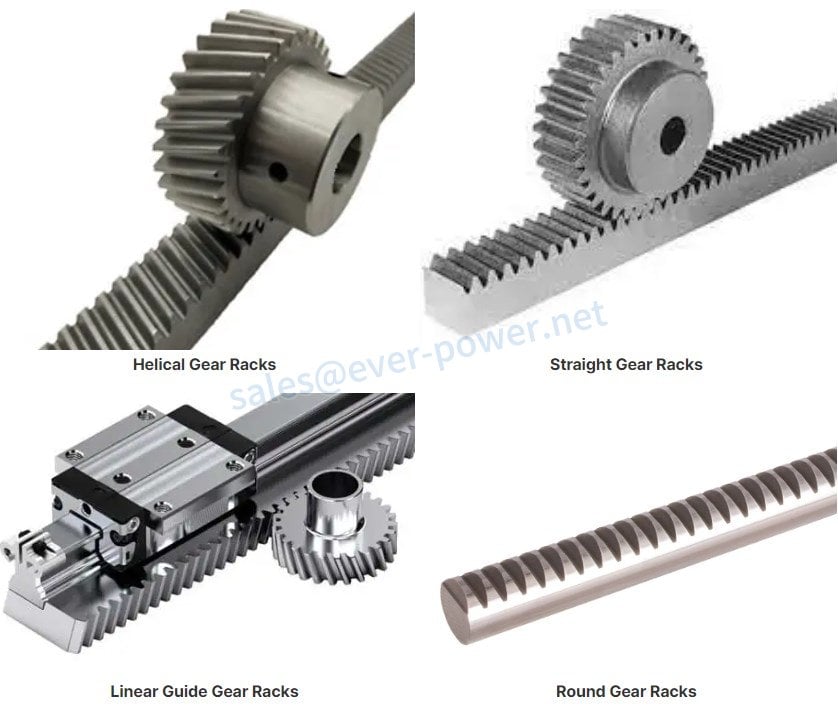
Gear racks come in various types, each suited for specific applications and environments. The common types include straight gear racks, helical gear racks, and custom-designed racks. Straight gear racks are simple and efficient, ideal for straightforward linear motion applications. Helical gear racks, with angled teeth, provide smoother and quieter operation, suitable for high-speed applications. Custom-designed racks are tailored for specialized requirements, offering unique advantages in specific scenarios.
The material composition of gear racks significantly impacts their performance. Steel gear racks offer high strength and durability, making them suitable for heavy-duty applications. Aluminum gear racks are lightweight and corrosion-resistant, ideal for applications where weight is a concern. Nylon gear racks provide excellent noise reduction and are suitable for light to moderate load applications.

Applications of Gear Racks in Various Industries
- Aerospace Industry: Gear racks are used in aircraft control systems for precise movement and positioning.
- Renewable Energy: In wind turbines, gear racks are employed for adjusting blade angles and optimizing energy capture.
- Automotive Industry: Gear racks are integral to steering systems, ensuring accurate and reliable control.
- Industrial Machinery: Used in CNC machines and robotic systems for precise linear motion and positioning.
- Medical Equipment: Gear racks are used in medical imaging devices and surgical robots for accurate and smooth movement.
Future Trends and Opportunities in Gear Rack Industry
- Advanced Materials: The development of new materials, such as composites and high-strength alloys, will enhance gear rack performance.
- Digital Manufacturing: Adopting digital manufacturing technologies like 3D printing will enable customized and rapid production of gear racks.
- Automation and Robotics: The increasing use of automation and robotics in various industries will drive demand for high-precision gear racks.
- Smart Gear Racks: Integration of sensors and IoT technologies will enable real-time monitoring and predictive maintenance of gear racks.
- Sustainability: Focus on sustainable manufacturing practices and recyclable materials will shape the future of gear rack production.

How to Choose the Right Gear Rack
- Define Requirements: Understand the specific needs of your application, including load capacity, precision, and environmental conditions.
- Material Selection: Choose the appropriate material based on strength, weight, and corrosion resistance requirements.
- Design Optimization: Work with engineers to optimize the gear rack design for your specific use case.
- Supplier and After-Sales Service: Select a reputable supplier offering comprehensive after-sales support and services.
- Cost-Effectiveness: Consider the overall cost, including manufacturing, installation, and maintenance.
- Quality Control: Ensure the gear rack undergoes rigorous quality control processes to meet industry standards.
Maintaining Gear Racks
- Regular Inspections: Conduct routine inspections to identify wear and tear, and address issues promptly.
- Cleaning and Corrosion Prevention: Keep gear racks clean and apply anti-corrosion coatings to prevent rust.
- Lubrication and Maintenance: Regularly lubricate gear racks to reduce friction and wear.
- Replacing Worn Parts: Replace worn or damaged components to maintain optimal performance.
- Temperature Monitoring: Monitor operating temperatures to prevent overheating and potential damage.
Why Choose Ever Power
At Ever Power, we specialize in the production and sale of high-quality gear racks. Our products are engineered to meet the highest standards, ensuring superior performance and reliability. Here are five reasons to choose Ever Power:
- Innovative Design: Our gear racks are designed using the latest technologies to ensure precision and efficiency.
- Quality Assurance: We implement stringent quality control measures to guarantee the durability and reliability of our products.
- Comprehensive Support: We offer extensive after-sales support to help you maintain and optimize your gear racks.
- Customization Options: We provide bespoke solutions tailored to meet the specific requirements of your application.
- Competitive Pricing: Our gear racks are competitively priced, offering excellent value for money.

FAQs
- What is gear rack stress analysis? Gear rack stress analysis is the process of examining the stress and strain on gear racks to ensure they can withstand operational loads without failure.
- Why is material selection important in gear rack design? The material determines the strength, durability, and performance of the gear rack under various conditions.
- How does Ever Power ensure the quality of its gear racks? Ever Power employs rigorous quality control measures and advanced manufacturing techniques to produce high-quality gear racks.
- What are the common applications of gear racks? Gear racks are commonly used in industries such as aerospace, automotive, industrial machinery, and renewable energy.
- How can I maintain my gear racks effectively? Regular inspections, proper lubrication, cleaning, and timely replacement of worn parts are essential for maintaining gear racks.
Author: Dream