gear rack testing methods

Gear Rack Testing Methods And Their Relationship With Gear Rack
Introduction to Gear Rack Testing Methods
Gear racks are integral components in various mechanical systems, converting rotational motion into linear motion. Ensuring their optimal performance necessitates rigorous testing. This article delves into the various methods employed to test gear racks, ensuring their reliability and efficiency.
Visual Inspection
Visual inspection is an initial step in gear rack testing. It involves a meticulous examination of the gear rack’s physical appearance to identify surface defects, wear, and tear. This method, although basic, can reveal significant issues that might affect performance.
Dimensional Accuracy
Dimensional accuracy ensures that the gear rack conforms to specified dimensions. Using precise measuring tools like calipers and micrometers, this test verifies the gear rack’s length, width, and tooth spacing, ensuring compatibility with mating gears.
Hardness Testing
Hardness testing assesses the gear rack’s resistance to deformation. Methods such as Rockwell, Vickers, and Brinell tests are employed to determine the material’s hardness, providing insights into its durability and wear resistance.
Torque Testing
Torque testing evaluates the gear rack’s ability to handle rotational force without deformation or damage. This test is crucial for applications requiring high torque levels, ensuring the gear rack can withstand operational stresses.
Load Testing
Load testing involves applying a specified load to the gear rack and measuring its performance. This test ensures that the gear rack can operate under expected load conditions without failure, guaranteeing reliability in practical applications.
Fatigue Testing
Fatigue testing assesses the gear rack’s endurance under cyclic loading. By simulating real-world operational conditions, this test determines the gear rack’s lifespan and its ability to withstand repeated stress without failure.
Vibration Analysis
Vibration analysis identifies any anomalies in the gear rack’s operation. This test detects imbalance or misalignment issues, ensuring smooth and efficient performance, critical for high-speed applications.
Surface Roughness Measurement
Surface roughness measurement evaluates the gear rack’s tooth finish. Tools like profilometers measure surface irregularities, ensuring minimal friction and wear during operation, which is essential for efficient performance.
Gear Mesh Efficiency
Gear mesh efficiency testing assesses how well the gear rack meshes with its mating gear. This test ensures optimal power transmission and reduces energy loss, enhancing the overall system’s efficiency.
Gear Rack Testing Methods and Their Relationship with Gear Rack
Testing methods are crucial for verifying the performance and reliability of gear racks. They help in identifying defects, ensuring dimensional accuracy, and verifying material properties. Reliable gear racks enhance the efficiency and longevity of mechanical systems, making these testing methods indispensable.

Performance Characteristics of Gear Rack
- High Load Capacity: Gear racks are designed to handle substantial loads, making them suitable for heavy-duty applications.
- Precision: High manufacturing standards ensure that gear racks maintain precise tooth spacing and alignment.
- Durability: Made from robust materials, gear racks exhibit excellent wear resistance and long operational life.
- Efficiency: Gear racks offer efficient power transmission, minimizing energy loss during operation.
- Versatility: Available in various sizes and materials, gear racks cater to a wide range of applications.
Types of Gear Rack and Their Characteristics
Gear racks come in different types, each with unique characteristics suited for specific applications.
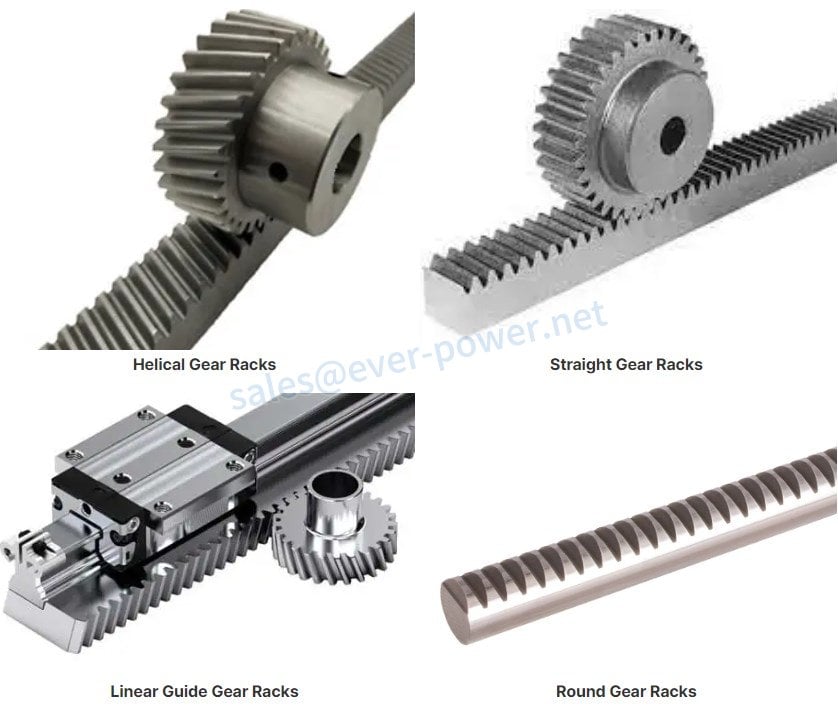
- Spur Gear Racks: These have straight teeth parallel to the rack length, offering high efficiency and easy manufacturing.
- Helical Gear Racks: Helical teeth are angled to the rack length, providing smoother operation and higher load-carrying capacity.
- Curved Gear Racks: These racks are designed for specific applications requiring curved motion paths.
The material choice for gear racks greatly influences their performance. Common materials include:
- Steel: Offers high strength and durability, ideal for heavy-duty applications.
- Aluminum: Lightweight and corrosion-resistant, suitable for applications where weight is a concern.
- Nylon: Provides good wear resistance and is self-lubricating, perfect for quieter operations.

Applications of Gear Rack in Various Industries
- Aerospace Industry: Gear racks are used in landing gear systems and control surfaces, requiring high precision and reliability.
- Renewable Energy: In wind turbines and solar tracking systems, gear racks facilitate the conversion of wind or solar energy into electrical power.
- Automotive Industry: Gear racks are essential in steering systems, ensuring precise control and safety.
- Industrial Machinery: Used in CNC machines and automated systems, gear racks provide accurate linear motion control.
- Medical Machinery: In medical devices like imaging systems and robotic surgery tools, gear racks ensure precise and reliable operations.
Future Trends and Opportunities for Gear Rack Products
- Advancements in Material Science: Developing new materials with enhanced properties will lead to more durable and efficient gear racks.
- Automation and Robotics: Increased automation in various sectors will drive the demand for high-precision gear racks.
- Customization and Flexibility: Tailoring gear racks to meet specific application requirements will become more prevalent.
- Eco-friendly Manufacturing: Emphasis on sustainable production methods will influence gear rack manufacturing processes.

Choosing the Right Gear Rack
- Identify Requirements: Understand the application needs, including load capacity, precision, and environmental conditions.
- Material Selection: Choose a material that balances strength, durability, and other specific requirements.
- Design Optimization: Ensure the gear rack design meets performance criteria and integrates seamlessly with existing systems.
- Supplier and After-sales Service: Select a reputable supplier offering comprehensive support and services.
- Cost-effectiveness: Balance quality and cost to achieve optimal value for money.
- Quality Control: Ensure rigorous quality checks are in place to maintain consistent performance standards.
Maintaining Gear Racks
- Regular Inspections: Conduct periodic checks to identify and address wear or damage promptly.
- Cleaning and Corrosion Prevention: Keep gear racks clean and apply protective coatings to prevent corrosion.
- Lubrication and Maintenance: Ensure proper lubrication to reduce friction and wear.
- Replacement of Worn Parts: Replace worn or damaged components to maintain optimal performance.
- Temperature Monitoring: Monitor operating temperatures to prevent overheating and thermal damage.
Why Choose Ever Power
Ever Power is a leader in the production and sales of gear racks, offering top-quality products that meet industry standards. Here are five key advantages:
- Innovative Designs: We prioritize cutting-edge designs that enhance performance and durability.
- High-Quality Materials: Our gear racks are made from premium materials, ensuring long-lasting reliability.
- Customization Options: We offer tailored solutions to meet specific application needs.
- Comprehensive Support: Our expert team provides exceptional customer service and technical support.
- Cost-Effective Solutions: We deliver high-quality products at competitive prices, ensuring excellent value for money.

FAQs
Q1: What is the importance of gear rack testing methods?
A1: They ensure the reliability, efficiency, and longevity of gear racks in various applications.
Q2: How does dimensional accuracy affect gear rack performance?
A2: It ensures compatibility with mating gears and smooth operation, preventing mechanical issues.
Q3: What materials are commonly used for gear racks?
A3: Steel, aluminum, and nylon are popular choices, each offering unique advantages.
Q4: Why is lubrication important for gear racks?
A4: Proper lubrication reduces friction, wear, and tear, enhancing gear rack lifespan and performance.
Q5: How does Ever Power ensure the quality of their gear racks?
A5: We implement rigorous quality control checks and use high-quality materials to maintain consistent performance standards.
Author: Dream