gear rack vs helical gear

Gear Rack vs Helical Gear – Understanding the Differences and Applications
Introduction to Gear Rack and Helical Gear
Gears are fundamental components in many mechanical systems, providing the necessary transmission of motion and force. Among the most prevalent types are gear racks and helical gears. Understanding their differences, applications, and interrelations is crucial for optimizing their use in various industries.
What is a Gear Rack?
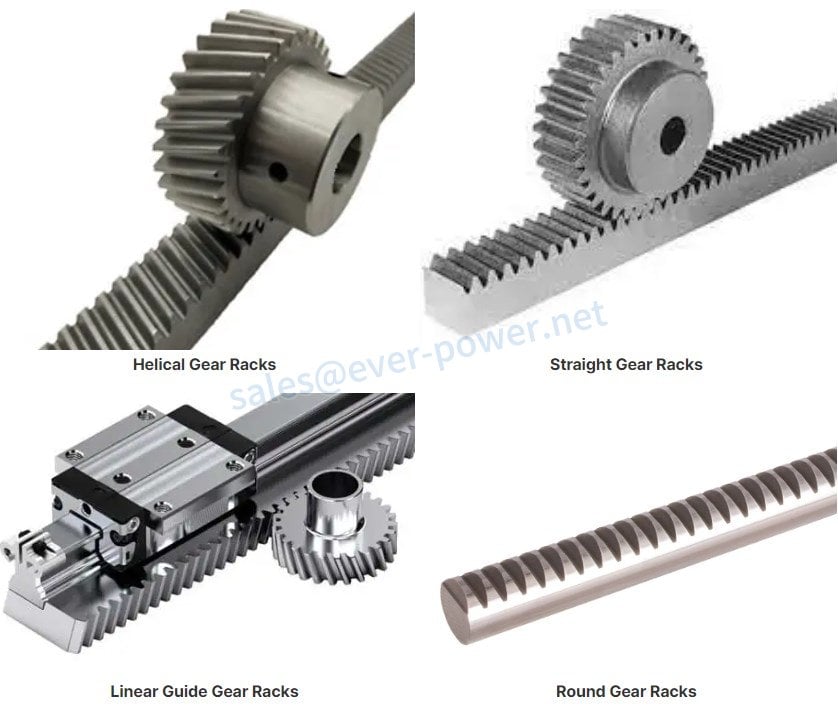
A gear rack is a linear or flat gear segment with teeth cut into one surface. It works in conjunction with a pinion, a small cylindrical gear, to convert rotational motion into linear motion. Gear racks are commonly used in rack and pinion steering systems, CNC machinery, and automation equipment.
Understanding Helical Gears
Helical gears are cylindrical gears with teeth that are cut at an angle to the axis of rotation. This design allows for smooth and quiet operation due to gradual engagement of the teeth. Helical gears are extensively used in automotive transmissions, industrial machinery, and various other applications requiring high torque and smooth operation.
Comparison: Gear Rack vs Helical Gear
When comparing gear racks to helical gears, several key differences arise. Gear racks provide straight-line motion, making them ideal for applications requiring linear movement. In contrast, helical gears provide rotational motion with higher efficiency and quieter operation. Each type has distinct advantages depending on the specific application requirements.
Functional Relationship: Gear Rack vs Helical Gear
The relationship between gear racks and helical gears can be intricate. While gear racks are typically used for linear motion, helical gears can be paired with them to provide smoother and quieter operation. This combination is particularly useful in high-precision machinery where both linear and rotational motions are required.

Performance Characteristics of Gear Rack
- High Load Capacity: Gear racks can handle significant loads, making them suitable for heavy-duty applications.
- Precision: The accuracy of gear racks ensures precise linear movement, essential for applications like CNC machinery.
- Durability: Made from robust materials, gear racks offer long-term reliability even under strenuous conditions.
- Versatility: Gear racks can be customized to various lengths and sizes, catering to different industrial needs.
- Ease of Integration: They can be easily integrated with other mechanical components, enhancing system flexibility.
Types of Gear Racks and Their Characteristics
Gear racks come in various types, each with unique properties suited to specific applications. The principal types include:
- Steel Gear Racks: Known for their high strength and durability, steel gear racks are ideal for heavy-duty applications.
- Plastic Gear Racks: Lightweight and corrosion-resistant, plastic gear racks are suitable for applications where weight and corrosion are concerns.
- Stainless Steel Gear Racks: Offering excellent resistance to corrosion and high temperatures, these are perfect for harsh environments.

Applications of Gear Rack in Various Industries
- Aerospace Industry: Used for precise movement in aircraft control surfaces and satellite antenna positioning.
- Renewable Energy: Essential in solar tracking systems and wind turbine mechanisms.
- Automotive Industry: Integral to rack and pinion steering systems, providing accurate control and responsiveness.
- Industrial Machinery: Utilized in automation systems, CNC machines, and heavy-duty lifting equipment.
- Medical Machinery: Employed in medical imaging systems and surgical robots for precise movement control.
Future Trends and Opportunities for Gear Rack Products
- Technological Advancements: Innovations in materials and manufacturing processes will enhance gear rack performance.
- Increased Automation: Growing demand for automation in various sectors will drive the need for high-precision gear racks.
- Sustainability: Development of eco-friendly materials will be pivotal in meeting environmental regulations.
- Global Expansion: Expanding markets in developing regions will offer new growth opportunities.
- Customization: Tailored solutions to meet specific industrial needs will become more prevalent.

Choosing the Right Gear Rack
Selecting the appropriate gear rack involves several critical considerations:
- Define Requirements: Clearly outline the application requirements, including load capacity, precision, and environmental conditions.
- Material Selection: Choose the right material based on strength, weight, and corrosion resistance needs.
- Design Optimization: Optimize the gear rack design for maximum efficiency and reliability.
- Supplier Evaluation: Select a reputable supplier with proven expertise and quality standards.
- Cost-Benefit Analysis: Conduct a thorough cost-benefit analysis to ensure economic viability.
- Quality Control: Implement stringent quality control measures to ensure product consistency and performance.
Maintaining Gear Racks
Proper maintenance ensures the longevity and optimal performance of gear racks. Key maintenance practices include:
- Regular Inspections: Conduct periodic inspections to identify any signs of wear or damage.
- Cleaning and Corrosion Prevention: Keep gear racks clean and apply anti-corrosion treatments to prevent rust.
- Lubrication and Maintenance: Regularly lubricate gear racks to minimize friction and wear.
- Replacement of Worn Parts: Replace any worn or damaged parts promptly to maintain system integrity.
- Temperature Monitoring: Monitor operating temperatures to prevent overheating and ensure proper function.
Why Choose Ever Power?
At Ever Power, we pride ourselves on producing and supplying top-quality gear racks. Here are five reasons to choose our products:
- Exceptional Quality: Our gear racks are manufactured using high-grade materials and advanced techniques to ensure superior performance.
- Custom Solutions: We offer customized gear racks tailored to meet specific application requirements, ensuring optimal results.
- Competitive Pricing: Our products are competitively priced, providing excellent value without compromising on quality.
- Extensive Experience: With years of industry experience, our team possesses the expertise to deliver reliable and innovative solutions.
- Comprehensive Support: We provide comprehensive customer support, from initial consultation to after-sales service, ensuring complete satisfaction.

Frequently Asked Questions
- Q: What are the main advantages of using a gear rack?
A: Gear racks offer high load capacity, precision, and versatility, making them ideal for various industrial applications.
- Q: How do I select the right material for a gear rack?
A: Material selection depends on factors such as load requirements, environmental conditions, and specific application needs.
- Q: Can gear racks be customized?
A: Yes, gear racks can be tailored to various lengths, sizes, and specifications to meet specific requirements.
- Q: What maintenance practices are essential for gear racks?
A: Regular inspections, cleaning, lubrication, and replacement of worn parts are crucial for maintaining gear racks.
- Q: Why should I choose Ever Power for gear racks?
A: Ever Power offers exceptional quality, custom solutions, competitive pricing, extensive experience, and comprehensive support.
Author: Dream