gear rack vs pinion gear

Gear Rack vs Pinion Gear: Relationship and Performance
Introduction to Gear Rack and Pinion Gear
Gear racks and pinion gears are essential mechanisms in various mechanical systems. These components work together to convert rotational motion into linear motion and vice versa. While they may seem simple, their applications span across numerous industries, making them indispensable in modern engineering.
Understanding Gear Rack
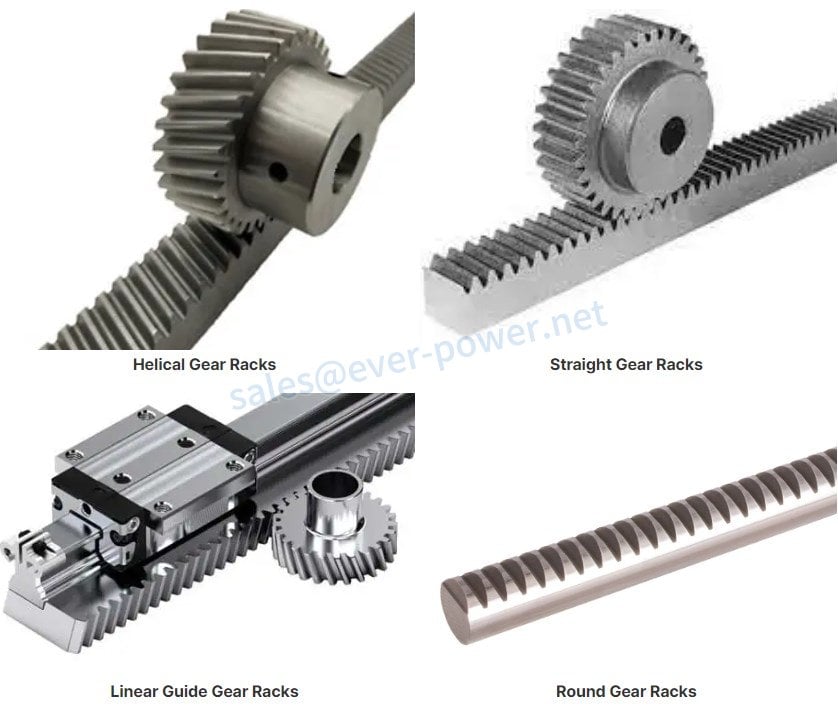
A gear rack is a flat, toothed component that meshes with a pinion gear to create linear motion. It is characterized by its straight, elongated form, with teeth cut into one side. The gear rack is typically mounted on a flat surface, and as the pinion gear rotates, it moves along the length of the rack, either pushing or pulling the connected object.
Understanding Pinion Gear
A pinion gear is a circular gear that engages with a gear rack. It is designed to mesh precisely with the teeth of the gear rack, creating a smooth, controlled movement. Pinion gears come in various sizes and tooth configurations to accommodate different applications and load requirements.
Gear Rack vs Pinion Gear: Key Differences
Although gear racks and pinion gears work together, they have distinct characteristics. Gear racks provide linear motion, while pinion gears offer rotational motion. Additionally, gear racks are typically longer and straight, whereas pinion gears are round and compact.
Relationship Between Gear Rack and Pinion Gear
The relationship between gear racks and pinion gears is symbiotic. The gear rack translates the rotational motion of the pinion gear into linear motion, enabling precise control in various mechanical systems. This interaction is fundamental in applications such as steering systems, conveyor belts, and CNC machines.

Performance Characteristics of Gear Rack
- Load Capacity: Gear racks can handle significant loads, making them suitable for heavy-duty applications.
- Precision: The precise tooth design ensures accurate motion control, essential for high-precision machinery.
- Durability: Made from robust materials, gear racks offer long-lasting performance even under harsh conditions.
Types of Gear Rack and Their Characteristics
Gear racks come in various types, each with unique features:
- Straight Gear Racks: These are the most common type, providing smooth and consistent linear motion.
- Helical Gear Racks: These have angled teeth, offering quieter and smoother operation compared to straight gear racks.
- Curved Gear Racks: Used in specific applications where linear motion must follow a curved path.

Material Advantages
- Steel: Offers high strength and durability, suitable for heavy-duty applications.
- Aluminum: Lightweight and corrosion-resistant, ideal for aerospace and automotive industries.
- Plastic: Provides good wear resistance and low friction, often used in medical and food processing equipment.
Applications of Gear Rack
- Aerospace Industry: Used in wing flap actuators and landing gear mechanisms.
- Renewable Energy: Integral in solar tracking systems to adjust the angle of solar panels.
- Automobile Industry: Essential in steering systems to convert rotational to linear motion.
- Industrial Machinery: Utilized in CNC machines for precise linear movements.
- Medical Machinery: Found in surgical robots and other precision medical devices.
Future Trends and Opportunities
- Advanced Materials: Development of new materials to enhance strength and reduce weight.
- Automation Integration: Increasing use in automated manufacturing and robotics.
- Energy Efficiency: Focus on reducing friction and energy consumption in gear systems.
- Customization: Growing demand for custom gear racks tailored to specific applications.

- Identify Requirements: Determine the load, speed, and precision needed for your application.
- Material Selection: Choose the appropriate material based on environmental conditions and load requirements.
- Design Optimization: Ensure the gear rack design aligns with the mechanical system for optimal performance.
- Supplier and After-Sales Service: Select a reputable supplier offering quality products and reliable support.
- Cost Efficiency: Balance quality and cost to achieve the best value for your investment.
- Quality Control: Implement stringent quality checks to ensure consistent performance.
- Regular Inspection: Periodically check the gear rack for signs of wear or damage.
- Cleaning and Corrosion Prevention: Keep the gear rack clean and apply protective coatings to prevent rust.
- Lubrication and Maintenance: Regularly lubricate the gear teeth to minimize friction and wear.
- Replace Worn Parts: Timely replacement of worn components to maintain system integrity.
- Temperature Monitoring: Monitor operating temperatures to prevent overheating and damage.
Ever Power is a leading manufacturer and supplier of high-quality gear racks. Our dedication to excellence and innovation makes us the preferred choice for customers worldwide.
- High-Quality Products: We offer gear racks made from premium materials, ensuring long-lasting performance.
- Customization Options: Tailor our gear racks to meet your specific requirements for optimal performance.
- Advanced Manufacturing: Utilize state-of-the-art manufacturing processes to produce precision gear racks.
- Expert Support: Our knowledgeable team provides expert guidance and support throughout the purchase process.
- Competitive Pricing: We offer competitive pricing without compromising on quality, ensuring you get the best value.

- Q: What materials are used for gear racks?
A: Gear racks are commonly made from steel, aluminum, and plastic, each offering unique advantages. - Q: How do I choose the right gear rack for my application?
A: Consider factors such as load capacity, precision, material, and environmental conditions when selecting a gear rack. - Q: What maintenance is required for gear racks?
A: Regular inspection, cleaning, lubrication, and timely replacement of worn parts are essential for maintaining gear racks. - Q: Can Ever Power provide custom gear racks?
A: Yes, Ever Power offers customization options to tailor gear racks to your specific application needs. - Q: What industries use gear racks?
A: Gear racks are used in various industries, including aerospace, renewable energy, automotive, industrial machinery, and medical machinery.
Author: Dream