helical gear rack wear resistance

Helical Gear Rack Wear Resistance and Its Relationship with Helical Gear Rack
A helical gear rack is widely used in various industries, such as automation equipment, CNC machine tools, automotive industry, heavy machinery, aerospace, and others. One of the critical factors that affect the performance of a helical gear rack is its wear resistance. In this article, we will explore the importance of helical gear rack wear resistance, its relationship with helical gear rack, and how to select and maintain the gear rack correctly.
Helical Gear Rack Wear Resistance
Wear resistance is the ability of a material to withstand friction and prevent material loss in contact with other materials. Helical gear racks are commonly made of steel or other materials, such as nylon, brass, or aluminum. The wear resistance of a helical gear rack depends on the material properties, surface hardness, lubrication, and operating conditions.
Steel is the most common material used for helical gear racks due to its high strength, durability, and wear resistance. However, steel gear racks may suffer from surface wear, pitting, and fatigue failure due to high loads, misalignment, and insufficient lubrication. To improve the wear resistance of steel gear racks, manufacturers may use surface hardening techniques, such as carburizing, nitriding, or induction hardening.
Other materials, such as nylon, are preferred for applications that require low noise, vibration, and shock absorption. Nylon gear racks have excellent wear resistance, self-lubricating properties, and low friction coefficient. However, they may suffer from deformation, swelling, or aging due to temperature changes, humidity, or chemical exposure.
Helical Gear Rack and Informational Connection
A helical gear rack is a critical component in a helical gear system that converts rotary motion into linear motion. The primary advantage of using a helical gear rack is its ability to provide smooth and precise linear motion with higher efficiency and load capacity than other linear motion systems, such as ball screws or belts.
The wear resistance of a helical gear rack is essential for maintaining the accuracy and repeatability of the linear motion system. Wear and tear on the gear rack can result in backlash, positioning errors, and reduced system performance. Therefore, it is crucial to select a helical gear rack with high wear resistance and to maintain it properly to prolong its lifespan and avoid costly downtime.

Helical Gear Rack Performance Features
A helical gear rack has several performance features that make it a popular choice for linear motion systems:
- High precision: Helical gear racks have a high degree of accuracy and repeatability, making them suitable for applications that require precise positioning and motion control.
- High load capacity: Helical gear racks can handle high loads and transmit power efficiently, making them ideal for heavy-duty applications that require high force and torque.
- Low noise and vibration: Helical gear racks produce less noise and vibration than other linear motion systems, making them suitable for applications that require low noise and smooth operation.
- High efficiency: Helical gear racks have a high transmission efficiency due to their engagement angle, resulting in less power loss and heat generation.
- Modular design: Helical gear racks can be easily combined with other components, such as gearboxes, motors, and linear guides, to form a complete linear motion system.
Types and Characteristics of Helical Gear Rack
There are several types of helical gear racks, depending on the application requirements and performance specifications. The most common types of helical gear racks are:
- Standard helical gear rack: This type of gear rack has a standard module, pressure angle, and tooth width and is suitable for general-purpose applications that require high precision and load capacity.
- Stainless steel helical gear rack: This type of gear rack is made of stainless steel and is preferred for applications that require corrosion resistance and hygiene, such as food processing or medical equipment.
- Hardened helical gear rack: This type of gear rack is heat treated to increase its surface hardness and wear resistance, making it suitable for high load and high-speed applications.
- Plastic helical gear rack: This type of gear rack is made of plastic materials, such as nylon or POM, and is preferred for applications that require low noise, low friction, and vibration damping.

Applications of Helical Gear Rack
Helical gear racks are widely used in various industries due to their high precision, load capacity, and efficiency. Some of the common applications of helical gear racks are:
- Automation equipment: Helical gear racks are used in automated systems, such as assembly lines, robots, and packaging machines, to provide precise and reliable linear motion.
- CNC machine tools: Helical gear racks are used in CNC machine tools, such as milling machines, lathes, and grinders, to convert rotary motion into linear motion for tool positioning and workpiece movement.
- Automotive industry: Helical gear racks are used in automotive steering systems to provide accurate and smooth steering control.
- Heavy machinery: Helical gear racks are used in heavy-duty machinery, such as cranes, excavators, and bulldozers, to provide precise and powerful linear motion for lifting and moving heavy loads.
- Aerospace: Helical gear racks are used in aerospace applications, such as satellites, rockets, and aircraft, to provide precise and reliable linear motion for control surfaces, landing gear, and cargo handling.
Future Development and Opportunities of Helical Gear Rack
The demand for helical gear racks is expected to grow in the future due to the increasing automation and digitalization of various industries. The development of new materials, surface treatments, and manufacturing processes will further improve the wear resistance, precision, and efficiency of helical gear racks.

As the market becomes more competitive, companies that can provide high-quality, customized, and cost-effective helical gear racks and related services will have a competitive advantage. To seize the opportunities in the market, manufacturers should focus on product innovation, process optimization, and customer satisfaction.
How to Select and Maintain the Helical Gear Rack
Selecting and maintaining the helical gear rack is essential for ensuring its proper function and longevity. Here are some tips for selecting and maintaining the helical gear rack:
- Clarify the requirements: Identify the application requirements, such as load capacity, speed, accuracy, and environment, to select the appropriate material, size, and configuration of the gear rack.
- Material selection: Choose the material that suits the application requirements, such as steel, nylon, brass, or aluminum, and consider factors such as wear resistance, corrosion resistance, and temperature resistance.
- Design optimization: Optimize the gear rack design to reduce stress concentration, improve load distribution, and increase wear resistance, such as by using a helix angle, tooth profile, or surface treatment.
- Supplier and after-sales service: Choose a reliable supplier that can provide high-quality gear racks, technical support, and after-sales service, such as inspection, repair, and replacement.
- Cost-effectiveness: Consider the total cost of ownership, including the purchase price, maintenance cost, downtime cost, and energy consumption, to select the most cost-effective gear rack solution.
- Quality control: Establish a quality control system to monitor the gear rack performance, such as vibration, noise, temperature, and wear, and take corrective actions, such as lubrication, cleaning, or replacement, when necessary.
Why Choose Ever Power
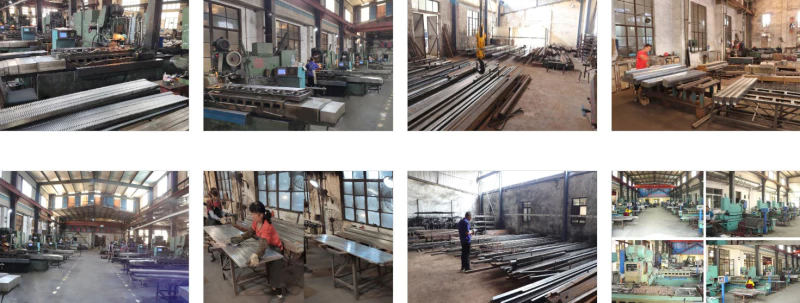
Ever Power is a professional manufacturer and supplier of high-quality helical gear racks and related products. Our gear racks are made of high-quality materials, such as steel, nylon, or brass, and are available in various sizes, configurations, and surface treatments to suit the customer’s specific requirements.
Here are some reasons why you should choose Ever Power:
- Customized solutions: We can provide customized gear rack solutions that meet your unique application requirements, such as size, configuration, material, and surface treatment.
- High-quality products: We use only high-quality materials and advanced manufacturing techniques to ensure the gear racks’ durability, wear resistance, and precision.
- Competitive pricing: We offer competitive prices for our gear racks, and we can provide cost-effective solutions that meet your budget constraints.
- Technical support: We have a team of experienced engineers and technicians who can provide technical support and advice for your gear rack projects.
- Excellent after-sales service: We provide excellent after-sales service, such as inspection, repair, and replacement, to ensure the gear rack’s proper function and longevity.
Q&A
Q1: What is the difference between a helical gear rack and a straight gear rack?
A1: A helical gear rack has a helix angle, which results in a diagonal contact between the rack and the gear, reducing the noise and vibration and increasing the load capacity and efficiency compared to a straight gear rack.
Q2: What is the maximum length of a helical gear rack?
A2: The maximum length of a helical gear rack depends on the material, module, and manufacturing process used. Typically, the length can range from a few millimeters to several meters.
Q3: Can a helical gear rack be used in a vertical application?
A3: Yes, a helical gear rack can be used in a vertical application, but the load capacity may be reduced due to the effect of gravity on the gear rack’s teeth.
Q4: How often should I lubricate the helical gear rack?
A4: The lubrication frequency of the helical gear rack depends on the operating conditions, such as the load, speed, and temperature. Generally, the gear rack should be lubricated periodically, such as every 100 hours of operation or more frequently if required.
Q5: Can I modify the helical gear rack after purchase?
A5: It is not recommended to modify the helical gear rack after purchase because it may affect the gear rack’s performance and longevity. If modifications are necessary, consult with the gear rack manufacturer or a qualified engineer to ensure the modifications are safe and effective.
Author: Dream