Spiral Bevel Gear Overview and Analysis

-
Introduction
Spiral bevel gear, also called helical bevel gear, is a commonly used gear transmission device, which transmits power and rotating torque through two sets of crossed helical gears. Helical bevel gears are characterized by smoothness, high efficiency, strong transmission capacity, etc., and are widely used in the field of mechanical transmission.
-
Structure and working principle
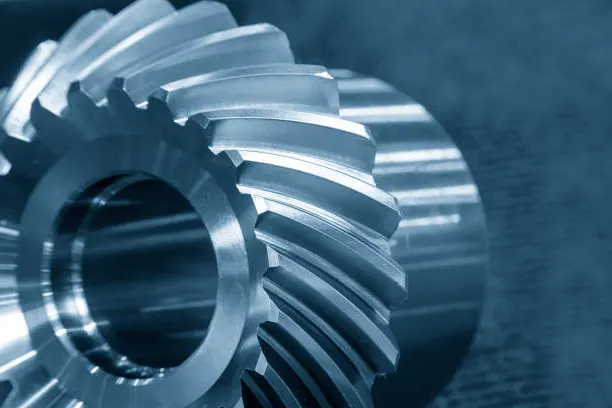
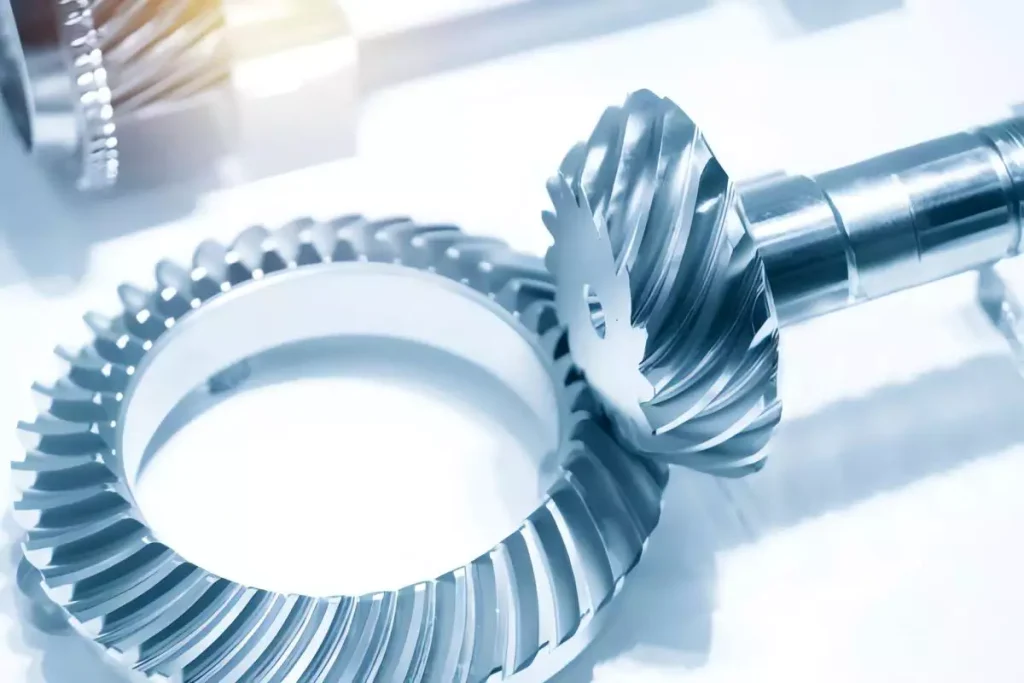
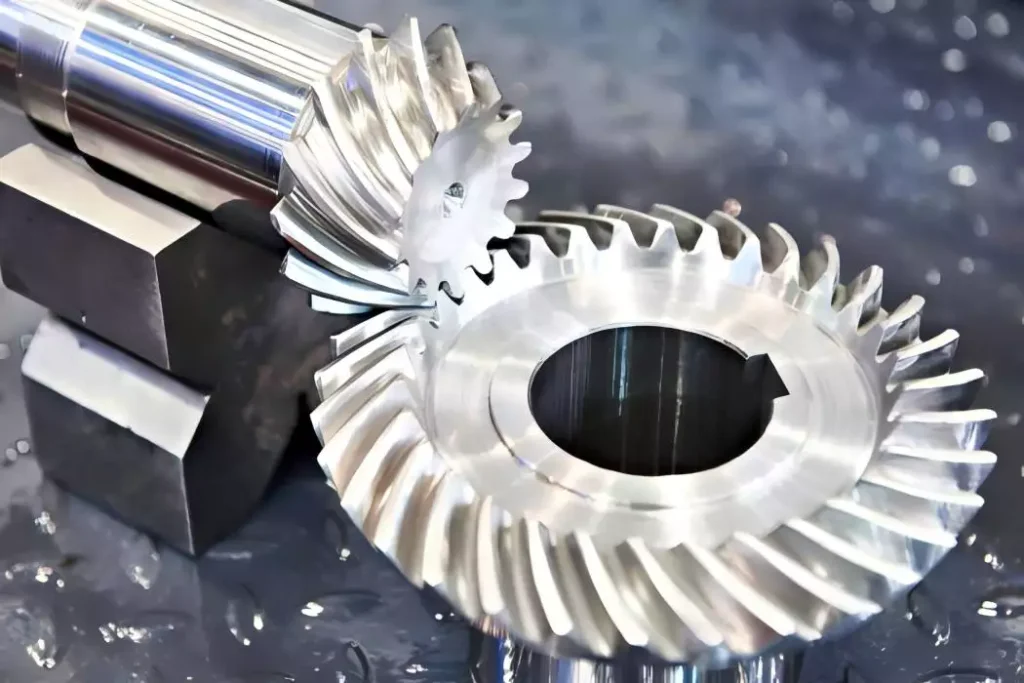
Spiral bevel gear consists of two beveled gears, which are the main gear and the driven gear. The active gear is usually the driving gear, while the driven gear is the driven gear. The teeth of the two gears have a spiral shape, and the angle of intersection between the gears is generally 90 degrees.
When the master gear rotates, the driven gear is also driven by the meshing of the helical gears. Due to the spiral structure of the tooth surface, the spiral bevel gear transmission has a larger contact area and meshing angle, so the transmission efficiency is higher. At the same time, spiral bevel gears can also withstand larger torque and have lower sound and vibration.
3 Features and advantages
3.1 Smooth transmission
Spiral bevel gearing is characterized by smooth transmission. Due to the spiral tooth surface of the spiral gear, the meshing process between the gears gradually unfolds during transmission, and the resistance is evenly distributed, making the transmission process smoother. Compared with general helical gear transmission, spiral bevel gear transmission is more stable and reliable.
3.2 High efficiency
The efficiency of spiral bevel gear transmission is high. Due to the spiral tooth surface of the gears, the meshing area between the gears is large and the number of contact points is large, so the friction loss is small. Compared with other transmission methods, spiral bevel gear transmission is more efficient.
3.3 High transmission capacity
Spiral bevel gearing can withstand large torque. The helical gear’s helical tooth surface can distribute the torque evenly over a number of tooth surfaces, spreading the load and thus increasing the transmission capacity. This makes spiral bevel gears widely used in high-power transmission systems.
3.4 Low noise and vibration
The design of spiral bevel gearing results in low noise and vibration. The helical tooth flanks of spiral gears allow for a progressive unfolding of the meshing process, which reduces the impact of the tooth flanks and noise generation. At the same time, spiral gears are also effective in reducing vibration and improving the smoothness of the transmission.
-
Areas of application
Spiral bevel gears are widely used in the field of mechanical transmission. It is suitable for different types of transmission devices, such as:
– Construction machinery: excavators, loaders, bulldozers, etc.
– Elevators and lifts
– Metallurgical equipment: rolling mills, mine hoisting equipment, etc.
– Oil and gas industry: pumps, compressors, etc.
– Textile and printing machines
– Chemical equipment
The applications of spiral bevel gears are diverse and constantly expanding. With the development of science and technology and the progress of manufacturing technology, spiral bevel gears will be used in more fields.
-
Summary
Spiral bevel gear is a commonly used gear transmission device, which is characterized by smoothness, high efficiency, strong transmission capacity, low noise and vibration. Its structure and working principle make it widely used in the field of mechanical transmission. Spiral bevel gears are suitable for a variety of different types of transmission devices, and have a wide range of applications in different industries. In the future, with the continuous development of technology, spiral bevel gears will continue to play an important role in providing reliable solutions for mechanical transmission in various industries.